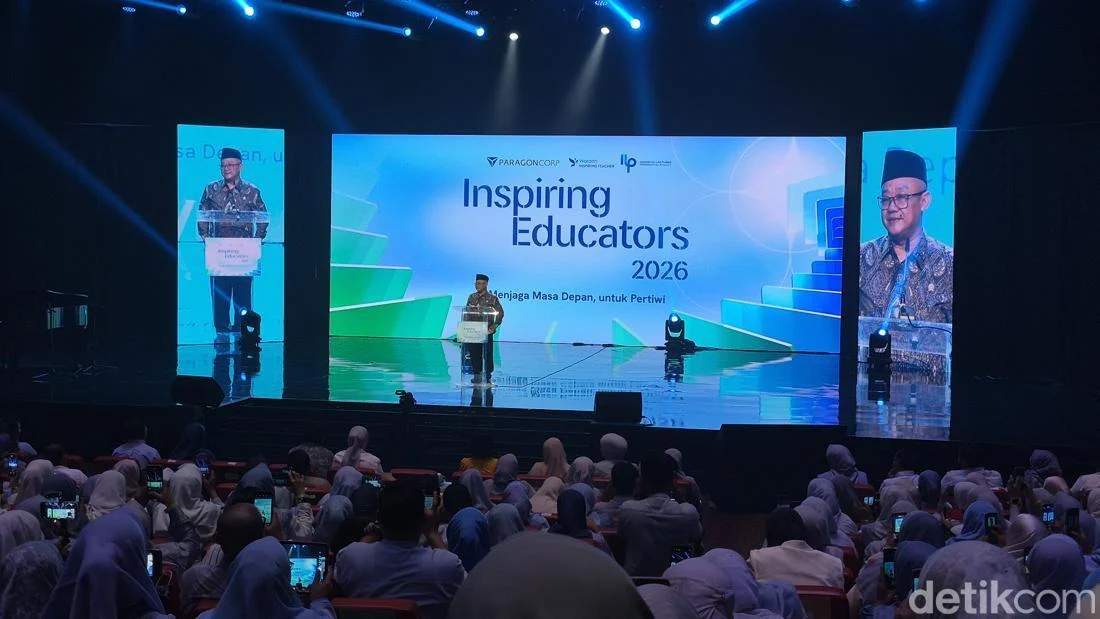
The landscape of national education in Indonesia continues to face multifaceted challenges, prominently revolving around the welfare, compensation, and professional recognition of educators. On Saturday, September 26, 2026, during the prestigious Wardah Inspiring Educators event held at the Jakarta Concert Hall in Kebon Sirih, Central Jakarta, the Minister of Primary and Secondary Education, Abdul Mu’ti, addressed a pressing issue that directly impacts the financial stability of numerous teachers across the archipelago. Minister Mu’ti publicly confirmed that his office had received explicit reports regarding teaching professionals whose Teacher Professional Allowances, universally known as Tunjangan Profesi Guru (TPG), have been delayed for a consecutive three-month period.
This disclosure immediately drew the attention of the education sector, given that the TPG serves as a critical financial lifeline designed to elevate the standard of living and recognize the specialized qualifications of certified educators. Addressing the audience of educators, policy observers, and stakeholders, Minister Mu’ti assured the teaching community that the administrative bottlenecks causing the three-month delay have been identified and are currently being actively resolved at the ministerial level. He injected a note of reassurance infused with personal affinity for the profession, asserting that having a leadership figure with a direct background as an educator ensures policies are formulated with genuine empathy and an acute understanding of the day-to-day financial pressures faced by teachers. The assurance of a retroactive disbursement—commonly referred to as rapel—scheduled for the upcoming month provided a palpable sense of relief to the educators present at the venue, transforming a moment of grievance into an optimistic dialogue regarding educator compensation and systemic improvements within the Ministry of Primary and Secondary Education.
Background and Regulatory Framework of Teacher Professional Allowances in Indonesia
To fully comprehend the significance of Minister Mu’ti’s recent announcements, it is essential to examine the regulatory architecture governing teacher compensation in Indonesia. The Teacher Professional Allowance is mandated under the auspices of national education laws designed to professionalize teaching and enhance the socio-economic status of educators. Historically, the distribution mechanism of the TPG has undergone various structural evolutions aimed at cutting down bureaucratic red tape and ensuring that funds reach the intended beneficiaries without undue intermediary delays.
Under the current policy guidelines established by the ministry, the TPG is structured to be disbursed on a monthly basis, transferred directly into the individual bank accounts of the qualified recipients. The financial stratification of the allowance distinguishes between State Civil Apparatus (ASN) educators and non-ASN educators. Specifically, ASN teachers are entitled to a professional allowance equivalent to one month of their base salary, reflecting their integration into the civil service salary scale. Conversely, non-ASN educators—encompassing teachers in private institutions or those operating under contract frameworks—receive a standardized nominal allowance amounting to Rp 2 million per month, provided they meet specific workload and administrative criteria.
The fundamental prerequisite for securing the TPG is the possession of an educator certificate, legally known as a sertifikat pendidik. This credential is traditionally acquired through the completion of the Teacher Professional Education program, widely recognized as Program Profesi Guru (PPG). The PPG program is designed to rigorously assess and elevate both pedagogical competence and subject-matter mastery. However, the administrative verification process linked to maintaining active certification, validating teaching hours, and synchronizing data through the Education Management Information System often creates vulnerable points in the disbursement pipeline. Administrative discrepancies at the regional or school level frequently result in temporary freezes or delays in fund releases, leaving educators to navigate financial uncertainty despite having fulfilled their teaching obligations.
Chronology of the Grievance and Ministerial Intervention
The chronology leading up to Minister Mu’ti’s public statement highlights the persistent friction between policy intent and field-level execution within Indonesia’s educational bureaucracy. In the months preceding the September 2026 event, various teacher associations and regional educator forums flagged irregularities in the routine monthly disbursement of the TPG. While the policy dictates a seamless, automated monthly transfer, reports accumulated on the desks of ministry officials indicating that a subset of educators had gone up to three months without receiving their entitled professional allowances.
The reports formally reached the office of Minister Mu’ti shortly before his scheduled engagement at the Jakarta Concert Hall. Recognizing the urgency of the matter, the ministry initiated immediate cross-departmental coordination with the Directorate General of Teachers and Educational Personnel, alongside financial divisions within the government, to trace the root causes of the administrative holdup.
During his address on September 26, 2026, Minister Mu’ti did not shy away from confronting the issue publicly. By acknowledging that reports of the three-month delay had reached his personal attention, he demonstrated a proactive approach to bureaucratic accountability. He elaborated that the processing phase for the withheld funds had already entered its final stages. In his characteristic conversational tone, the minister reassured the crowd that the delayed funds would not be lost but would instead be paid out in a lump-sum retroactive payment, or rapel, covering the entire three-month accumulation.
Furthermore, Minister Mu’ti pinpointed the operational timeline for the release of these funds, projecting that the retroactive allowances would successfully land in the accounts of the affected educators by October 2026. This financial injection will temporarily elevate the monthly take-home pay of these educators, combining their standard compensation with the accumulated retroactive balance to create what the minister colloquially described as a high-income month for the recipients.
Dialogues on Educator Compensation and Broader Fiscal Implications
Beyond the immediate resolution of the delayed TPG disbursements, the gathering at the Wardah Inspiring Educators 2026 event catalyzed a broader discourse regarding the overarching structure of teacher salaries in Indonesia. During the interactive segments of the event, the mention of high combined incomes prompted immediate vocal reactions from the audience, with teachers openly advocating for a permanent, structural increase in base salaries to match the rising cost of living and the increasing complexity of modern educational demands.
In response to the persistent calls for structural salary adjustments, Minister Mu’ti engaged in a blend of lighthearted banter and serious policy signaling. Addressing a playful cultural remark regarding the impossibility of performing the Islamic pilgrimage outside of its designated months—utilizing the word haji as a rhetorical pivot—the minister deflected the immediate demand before pivoting to substantive policy coordination.
The turning point of the dialogue occurred when the minister confirmed that the conversation regarding comprehensive salary adjustments for educators had transcended informal discussions. In a revelation that elicited enthusiastic applause from the auditorium, Minister Mu’ti announced that the proposal for salary enhancements had already been communicated to the Minister of Finance and had reportedly received a favorable response, characterized colloquially as obtaining a green light.
This development carries profound economic and administrative implications. A structural increase in teacher salaries, if successfully formalized through upcoming fiscal budgets, would require meticulous macro-fiscal planning. Education consistently commands a mandatory twenty percent allocation of the national state budget (APBN), yet the distribution between infrastructure, operational costs, and personnel expenditures remains a subject of intense budgetary balancing. Elevating base salaries nationwide necessitates synchronized cooperation between central ministries and regional governments, given that many regional teachers rely on sub-national fiscal capacities for their supplementary allowances.
Analysis of Systemic Challenges and Future Policy Outlook
The events of September 26, 2026, serve as a microcosm of the systemic hurdles confronting the Indonesian education system under the current administration. While high-level political commitments and empathetic leadership are vital in addressing immediate grievances—such as resolving three-month allowance delays—long-term stability requires institutional reform.
The reliance on manual reporting, data verification discrepancies, and localized administrative bottlenecks continues to expose educators to financial vulnerability. The transition toward automated, digitalized disbursement systems, while improved, requires continuous auditing to ensure that systemic glitches do not perpetually disrupt the livelihoods of teachers. The Ministry of Primary and Secondary Education faces the ongoing challenge of bridging the gap between urban policy formulation and rural or remote administrative execution, where technological infrastructure and administrative personnel capacity can vary significantly.
Moreover, the intersection of professional allowances and base salary reforms highlights the complex political economy of public sector compensation in Indonesia. Teachers represent the largest single contingent of civil servants and public-sector workers nationwide. Consequently, any adjustment to their compensation structure exerts a massive multiplier effect on the national fiscal posture.
As the Ministry moves toward fulfilling its commitment to disburse the delayed allowances in October 2026 and continues its dialogue with the Ministry of Finance regarding potential base salary increments, the broader educational community remains watchful. The success of these policy initiatives will ultimately be measured by their consistency, transparency, and the elimination of recurring administrative friction. For Indonesia’s educators, the assurance of timely compensation and the prospect of enhanced welfare represent not merely financial relief, but a fundamental validation of their pivotal role in national development and human capital formation.