
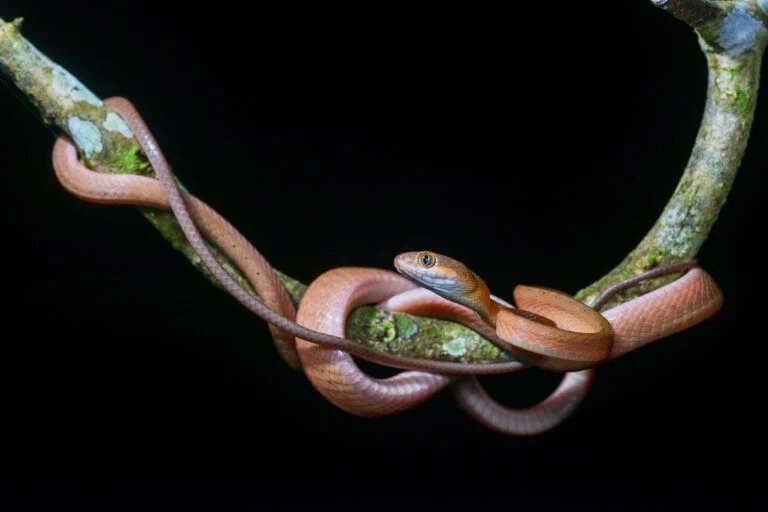
The scene is a familiar one to those who have observed domestic or wild cats in a natural environment: a feline stands poised, eyes locked on a coiled serpent in the grass. Without a perceptible warning, the snake strikes with lethal velocity, aiming directly for the cat’s snout. In a fraction of a second, the cat vanishes from the point of impact, reappearing a few inches back while simultaneously swatting the predator away with a blur of motion. To the human eye, the movement is near-instantaneous, requiring slow-motion playback to truly deconstruct the sequence. This remarkable display of agility is not a product of mere serendipity; it is the culmination of millions of years of evolutionary refinement that has transformed the feline into the ultimate ambush predator.
The Evolutionary Architecture of the Feline Reflex
The feline body is a masterpiece of biological engineering, optimized for explosive bursts of energy and rapid environmental processing. From a skeletal perspective, the cat possesses a flexible spine and a unique collarbone structure that allows for an extraordinary range of motion, facilitating both extreme jumps and the ability to squeeze through tight apertures. However, the true secret to their survival lies within the complex integration of their nervous system and musculoskeletal architecture.
According to Dr. Z. Yanikomeroglu, an expert in neurobiology, the average human reaction time—the interval between sensory input and physical output—typically ranges from 200 to 500 milliseconds. This window is highly variable, influenced significantly by age, cognitive load, distractions, and physiological state. In stark contrast, feline reaction times are estimated to fall between 100 and 120 milliseconds. This neurological advantage allows cats to process shifting environmental variables—such as the subtle muscle contractions that precede a snake’s strike—long before a human would be capable of registering the danger.
"Cats have evolved into apex ambush predators," Dr. Yanikomeroglu notes. "Their reaction times, particularly during the critical moments of prey acquisition or threat avoidance, are exponentially faster than those of humans. This is supported by an abundance of ‘fast-twitch’ muscle fibers, which facilitate rapid, high-intensity contractions that allow for explosive physical responses."
Dissecting the Reflex: A Comparative Analysis
While the agility of a cat is well-documented, the scientific community remains cautious about drawing definitive comparisons between feline reflexes and those of their common adversaries, such as snakes. Popular literature often cites feline reflexes in the range of 20 to 70 milliseconds, while snake strikes are recorded between 40 and 75 milliseconds. However, these figures are frequently derived from anecdotal field observations rather than controlled laboratory studies, making them subjects of ongoing debate within zoological circles.
The challenge in comparing these two biological systems lies in the complexity of the movements involved. A snake’s strike is a highly specialized, ballistic movement—a single, unidirectional burst of kinetic energy intended for capture or defense. Conversely, a cat’s defensive maneuver is multifaceted. It involves a sophisticated chain of actions: the initial detection of the threat, the cognitive assessment of the trajectory, the recruitment of fast-twitch muscles, the physical act of jumping or swerving, and the coordinated counter-strike or redirection.
Crucially, the cat’s "defensive" movement likely begins before the snake has fully extended its body. By reading subtle behavioral cues—a slight tilt in the snake’s head, a change in tension in its coils, or the narrowing of its pupils—the cat initiates a preemptive evasion. This predictive behavior, combined with their rapid motor coordination, makes the cat one of the most formidable defensive fighters in the animal kingdom.
The Physics of the Righting Reflex
Perhaps the most iconic demonstration of feline agility is the "righting reflex," the ability of a cat to rotate its body mid-air and land on its feet when dropped from a height. For decades, this behavior perplexed physicists, as it appeared to defy the law of conservation of angular momentum—which states that a body in freefall without external torque should not be able to rotate.
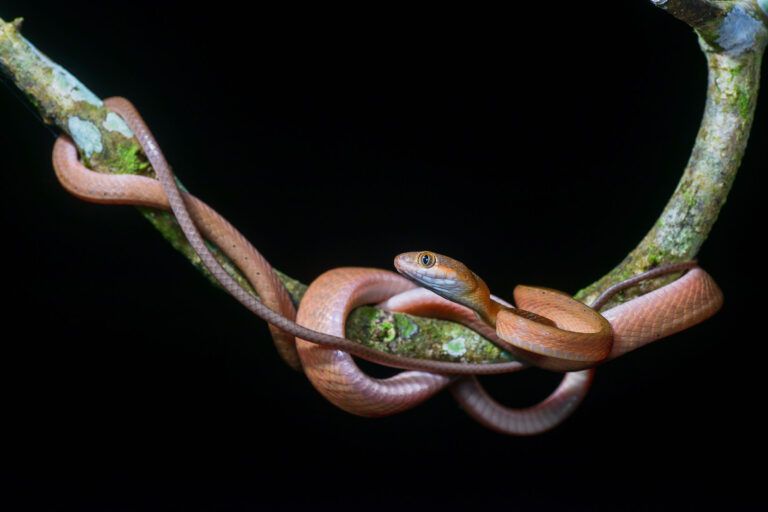
The resolution to this paradox lies in the sophisticated application of biomechanics. Professor Gregory J. Gbur, a specialist in optical physics at the University of North Carolina Charlotte, has extensively analyzed the feline righting reflex. The mechanism relies on the cat’s ability to manipulate its body in two distinct phases: the "bend-and-twist" method and the "tuck-and-twist" method.
By arching its back, the cat can effectively divide its body into two parts. The front half rotates in one direction while the rear half rotates in the opposite direction. Because the moments of inertia of these two sections differ—the cat can pull its front legs inward while extending its back legs—the total angular momentum remains zero, yet the cat successfully reorients itself to face the ground. Furthermore, the cat utilizes its tail as a counter-balance, acting like a "propeller tail" to assist in torque generation, ensuring that even in a chaotic fall, the animal achieves a stable landing orientation.
Internal Guidance: The Biological Gyroscope
The physical maneuvers described above would be impossible without the feline’s internal sensory apparatus. Housed deep within the inner ear is the vestibular system, which functions with the precision of a high-end mechanical gyroscope. This organ is responsible for detecting gravity, acceleration, and rotation.
When a cat loses its footing, the vestibular system immediately detects the discrepancy between the cat’s current orientation and the gravitational vertical. This data is transmitted to the brain, which then fires a lightning-fast sequence of commands to the cat’s musculoskeletal system. The result is a highly orchestrated movement that aligns the head first, followed by the spine and hindquarters. This entire process occurs in a fraction of a second, demonstrating a level of biological integration that engineers have struggled to replicate in robotics.
Implications for Biological Research and Technology
The study of feline movement extends far beyond mere curiosity. Researchers in fields ranging from biomechanics to soft-robotics have looked to the cat’s anatomy for inspiration. The "righting reflex," in particular, has informed the design of space-based robotics and self-stabilizing drones. By understanding how a cat uses its flexible spine and tail to redistribute mass, engineers have developed algorithms that allow machines to recover from tumbling or loss of balance in mid-air.
Furthermore, the study of feline neurology contributes to a deeper understanding of reflex arcs and sensory processing in mammals. The way a cat integrates visual information with vestibular feedback to execute complex movements provides a blueprint for how neural pathways prioritize speed over conscious thought.
Conclusion: A Legacy of Adaptation
The cat’s ability to evade a venomous snake, capture agile prey, or land gracefully from a height is not an isolated set of traits, but a cohesive survival strategy. It is the result of a long evolutionary journey that favored individuals with the fastest nerves, the most flexible skeletons, and the most precise sensory feedback loops.
While humans continue to marvel at these feats, it is important to recognize that these movements are the result of rigorous biological selection. The cat is a creature defined by its ability to exist in the "now"—to process the environment and react in a timeframe that renders its movements nearly invisible to the human eye. As we continue to study these animals, we gain not only a greater appreciation for their elegance but also a deeper insight into the fundamental physics and biological laws that govern life on Earth. Whether observing a house cat in the living room or a wild cat in the savanna, the fundamental truth remains: the feline is a masterpiece of natural engineering, perfectly tuned to the demands of a high-speed, high-stakes world.
