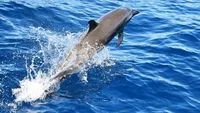
Marine biologists and animal behaviorists have documented a remarkably sophisticated and previously unrecorded feeding strategy utilized by a wild dolphin in the waters of Australia. Living in the pristine yet competitive ecosystem of the Great Barrier Reef, a male Indo-Pacific bottlenose dolphin has systematically bypassed traditional hunting methods. Instead of capturing and consuming his prey whole, this marine mammal relentlessly pursues specific fish until the targeted prey, driven by exhaustion and stress, vomits its recent meal. The dolphin then intercepts and consumes the regurgitated contents.
This extraordinary behavioral anomaly, which challenges conventional understandings of marine mammal foraging strategies, was recently detailed in the peer-reviewed scientific publication Ecology and Evolution. The documentation marks a monumental milestone in cetacean research, offering researchers a rare window into the cognitive flexibility, adaptability, and complex problem-solving capabilities of marine mammals inhabiting complex coral reef environments.
The Subject of Study: Bubbles and His Home Range
The central figure in this groundbreaking study is an adult male bottlenose dolphin locally identified by researchers as "Bubbles." His established home range encompasses the warm, nutrient-rich coastal waters surrounding Lady Elliot Island, situated at the extreme southern tip of the world-renowned Great Barrier Reef in Queensland, Australia. This region is ecologically diverse, characterized by shallow coral gardens, sweeping oceanic currents, and a high density of pelagic and reef-associated fish species, creating a dynamic backdrop for predatory interactions.
The comprehensive research initiative tracking Bubbles was spearheaded by Asia Armstrong, a prominent marine scientist affiliated with the University of the Sunshine Coast. Armstrong’s initial encounter with this anomalous behavior occurred serendipitously in 2017, when she captured brief, intriguing footage of the dolphin’s peculiar hunting sequence on video. Recognizing the potential significance of the observation, Armstrong initiated a long-term monitoring project. Between June 2021 and October 2025, Armstrong and her dedicated research team conducted extensive observational field studies, capturing hours of high-definition underwater footage and documenting dozens of distinct hunting events to verify whether this was an isolated incident or an established behavioral pattern.
The Mechanics of the Hunt: Strategy and Echolocation
The hunting methodology perfected by Bubbles departs radically from the standard predatory tactics observed in bottlenose dolphins worldwide. Typically, dolphins hunt cooperatively or individually by rounding up schools of fish, driving them toward the surface, or utilizing hydro-acoustic stunning techniques before consuming their catch whole. Bubbles, however, employs a highly selective and psychologically taxing approach.
According to the data collected during the four-year observation window, Bubbles begins his hunt by scanning the water column. Researchers noted that prior to initiating a chase, the dolphin frequently emits distinct series of echolocation clicks while rapidly oscillating his head from left to right. Scientists hypothesize that Bubbles utilizes his sophisticated biological sonar to assess potential targets, specifically scanning for larger fish whose digestive tracts are heavily loaded with recent meals, thereby maximizing the potential energy reward of the ensuing chase.
Once a target is selected, Bubbles singles out a specific individual—predominantly large bigeye trevally (Caranx sexfasciatus), a robust and formidable reef fish that would otherwise demand significant physical expenditure and injury risk to capture and ingest whole. Rather than lunging for a kill, Bubbles initiates a high-speed, persistent pursuit. He tails the fish relentlessly across the reef shelf, maintaining immense pressure over extended durations.
Driven to the brink of physiological exhaustion and acute stress by the unrelenting chase, the targeted bigeye trevally predictably resorts to a defensive physiological mechanism: it regurgitates the contents of its stomach. Marine biologists explain that lightening the body load reduces metabolic drag, aiding escape. The instant the food is expelled into the water column, Bubbles abandons the pursuit of the fish, pivots, and rapidly consumes the floating or sinking regurgitated meal.
Quantitative Insights: Statistical Breakdown of the Behavior
The empirical data gathered by Armstrong’s research team underscore the efficiency and persistence of Bubbles’ unique foraging technique. Over the course of the multi-year study, researchers recorded numerous hunting bouts, quantifying success rates, chase frequencies, and behavioral endurance.
During intensive monitoring periods, Bubbles demonstrated remarkable stamina. On multiple occasions, the dolphin was documented executing up to 10 consecutive chases within a compressed 30-minute window. Across a sample size of 20 meticulously tracked hunting attempts, Bubbles successfully secured his meal via regurgitation 11 times, yielding an impressive success rate of 55 percent.
This high conversion rate points toward a calculated cost-benefit analysis deeply embedded in the dolphin’s foraging routine. Bigeye trevally are physically demanding prey, possessing hard bones, spiny fins, and substantial body mass. Capturing, subduing, and digesting such a fish whole requires immense muscular exertion and poses internal risks from sharp spines. Conversely, consuming partially digested, pre-softened biomass allows Bubbles to acquire vital caloric intake while expending significantly lower net energy, presenting a compelling evolutionary trade-off.
Kleptoparasitism in the Marine Realm
In the broader context of behavioral ecology, the phenomenon observed in Bubbles is classified as kleptoparasitism—a specialized form of ecological parasitism in which an animal steals food that another has captured, gathered, or in this case, ingested and processed. Kleptoparasitism is extensively documented across various taxonomic groups, most notably among avian species. Seabirds such as frigatebirds and skuas are notorious for intercepting and harassing other birds mid-air until they drop or regurgitate their freshly caught fish.
However, instances of kleptoparasitism documented among marine mammals, particularly cetaceans, remain exceedingly rare and are seldom captured with such granular detail. Prior to the publication of the findings regarding Bubbles, scientific literature contained only a single comparable, well-documented account of cetacean kleptoparasitism: instances where dolphins were observed aggressively intercepting fish captured by cormorants or other surface-diving seabirds.
The documentation of Bubbles elevates our understanding of marine mammal foraging plasticity, demonstrating that dolphins can invent, refine, and transmit complex behavioral innovations that mimic predatory strategies typically found in entirely different animal phyla.
Scientific Perspectives and Evolutionary Implications
While the observational data collected by Armstrong and her colleagues at the University of the Sunshine Coast provide an unprecedented empirical foundation, the broader scientific community continues to debate the cognitive underpinnings and evolutionary implications of the behavior.
Jason Bruck, an independent marine biologist and animal behavior expert not directly involved in the Queensland study, offered a balanced perspective on the findings. Bruck noted that while the empirical evidence compiled by the research team is exceptionally compelling and thorough, further investigation is required to definitively determine the cognitive intent behind the behavior. Specifically, researchers must ascertain whether Bubbles consciously understands the causal link between the chase and the eventual regurgitation from the outset of the hunt, or if the behavior evolved progressively through trial-and-error reinforcement before becoming a hardwired habit.
Several primary hypotheses currently circulate within the marine biology community regarding the origin and persistence of Bubbles’ hunting style:
- The Accidental Discovery Hypothesis: Initially, Bubbles may have pursued the bigeye trevally with standard predatory intentions. Upon startling the fish into stress-induced regurgitation, the dolphin serendipitously discovered that consuming the discarded food was nutritionally rewarding and physically easier, leading to associative learning and intentional repetition.
- The Prey Evasion Hypothesis: From the perspective of the prey, the intentional expulsion of stomach contents may serve as a deliberate diversionary tactic designed to satiate or distract the pursuing predator, allowing the fish to escape with its life while sacrificing its recent meal.
- Learned Cultural Transmission: Although currently documented primarily in a single individual, behavioral ecologists are actively monitoring other dolphins within Bubbles’ social network to determine if this specialized kleptoparasitic technique is being socially transmitted horizontally among peers or vertically to offspring, which would signify a nascent marine mammal culture.
Future Research Horizons and Conservation Context
The documentation of Bubbles’ unique feeding strategy highlights the ongoing gaps in human knowledge concerning wild cetacean behavior. As human pressures on marine ecosystems intensify—ranging from climate-induced coral bleaching events on the Great Barrier Reef to shifts in pelagic fish distributions—the behavioral adaptability of marine apex predators becomes a critical area of scientific inquiry.
Researchers emphasize that the ability of animals like Bubbles to innovate alternative foraging strategies under changing ecological conditions speaks to the high cognitive capacity of bottlenose dolphins. As the scientific community awaits further observational data from the waters of Lady Elliot Island, Bubbles remains a fascinating subject of study—a solitary innovator rewriting the textbooks on marine mammal behavior, one stolen meal at a time.