
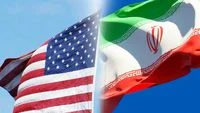
The United States military executed a high-stakes, multi-day rescue operation deep inside Iranian territory earlier this year, marking the first officially acknowledged deployment of American boots on the ground in Iran in nearly half a century. Newly declassified records and recent disclosures by senior military leadership have illuminated the staggering scale of the April operation, which was launched to recover two downed fighter pilots following an anti-regime strike near the central Iranian city of Isfahan.
The operation involved unprecedented coordination across multiple branches of the United States Armed Forces, mobilizing tens of thousands of personnel globally, with hundreds directly operating in the airspace above Iran and scores deployed in active combat conditions on the ground. According to data provided by the United States Central Command (CENTCOM), the mission stands as a watershed moment in modern military history, piercing heavily contested airspace and operating undetected within a hostile sovereign nation to rescue its captured personnel.
The Catalyst: The Downing of an F-15E Strike Eagle
The crisis began on April 3, when a United States Air Force F-15E Strike Eagle was shot down during a targeted bombardment of strategic military assets in southern Isfahan. The multi-role combat aircraft, valued at approximately $30 million, was actively engaged in degrading Iranian drone and missile manufacturing facilities when it was struck.
According to military assessments, the aircraft fell victim to an Iranian shoulder-fired surface-to-air missile—commonly known as a Man-Portable Air-Defense System (MANPADS)—estimated to cost a mere $100,000. The stark financial and technological disparity between the weapon systems underscored the high vulnerability of advanced tactical aircraft when operating within close proximity of asymmetric, highly dispersed air defense networks.
The two-man crew, identified publicly only by their tactical call signs "Alpha" and "Bravo," successfully ejected from the stricken aircraft before impact. However, the chaotic nature of the ejection and the mountainous, hostile terrain resulted in the two aviators landing roughly 5 kilometers apart from one another, setting the stage for a fragmented, highly dangerous dual-recovery operation that would stretch American military assets to their absolute limits.
Chronology of the Rescue: Phase One and the Evacuation of Alpha
The immediate aftermath of the ejection triggered an emergency response protocol that quickly snowcased the immense logistical power of the United States military. The first phase focused on locating and extracting the aviator known as "Alpha," who landed in an area with heavy enemy presence.
Within hours of the crash, the Pentagon authorized a massive surge of air power into Iranian airspace. In total, 21 aircraft were immediately diverted or scrambled to spearhead the initial search and rescue (SAR) effort. Despite the overwhelming air cover, the mission faced immediate, hostile resistance. An American search helicopter sustained heavy damage from ground-based small arms fire while attempting to locate the downed pilot.
Compounding the crisis, an A-10 Thunderbolt II close-air-support aircraft—commonly known as the Warthog—participating in the search perimeter was also targeted and severely hit by hostile fire, forcing its pilot to eject over hostile territory. The secondary ejection added another layer of complexity to an already perilous mission, though the A-10 pilot was ultimately secured in a rapid sub-operation.
Despite the intense aerial opposition and dense anti-aircraft threats, elite rescue personnel managed to locate Alpha. Utilizing a combination of precision air strikes to suppress local hostile forces and rapid extraction maneuvers, Alpha was successfully lifted out of Iranian territory. CENTCOM records indicate that 123 distinct munitions were expended during the execution of this first phase alone, laying bare the heavy kinetic force required to carve out a momentary window of safety.
The Ordeal of Bravo: Two Days Behind Enemy Lines
While Alpha’s extraction was completed within hours, the rescue of the second aviator, Bravo, evolved into a grueling, multi-day endurance test. Bravo had sustained severe physical injuries during the ejection and landing, including a fractured spinal column, a broken arm, and a shattered shoulder.
Unable to move significant distances, Bravo was forced to evade capture and survive in the rugged Iranian terrain for approximately two days while elements of the Islamic Revolutionary Guard Corps (IRGC) and local security forces scoured the region. Declassified infrared surveillance footage released weeks after the incident revealed the terrifying proximity of the search parties, showing IRGC ground units closing in on Bravo’s concealed position.
Recognizing the closing window, CENTCOM authorized a massive escalation for the second phase of the operation, transitioning from a localized rescue mission into a major theater-level military campaign. The scale of the second wave dwarfed initial efforts, deploying more than 150 aircraft into Iranian skies. The armada included 64 advanced fighter jets, four strategic heavy bombers, 48 aerial refueling tankers, 13 dedicated combat search and rescue aircraft, and 26 specialized intelligence, surveillance, reconnaissance (ISR), and electronic warfare platforms.
Under the cover of heavy electronic jamming and suppression strikes, two specialized MC-130J Commando II transport aircraft managed to land on a improvised, makeshift dirt airstrip secured by advanced reconnaissance elements. Simultaneously, highly maneuverable MH-6 "Little Bird" assault helicopters were flown directly into the landing zone.
Two Pararescue specialists—commonly known as PJs—from the United States Air Force descended from the aircraft into the treacherous mountainous terrain. Operating under extreme risk of being overrun, the PJs located the severely wounded Bravo, stabilized him under combat conditions, and hoisted him aboard the waiting helicopter. During this second phase, forces expended a staggering 216 munitions, bombarding IRGC troop concentrations and blocking positions to clear an escape corridor.
Strategic Losses and the Destruction of High-Value Assets
The complexity of landing heavy transport aircraft on unpaved, volatile terrain resulted in significant logistical casualties. During the extraction of Bravo, both participating MC-130J Commando II transport aircraft became irretrievably bogged down in the soft, unstable desert soil of the makeshift landing strip.
Faced with the imminent threat of the advanced transport planes falling intact into the hands of the Iranian military—which would have resulted in an unprecedented technological and intelligence catastrophe—commanders made the hard decision to abandon the aircraft. American strike assets systematically destroyed both MC-130J platforms on the ground, alongside a participating MH-6 Little Bird helicopter.
The financial cost of this tactical necessity was immense. Each MC-130J Commando II carries an estimated unit price tag of approximately $100 million. Destroying two of these elite special operations transports, alongside auxiliary rotary-wing assets, represented a multi-million-dollar material loss, highlighting the extraordinary price the United States was willing to pay to protect its classified technology and ensure the recovery of its personnel.
CENTCOM Disclosures and Historical Significance
The full scope of the operation remained heavily classified for months until CENTCOM Commander Admiral Brad Cooper broke the silence during a comprehensive interview with CBS News. Admiral Cooper’s disclosures formally confirmed what defense analysts had long debated: that more than 90 United States military personnel were actively operating on the ground inside Iran during the mission.
"This represents the first officially acknowledged presence of United States ground forces operating inside Iran in forty-six years," Admiral Cooper stated, placing the operation in a profound historical context.
The timeline reaches back to 1979, the year of the Iranian Islamic Revolution and the subsequent American hostage crisis, most notably underscored by the failed and tragic Operation Eagle Claw in 1980. Unlike that historic failure, which bogged down in the Iranian desert due to mechanical failures and weather anomalies before reaching its target, this modern rescue operation succeeded despite intense active opposition, showcasing the staggering advancements in night-vision technology, precision-guided munitions, satellite communications, and specialized personnel recovery tactics developed over decades of continuous conflict in the Middle East.
Official Reactions and Geopolitical Implications
The public revelation of this deep-penetration rescue mission has sent ripples through the international diplomatic and security communities. While Washington has framed the operation strictly as a humanitarian imperative—under the sacrosanct military ethos of leaving no service member behind—foreign policy experts warn of the profound geopolitical fallout.
Tehran has yet to fully reconcile the public embarrassment of a foreign military operating with impunity within its borders for days, though state media has historically downplayed security breaches of this magnitude. Meanwhile, regional adversaries and allies alike are closely analyzing the telemetry of the operation.
Military analysts point out several critical implications stemming from the declassified records:
- Vulnerability of Advanced Airframes: The loss of an F-15E Strike Eagle to a relatively inexpensive MANPADS underscores the persistent danger posed by asymmetric air defense proliferation. Even the most sophisticated fourth-generation fighter jets remain susceptible to low-cost, decentralized threats when operating at lower altitudes.
- Unprecedented Power Projection: The ability of the United States to marshal over 150 aircraft, suppress regional air defenses, land transport aircraft, and deploy ground troops deep inside a heavily fortified hostile nation demonstrates an extraordinary capability for long-range power projection and personnel recovery.
- Escalation Risks: Operating boots on the ground inside a hostile sovereign state carries inherent risks of sparking a wider, conventional regional war. The sheer volume of ordinance dropped—totaling 339 munitions across both phases—illustrates how quickly a localized rescue mission can escalate into a major theater-level engagement.
- Technological Security: The deliberate destruction of two $100 million MC-130J aircraft to prevent reverse-engineering highlights the paranoid calculus of modern high-tech warfare, where the preservation of classified avionics and electronic warfare suites often supersedes equipment recovery.
As geopolitical tensions in the Middle East remain at a boiling point, the declassification of the Isfahan rescue mission serves as a stark reminder of the hidden wars fought beneath the surface of official headlines. It highlights the lengths to which global superpowers will go to protect their soldiers, while simultaneously exposing the razor-thin margins separating localized tactical recovery operations from all-out regional conflagration.

