
The prevailing global economic paradigm, which for decades advocated for open markets and a reduction in state intervention, is undergoing a profound transformation. What was once a widely accepted blueprint for development is now facing increasing scrutiny, as major economies like the United States and the European Union pivot towards protecting their domestic industries and strategically subsidizing key sectors. This shift signals a departure from the "Washington Consensus" – a set of neoliberal policies promoted by international financial institutions – and underscores a growing comfort among nations in prioritizing national interests over a singular, globally prescribed economic model. This phenomenon, often termed "slowbalisation" or de-globalization, reflects a more pragmatic and nationalistic approach to economic governance.
Against this backdrop of evolving global priorities, Indonesia finds itself at a critical juncture, grappling with a complex policy dilemma. While many developed nations are asserting their economic sovereignty, Indonesia appears poised to adopt global health agendas, particularly concerning tobacco control, which could have significant implications for its unique and economically vital domestic tobacco industry. Proposed regulations, including the implementation of plain packaging for cigarettes, a ban on certain additives, and strict limits on nicotine and tar levels, are currently under consideration by the Ministry of Health and the Coordinating Ministry for Human Development and Cultural Affairs (Kemenko PMK). These measures, while aligned with international health recommendations, raise fundamental questions about their genesis – whether they truly originate from Indonesia’s specific national needs or are primarily driven by years of global advocacy campaigns from international organizations.
The Global Reassessment of Economic Development Models
The intellectual groundwork for this global reassessment has been laid by prominent economists like Harvard’s Dani Rodrik, who has long argued against the universality of development models. Rodrik’s core thesis, encapsulated in the dictum "there’s no one size fits all," posits that each nation possesses a distinct historical trajectory, economic structure, cultural fabric, and set of challenges. Consequently, public policies must be meticulously tailored to these unique national circumstances rather than simply replicating strategies adopted by other countries. This perspective emphasizes that genuine development stems from an intrinsic understanding of domestic realities and the formulation of policies that address these specific contexts, rather than a rigid adherence to external prescriptions.
Indeed, the current actions of leading global economies serve as compelling illustrations of Rodrik’s argument. The United States, historically a proponent of free trade, has increasingly employed protectionist measures to safeguard its industrial base, particularly in strategic sectors. Similarly, the European Union has committed substantial subsidies to critical industries, reflecting a strategic move to bolster domestic competitiveness and resilience. These actions, seemingly contradictory to the free-market principles they once championed globally, highlight a pragmatic recognition that national interests, economic security, and job creation often necessitate a departure from abstract global rules. This shift underscores a broader global trend where nations are becoming more confident in asserting their sovereignty in economic policy, prioritizing internal stability and growth.
Indonesia’s Unique Tobacco Landscape: The Kretek Industry
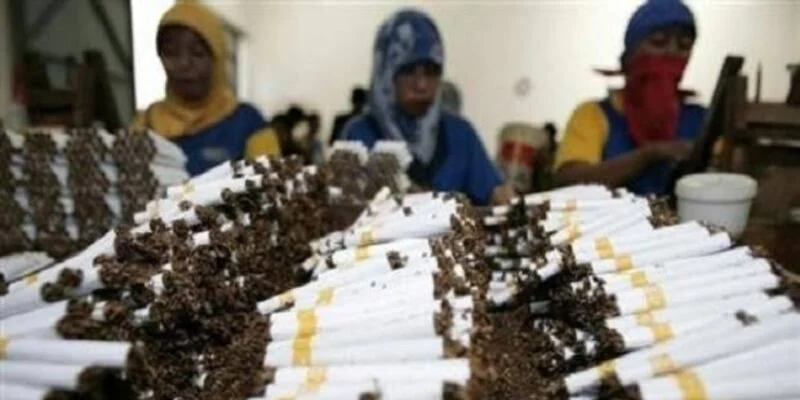
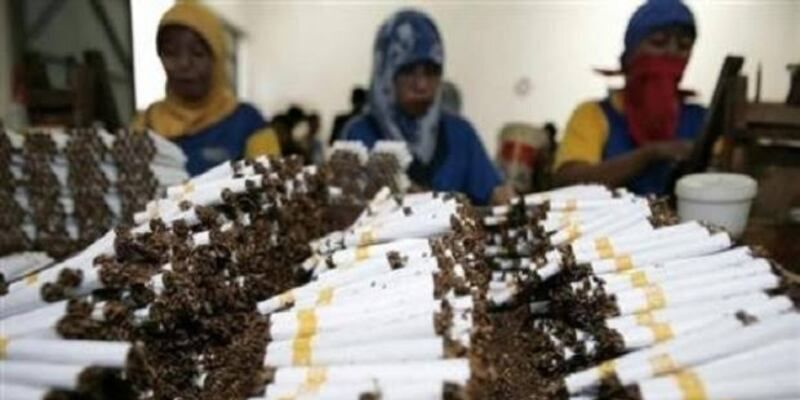
In stark contrast to this global trend of self-assertion, Indonesia’s apparent readiness to embrace global tobacco control standards without comprehensive domestic impact assessments raises significant concerns. Unlike many countries where tobacco consumption primarily involves conventional cigarettes, Indonesia is home to the distinctive kretek industry – clove cigarettes. This industry is not merely an economic sector; it is deeply interwoven with Indonesia’s history, culture, and socio-economic fabric. Kretek cigarettes, characterized by their unique blend of tobacco and cloves, are a product of indigenous innovation, developed and refined over centuries. The specific tobacco varieties grown in Indonesia possess naturally high nicotine content, a characteristic inherent to the local agricultural ecosystem, not an artificial enhancement.
The economic footprint of the kretek industry is immense and multifaceted. It sustains millions of livelihoods across a vast and intricate supply chain, from the remote farms where tobacco and cloves are cultivated to the intricate manufacturing processes and the extensive distribution networks. Farmers cultivating tobacco and cloves, factory workers involved in hand-rolling or machine production, transport operators, sales personnel, small retailers (UMKM), printing companies for packaging, and various other ancillary businesses all depend on the vitality of this industry. Estimates suggest that millions of Indonesians are directly or indirectly employed or derive income from the tobacco sector. The Ministry of Industry, for instance, has previously highlighted the potential for an economic value loss of up to Rp700 trillion (approximately US$45 billion) if regulations like strict tar and nicotine limits are imposed without a thorough understanding of the national tobacco industry’s unique characteristics. This figure, while subject to methodological scrutiny, underscores the colossal economic stakes involved.
The Proposed Regulations and Their Potential Ramifications
The specific regulations under consideration – plain packaging, a ban on additives, and stringent limits on nicotine and tar – are central to the global tobacco control agenda, championed by organizations like the World Health Organization (WHO) under the Framework Convention on Tobacco Control (FCTC). While the health objectives behind these proposals are clear – reducing smoking rates and mitigating health risks – their application in the Indonesian context presents unique challenges.
- Plain Packaging: This policy mandates standardized, undifferentiated packaging, typically in a drab color with large health warnings, removing all branding elements. Proponents argue it reduces the appeal of tobacco products, particularly to youth, and enhances the effectiveness of health warnings.
- Additive Bans: Many countries have moved to ban flavorings and other additives in tobacco products, arguing they make smoking more appealing and mask the harshness of tobacco. For kretek cigarettes, cloves are an inherent additive, making a blanket ban highly problematic and potentially existential for the industry.
- Nicotine and Tar Limits: These regulations aim to reduce the harmful components in cigarette smoke. However, given the naturally high nicotine content of Indonesian tobacco, meeting stringent international limits without fundamentally altering the raw material or manufacturing process could prove challenging, if not impossible, for domestic producers.
The core concern articulated by critics of these proposals is the apparent lack of a comprehensive impact assessment that balances the projected health benefits with the undeniable economic and social costs. The narrative often heard is that Indonesia "must" align with international standards, frequently overshadowing the voices of those whose livelihoods are directly threatened. This raises a crucial question: are these policies truly born from an internal analysis of Indonesia’s specific health challenges and its capacity to implement such measures, or are they a consequence of external pressure and a desire to conform to global norms?
Lessons from International Experiences with Plain Packaging
The experience of other countries with plain packaging offers a mixed picture, suggesting that its implementation is not without complexities and potential drawbacks. Australia was the first country to introduce plain packaging in 2012, followed by nations like the United Kingdom, France, and New Zealand. While some studies and public health bodies have claimed success in reducing smoking prevalence, particularly among young people, other reports and analyses have highlighted significant unintended consequences:
- Rise in Illicit Trade: Standardized packaging can make it easier for counterfeiters to produce illicit tobacco products, as they do not need to replicate complex brand designs. This can lead to an increase in the illegal market, making it harder for governments to control product quality, collect excise taxes, and enforce age restrictions.
- Pressure on Legal Industry: The legal tobacco industry often faces increased competition from illicit products, leading to reduced sales, potential job losses, and a decline in tax revenue for the government.
- Difficulty in Enforcement: Monitoring and enforcement become more challenging when legitimate products are indistinguishable from illegal ones in terms of packaging.
These experiences underscore that while public health is a paramount concern, policy decisions must also consider the broader socio-economic ecosystem. A direct "copy-paste" approach to policy adoption, without rigorous adaptation to local conditions, carries inherent risks.
The Call for a Holistic and Nationally-Driven Policy Framework
The current debate highlights a critical perceived imbalance in the Indonesian government’s approach, particularly within the Ministry of Health and Kemenko PMK. Critics argue that these ministries appear more preoccupied with adopting global recommendations than with addressing fundamental questions about the national economic impact. Questions that remain largely unanswered include:
- What will be the precise impact on Indonesia’s national economy, considering the vast economic chain connected to the tobacco industry?
- What are the projected job losses for millions of workers, including farmers, factory laborers, and small business owners?
- How will state revenue, particularly from excise taxes on tobacco products, be affected?
- What are the social costs associated with widespread unemployment and economic disruption in communities heavily reliant on this sector?
These questions are not secondary; they are central to responsible governance. The primary mandate of any government is to protect and advance the interests of its own nation and its citizens, not merely to serve as an implementer of international agendas.
The Ministry of Industry’s earlier cautionary statement regarding the Rp700 trillion potential economic loss serves as a vital counterpoint in this discussion. It emphasizes that every regulation carries economic consequences, inevitably creating winners and losers. Dismissing economic considerations as less important than health concerns, or framing the debate as an inherent conflict between health and economy, is a simplistic and ultimately unhelpful approach. A truly comprehensive development strategy must integrate both dimensions. It must simultaneously aim to improve public health outcomes, safeguard existing livelihoods, foster domestic industries, ensure stable state revenue, and enhance the welfare of millions of families.
Dani Rodrik’s insights are particularly pertinent here: governments should not merely translate global policies but actively design national policies. This requires a deep understanding of domestic productive sectors, ongoing dialogue with businesses and labor unions, and a clear vision of the country’s own economic structure. Nations that have successfully developed their industries have often been those courageous enough to forge their own paths, choosing policies that align with their specific national interests, rather than rigidly conforming to external blueprints. As Rodrik eloquently states, "Development is not about conforming to the global rules. It is about solving the domestic political problem under limited or constraint of the institutions."
Conclusion: Reasserting National Sovereignty in Policy-Making
The shift towards de-globalization, exemplified by the protectionist stances of the US and the substantial subsidies offered by the EU, indicates a global trend where national interests are increasingly taking precedence. The world is becoming more pragmatic, acknowledging that the unfettered global market does not, in itself, solve all problems. In this evolving global landscape, Indonesia’s trajectory appears to be moving in the opposite direction, potentially adopting global standards without a fully articulated and widely understood assessment of their domestic economic impact.
This warrants a robust and transparent national conversation, one that moves beyond slogans, campaigns, or the dismissal of dissenting voices as "anti-health." What is urgently needed is a comprehensive, multi-stakeholder assessment that rigorously quantifies both the health benefits and the economic costs of the proposed tobacco control measures. Such a study must genuinely incorporate the perspectives of tobacco farmers, clove growers, factory workers, small business owners, academics, and relevant government agencies, ensuring a balanced and inclusive approach.
Indonesia cannot afford to ignore its public health challenges. However, it also cannot afford to disregard the fate of millions of its citizens whose livelihoods depend on the tobacco industry. Being an active member of the global community does not necessitate an uncritical acceptance of every global agenda. On the contrary, a strong nation is one that possesses the discernment and courage to say "no" when a proposed policy does not genuinely serve its national interests. This is precisely the stance many nations are adopting today.
It is time for Indonesia to demonstrate similar courage. Rather than serving as a laboratory for various global agendas, the nation must prioritize the development of policies that are truly born from the needs, realities, and interests of the Indonesian people, fostering both health and prosperity in a manner uniquely suited to its national character.

