
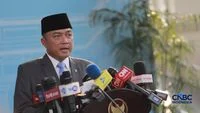
Jakarta is abuzz with anticipation as President Prabowo Subianto is set to finalize crucial appointments within the Attorney General’s Office (Kejagung), including the highly sensitive position of Junior Attorney General for Special Crimes (Jampidsus). State Secretary Prasetyo Hadi confirmed on Tuesday, July 21, 2026, from the Presidential Palace Complex in Jakarta, that a decision is imminent, with a Presidential Decree (Keppres) expected to be signed within the next "one or two days." This pivotal announcement comes at a critical juncture for Indonesia’s legal and anti-corruption landscape, signaling a clear direction for the new administration’s commitment to upholding the rule of law and combating high-level graft.
The Jampidsus role, often described as the spearhead of Indonesia’s anti-corruption efforts, holds immense power and responsibility. This office is tasked with investigating and prosecuting major corruption cases, state asset recovery, and other significant economic crimes that often involve high-ranking officials, corporate entities, and substantial state losses. The outgoing Jampidsus, Febrie Adriansyah, concluded his tenure amidst a period of intense scrutiny and notable events, including the widely reported "shadowing" incident involving members of Densus 88 (the elite counter-terrorism unit of the Indonesian National Police) and a major corruption investigation into the mining sector, specifically the colossal Timah (tin) corruption scandal, which reportedly caused trillions of rupiah in state losses. These events underscored the perilous and high-stakes nature of the Jampidsus position, making the upcoming appointment a litmus test for the new government’s approach to inter-agency relations and its resolve against corruption.
The Significance of the Jampidsus Role and Recent Context
The Junior Attorney General for Special Crimes is arguably one of the most demanding and impactful positions within the Indonesian legal framework. The office operates with broad investigative powers, delving into complex financial crimes, illicit asset accumulation, and grand corruption schemes that often span multiple jurisdictions and involve intricate networks. The Jampidsus’s actions directly influence public perception of justice, investor confidence, and the overall integrity of state institutions.
In the period leading up to this anticipated announcement, the Kejagung, particularly the Jampidsus office, has been at the forefront of several high-profile investigations. The most prominent among these is the Timah corruption case, which has seen numerous arrests and investigations into alleged malfeasance within the state-owned tin mining company, PT Timah Tbk. Reports of staggering state losses, potentially reaching hundreds of trillions of rupiah, have shocked the nation and amplified calls for swift and decisive legal action. The handling of such a monumental case requires not only legal acumen but also unwavering integrity and political independence, making the leadership of Jampidsus absolutely critical.
Adding to the complexity was the aforementioned "shadowing" incident earlier this year, where members of Densus 88 were reportedly observed tailing then-Jampidsus Febrie Adriansyah. While official explanations varied and the incident was largely defused through high-level inter-agency meetings, it highlighted underlying tensions and the intense pressure surrounding the anti-corruption body. Such occurrences inevitably raise questions about inter-agency cooperation, potential interference in investigations, and the security of top legal officials, placing an even greater emphasis on the qualities of the next Jampidsus. The next appointee will not only inherit a demanding caseload but also the responsibility of navigating delicate inter-agency dynamics while maintaining public trust.
Nominees and the Final Assessment Team Process
Attorney General ST Burhanuddin has formally submitted a list of recommended candidates for several key positions, including the Jampidsus, to the President. This list, a crucial step in the bureaucratic appointment process, is currently under review by the Tim Penilai Akhir (TPA), or Final Assessment Team. The TPA is an inter-ministerial body comprising high-ranking officials, including the President, Vice President, State Secretary, Minister of Administrative and Bureaucratic Reform, and others, tasked with evaluating candidates for strategic government positions based on merit, experience, and integrity. Their deliberation ensures a comprehensive vetting process before presidential approval.
For the Jampidsus position, the Attorney General has proposed Kuntadi, who currently serves as the Head of the Asset Recovery Agency (Badan Pemulihan Aset – BPA) within the Kejagung. Kuntadi’s experience in asset recovery would be particularly relevant given the focus of Jampidsus on financial crimes and returning state losses. His background suggests a strong emphasis on the practical aspects of financial crime prosecution and the ability to track and reclaim illicitly gained wealth, a crucial component of effective anti-corruption efforts.
Beyond Jampidsus, the Attorney General’s proposed list also includes other significant changes aimed at strengthening the Kejagung’s leadership structure:
- Asep Nana Mulyana has been put forward as the definitive Deputy Attorney General. This is a critical administrative role, overseeing the entire operational framework of the Kejagung and ensuring coordination across its various divisions.
- To fill Asep Nana Mulyana’s current role, Leonard Eben Ezer Simanjuntak, currently the Head of the Education and Training Agency (Badan Pendidikan dan Pelatihan – BPP) of the Attorney General’s Office, is proposed to become the Junior Attorney General for General Crimes (Jampidum). Jampidum handles general criminal cases, providing legal guidance, and overseeing public prosecution, making it a cornerstone of the justice system.
- Harli Siregar is proposed to take over as the Head of the Education and Training Agency (BPP), a role vital for developing the skills and professionalism of prosecutors nationwide.
- Finally, Patris Yusrian Jaya, currently the Head of the Jakarta High Prosecutor’s Office (Kajati DKI Jakarta), is proposed to lead the Asset Recovery Agency (BPA), replacing Kuntadi if his Jampidsus nomination is approved. This demonstrates a strategic reshuffling to ensure continuity and expertise across crucial functions.
State Secretary Prasetyo Hadi emphasized that while these names have been proposed, the final roster remains subject to presidential approval following the TPA’s comprehensive review. "We are asking for time for this to be discussed according to the mechanism of the final assessment team," Prasetyo Hadi stated. He further added, "Indeed, there are several names proposed, but we ask that it only be announced tomorrow after the presidential decree is signed. Let it be a decision first before we convey it to media friends and the public." This approach underscores the sensitive nature of these appointments and the need for official confirmation before public disclosure, preventing premature speculation and ensuring a smooth transition of leadership.
Broader Implications for Governance and Anti-Corruption
The impending appointments hold profound implications for President Prabowo Subianto’s nascent administration and Indonesia’s ongoing fight against corruption. The selection of these key figures will not only define the operational effectiveness of the Attorney General’s Office but also set the tone for the government’s commitment to legal reform, inter-agency harmony, and good governance.
Firstly, the choice of Jampidsus will be seen as a direct reflection of President Prabowo’s stance on anti-corruption. A strong, independent, and courageous appointee will signal a determination to tackle corruption aggressively, irrespective of political affiliations or powerful interests. Conversely, a perceived weak or compromised choice could undermine public trust and cast a shadow over the administration’s anti-graft agenda. The public will be keenly watching to see if the new Jampidsus can effectively continue investigations into high-profile cases like the Timah scandal and prevent future abuses of power.
Secondly, these appointments will impact inter-agency relations, particularly between the Attorney General’s Office, the National Police, and the Corruption Eradication Commission (KPK). Historically, there have been periods of both cooperation and friction between these key law enforcement bodies. A clear, respected, and authoritative leadership at the Kejagung can foster better coordination, reduce overlaps, and enhance the overall efficiency of law enforcement efforts. The recent "shadowing" incident serves as a stark reminder of the need for robust communication and mutual respect between agencies, and the new leadership will be crucial in rebuilding and maintaining such relationships.
Thirdly, the stability and leadership within the Kejagung are vital for maintaining investor confidence and promoting economic growth. Corruption is a significant deterrent to investment, both domestic and foreign. A strong, credible, and independent justice system that effectively prosecutes corruption provides assurance to businesses that their investments are protected and that the playing field is fair. The President’s choices will therefore have economic ramifications, signaling to the market whether Indonesia is serious about creating a transparent and corruption-free business environment.
Finally, these appointments are crucial for strengthening public trust in state institutions. In a democratic society, the integrity of the justice system is paramount. When public officials are held accountable, and corruption is effectively prosecuted, it reinforces the belief that no one is above the law. This, in turn, strengthens democratic institutions and promotes social cohesion. The new leadership must demonstrate unwavering commitment to ethical conduct and transparency to regain and solidify public confidence.
Historical Context and Future Challenges
Indonesia’s history is replete with examples of both courageous anti-corruption crusaders and systemic challenges within its legal framework. The Attorney General’s Office has, at various times, been lauded for its efforts in tackling major cases and criticized for perceived inefficiencies or political influences. The role of Jampidsus, in particular, has often been a hot seat, with incumbents facing immense pressure, threats, and public scrutiny. The new appointees will inherit this complex legacy and face the ongoing challenge of navigating a legal system that is constantly evolving to combat sophisticated forms of corruption and crime.
The legal and political landscape under President Prabowo’s administration is expected to place a renewed emphasis on law enforcement and national integrity. The choices made in these critical appointments will be foundational to how this vision is translated into action. The new Jampidsus, along with the Deputy AG and Jampidum, will be instrumental in shaping the legal enforcement agenda, prioritizing cases, and ensuring that justice is served fairly and efficiently across the archipelago.
As the nation awaits the President’s signature on the crucial Presidential Decree, the air of expectation is palpable. The appointments within the Attorney General’s Office are not mere bureaucratic reshuffles; they are strategic decisions that will significantly impact Indonesia’s trajectory in its relentless battle against corruption and its journey towards stronger governance and a more just society. The coming days will reveal the President’s choices, setting the stage for a new chapter in Indonesia’s legal and political landscape.

