

A significant milestone for environmental governance and public transparency in Indonesia was achieved on September 14, 2026, when the Jakarta Administrative Court (PTUN) issued a landmark ruling regarding the disclosure of government documents. The court officially upheld a decision previously delivered by the Central Information Commission (KIP) on June 10, 2026, which mandates that the Ministry of Investment and the Investment Coordinating Board (BKPM) must release official documents pertaining to the revocation of four nickel mining business licenses (IUP) in the ecologically sensitive Raja Ampat archipelago.
This legal victory follows months of intensive litigation initiated by Greenpeace Indonesia, which sought to challenge the opaque nature of the government’s decision-making process. The court’s decision, registered under Case Number 242/G/KI/2026/PTUN.Jkt, explicitly rejects the objections raised by the Ministry of Investment/BKPM, affirming that the requested records constitute public information rather than protected state secrets.
The Scope of the Legal Conflict
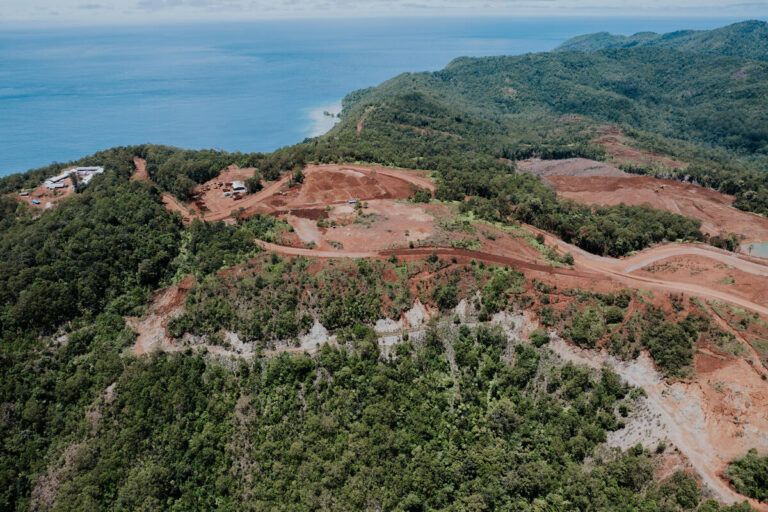
The dispute centers on the government’s June 2025 announcement regarding the cancellation of four major mining permits in Raja Ampat. The licenses in question involved significant land concessions: PT Kawai Sejahtera Mining (KSM) held 5,922 hectares on Kawei Island; PT Mulia Raymond Perkasa (MRP) held 2,193 hectares on Manyaifun Batang Pele Island; PT Anugerah Surya Pratama (ASP) held 1,173 hectares on Manuran Island; and PT Nurham held 3,000 hectares in the Yesner region of East Waigeo.
While the government did not revoke the license of PT Gag Nikel (GN), citing its long-standing operations since 1972, the four aforementioned companies faced immediate termination following findings from the Ministry of Environment and Forestry. The ministry alleged that these operations violated strict environmental regulations and intruded upon areas designated as part of the Raja Ampat Geopark, a region celebrated globally for its unparalleled marine biodiversity.
A Chronology of the Transparency Struggle
The quest for accountability began shortly after the government’s June 2025 announcement. The timeline of the dispute illustrates the friction between civil society’s demand for oversight and the government’s bureaucratic resistance:

- June 2025: Government officials, including the Minister of Energy and Mineral Resources, announce the revocation of four IUPs, citing environmental breaches and the protected status of the islands.
- July 2025: Greenpeace Indonesia formally requests access to the administrative documentation behind these revocations from the Ministry of Energy and Mineral Resources, which directs them to BKPM.
- Late 2025: Having received no substantive response from BKPM, Greenpeace files a formal request for information. Following further silence, the organization escalates the matter to the Central Information Commission (KIP).
- October 2025 – June 2026: The KIP conducts a series of evidentiary hearings.
- June 10, 2026: The KIP rules in favor of the public, declaring the revocation documents as public information. BKPM subsequently files an appeal to the Jakarta PTUN.
- September 14, 2026: The Jakarta PTUN rejects the BKPM’s appeal, reinforcing the KIP’s original ruling and ordering the ministry to pay court costs amounting to Rp419,000.
Environmental Imperatives and Legal Frameworks
The core of the environmental concern stems from the legal protection of small islands. Under Law No. 1/2014 regarding the Management of Coastal Areas and Small Islands, as reinforced by Constitutional Court Decision No. 35/PUU-XXI/2023, the Indonesian government has established a clear prohibition against mining activities on small islands—defined as those under 2,000 square kilometers.
As noted by the Minister of Environment in June 2025, the Raja Ampat islands, often described as the "last paradise," are geologically fragile and entirely incompatible with industrial-scale extraction. The environmental degradation caused by nickel mining—which involves clearing forests, altering topography, and risking heavy metal contamination in surrounding waters—poses a direct threat to the livelihoods of indigenous communities and local artisanal fishers.
Anggi Putra Prayoga, a Forest Campaigner at Greenpeace Indonesia, emphasized that the mere announcement of a license revocation is insufficient if it lacks transparency and accountability regarding the restoration process. "The revocation of an permit does not automatically erase the environmental damage left behind," said Prayoga. "We need to know the terms of the revocation, specifically whether these companies are legally obligated to conduct post-mining remediation."

Implications for Governance and Future Policy
The court’s decision carries profound implications for the management of natural resources across the Indonesian archipelago. By characterizing the administrative records of mining permits as public information, the ruling limits the ability of government agencies to hide behind claims of administrative secrecy. This is particularly vital for cases involving natural resource management, where public interest—and potential ecological catastrophe—is high.
The case also sets a precedent for how the government must handle the "documentation" of policy reversals. If a permit is canceled, the public has a right to verify that the cancellation is genuine, enforceable, and legally binding. Without access to these documents, stakeholders cannot monitor whether companies have ceased operations or if they have initiated the necessary land rehabilitation.
Furthermore, this ruling serves as a warning to other extractive industries operating in ecologically sensitive regions. As Indonesia shifts its focus toward nickel as a critical mineral for the global battery and electric vehicle supply chain, the demand for "green" and "ethical" mining will likely increase. This ruling suggests that the days of opaque licensing and unchecked industrial expansion on small, protected islands are under increasing judicial scrutiny.

The Path Forward
Following the PTUN verdict, all eyes are on the Ministry of Investment/BKPM to see if they will accept the court’s decision or attempt a further legal challenge at the Supreme Court (Kasasi). While the court acknowledged that parties may exercise their right to further legal remedies, the consensus among legal observers is that the foundation of the KIP and PTUN rulings is firmly rooted in the principles of the Public Information Disclosure Act.
For the residents of Raja Ampat, the victory is more than a legal technicality. It is a tool for empowerment. As the community continues to advocate for the permanent protection of their ancestral waters and forests, access to official data provides them with the evidence required to hold both the state and private corporations accountable.
Greenpeace Indonesia has reiterated its stance that the protection of Raja Ampat must be holistic, extending beyond the current mining crisis to include a comprehensive moratorium on any industrial activity that threatens the archipelago’s ecological integrity. As the legal dust settles, the administrative documents—once finally released—will provide the roadmap for the long-term restoration of the lands and waters affected by years of mining operations.

Ultimately, this case underscores the vital role of the judiciary in balancing economic development with environmental conservation. By prioritizing transparency, the courts have affirmed that the management of Indonesia’s natural heritage is not a closed-door business but a matter of national concern that requires the informed participation of its citizens. The outcome serves as a stark reminder that in the face of climate change and biodiversity loss, administrative secrecy is no longer a viable policy instrument for the modern state.

