
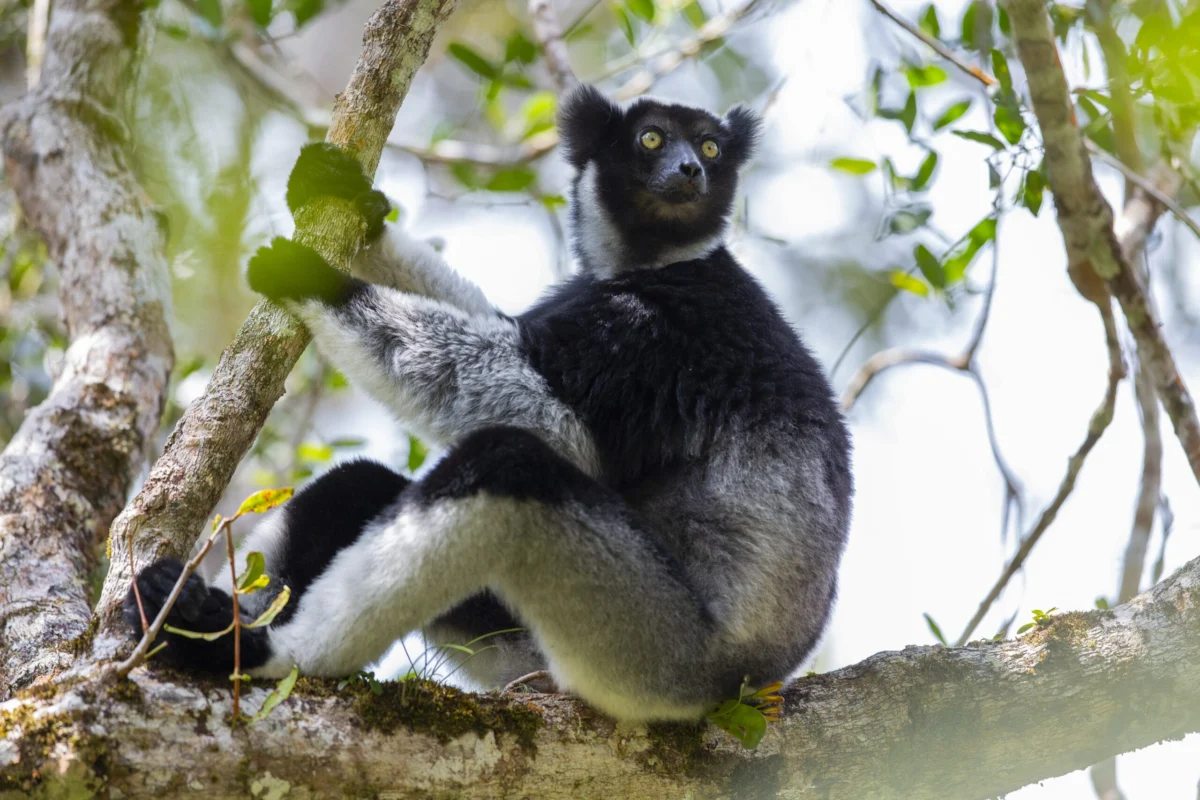
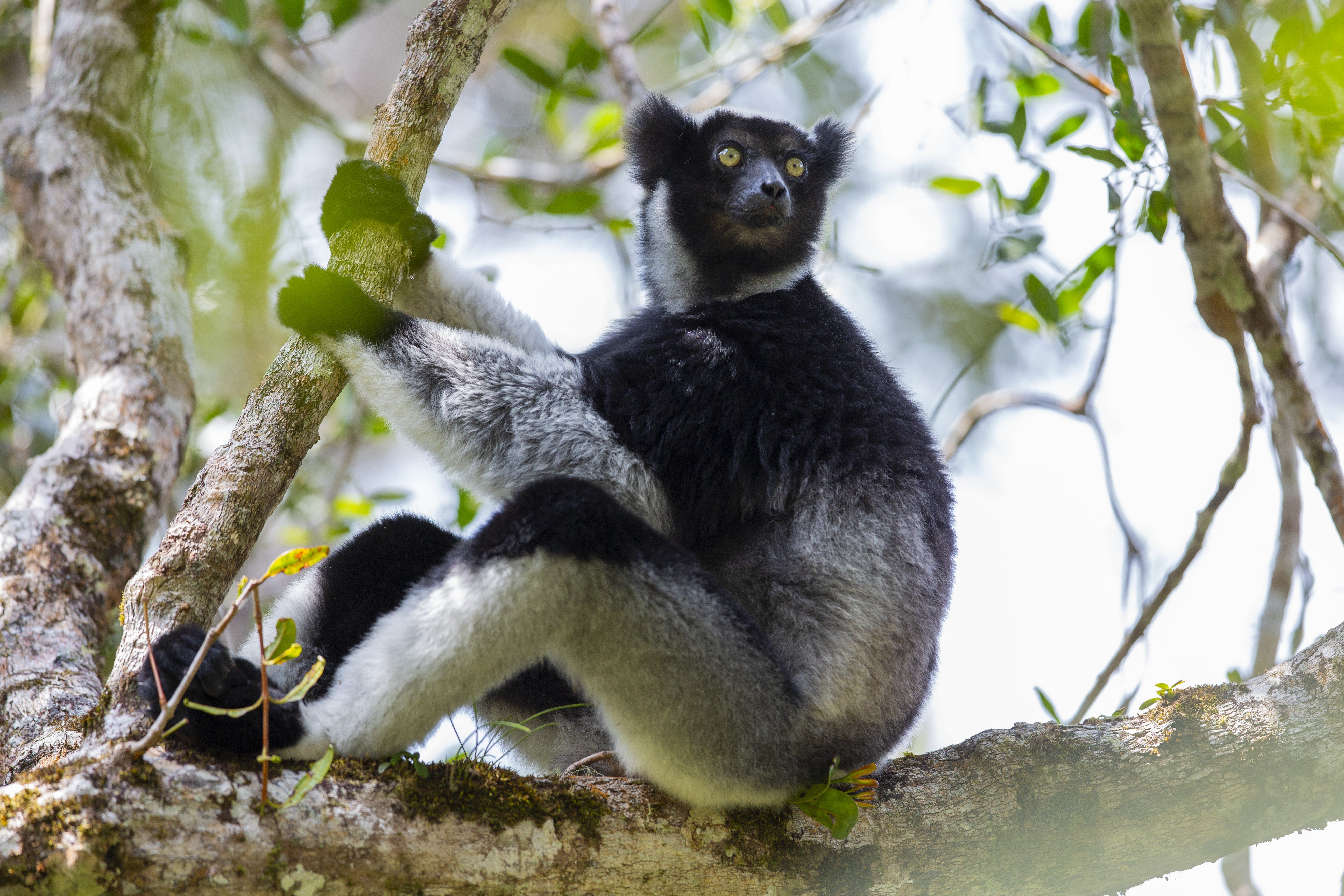
Deep within the lush, verdant canopy of Madagascar’s Maromizaha forest, a haunting, siren-like melody pierces the humid air. The source of this acoustic display is the indri (Indri indri), a charismatic primate that stands as the world’s only known singing lemur. While the indri has long been recognized for its complex vocalizations, new research published in the journal PLOS Computational Biology reveals that these primates utilize a sophisticated physiological strategy remarkably similar to that of professional human opera singers. By coordinating the width of their mouth opening with the pitch of their songs, these lemurs engage in a form of vocal optimization that allows their calls to traverse vast distances across the dense, light-absorbing rainforest.
The study, which synthesizes field audio with advanced markerless motion-tracking technology, offers a rare glimpse into the mechanics of animal communication. It suggests that the biological requirements for projecting sound through a complex environment may have driven the indri to independently evolve vocal techniques once thought to be unique to humans.
A Legacy of Vocal Complexity
The indri, the largest living lemur species, is endemic to the eastern rainforests of Madagascar. Unlike many other primates that rely on simple alarm calls or guttural grunts, the indri communicates through elaborate, long-distance songs. These vocalizations serve multiple critical functions: they solidify bonds between members of a cohesive social group, act as territorial markers to warn neighboring troops, and provide a medium for long-range communication in an environment where visual signals are easily obscured by dense foliage.
Historically, scientists have understood that these songs were complex, but the precise physical mechanisms facilitating such vocal control remained largely anecdotal. The recent study represents a paradigm shift, moving beyond audio analysis to examine the physical choreography behind the sound. By analyzing 83 video recordings of 19 wild indris, researchers were able to quantify exactly how the lemurs manipulate their vocal tracts to influence the acoustic properties of their songs.
The Science of Formant Tuning
In human opera, singers are trained to perform "formant tuning," a process where the singer adjusts the shape of their vocal tract—specifically the position of the jaw and the aperture of the mouth—to align the resonance of their vocal tract with the harmonics of the notes they are producing. This synchronization amplifies the sound, allowing an unamplified voice to carry over the massive resonance of an orchestra.
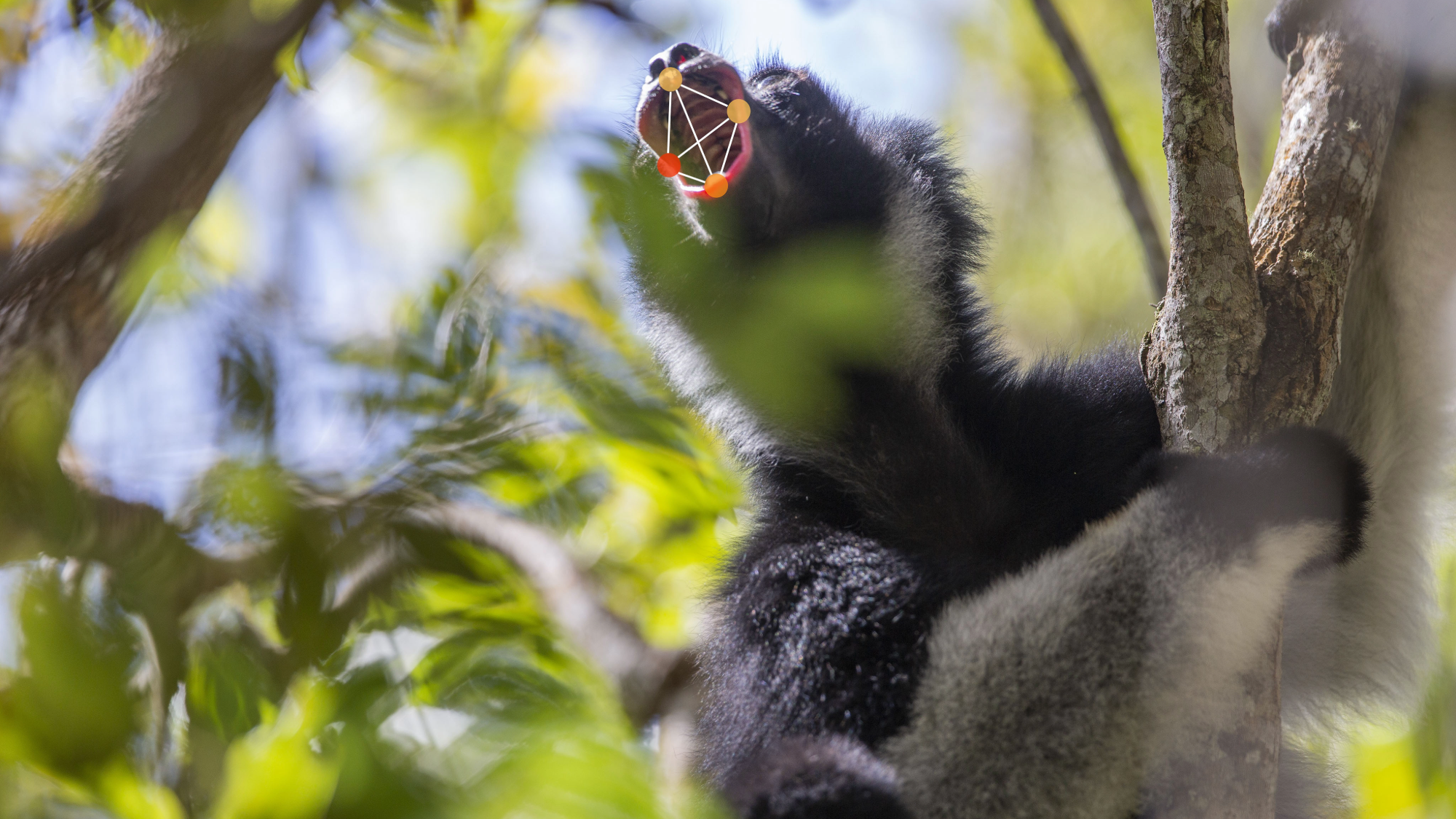
The research team, led by primatologist Chiara De Gregorio of the University of Warwick, discovered that indris perform a functional equivalent. When the lemurs transition to higher frequencies, they systematically open their mouths wider. This widening of the oral cavity appears to tune the vocal tract, ensuring that the energy of the sound is concentrated in the frequency range most effective for traveling through the rainforest.
"Every time the pitch of an indri’s song rose, we could see its mouth opening wider, frame by frame," De Gregorio noted in a press statement. "It is a level of fine-tuned coordination between voice and body that we typically associate with professional human singers, not a lemur in the canopy."
Methodology and Technical Innovation
The breakthrough was made possible by the application of markerless pose estimation software. This technology allowed the researchers to isolate and track the upper and lower lip positions of the lemurs in wild settings without the need for intrusive physical sensors or captive environments.
Filippo Carugati, a naturalist at the University of Turin and co-author of the study, emphasized the significance of this technological leap. By mapping the movement of the facial muscles against the recorded audio frequencies, the team could correlate specific anatomical adjustments with shifts in acoustic output. This data-driven approach removes the subjectivity of observation, providing a quantifiable timeline of how the indri’s vocal tract adapts in real-time. The study’s reliance on non-invasive field data ensures that the observed behaviors reflect natural, uncoerced vocalization patterns.

Convergent Evolution and Deep Time
One of the most compelling aspects of the findings is the timeline of evolutionary development. Humans and indris diverged from a common ancestor approximately 74 million years ago. Despite this vast evolutionary chasm, both species have developed similar physiological solutions to the problem of long-distance vocal projection.
This is a classic example of convergent evolution—a process in which unrelated species independently evolve similar traits as a result of having to adapt to similar environmental pressures. For both the human opera singer in an auditorium and the indri in a tropical forest, the challenge is the same: how to make a sound resonant enough to be heard clearly over a distance. The fact that the indri has arrived at a "technique" so similar to human vocal training suggests that the physics of sound production imposes rigid constraints on how vocalizing animals must move their bodies to achieve maximum acoustic efficiency.
Broader Implications for Primatology
The implications of this research extend beyond the study of a single species. It challenges the anthropocentric view that complex vocal control is an exclusively human trait. By demonstrating that such sophisticated motor-vocal coordination exists in a prosimian primate, the findings invite researchers to re-examine the vocal capabilities of other singing animals, such as gibbons or cetaceans.
Furthermore, this study highlights the importance of preserving the natural habitats of the indri. As the Maromizaha forest faces ongoing threats from deforestation and climate change, the ability of these lemurs to communicate effectively becomes increasingly precarious. If environmental factors interfere with the acoustics of the forest, the social cohesion of indri troops—which relies on the integrity of their songs—could be significantly compromised.
Looking Ahead: The Future of Vocal Research
The research team plans to expand their work by investigating whether individual indris have unique "singing styles" or if these vocal techniques are strictly uniform across the species. Additionally, the integration of AI-driven acoustic analysis could allow for a deeper understanding of how the songs are structured, potentially identifying specific vocal "markers" that define individual identity or social status within a group.
As the scientific community continues to explore the intersections of biology, physics, and behavior, the indri remains a vital subject of study. Their songs are not merely biological noise; they are a complex, evolved language of survival that echoes a fundamental principle of acoustic engineering. By bridging the gap between the opera house and the rainforest, the indri has provided researchers with a unique lens through which to view the evolution of sound and the remarkable adaptability of the mammalian vocal tract.
The study confirms that whether in the high-stakes environment of a grand theater or the high-stakes survival of the Madagascar wilderness, the laws of acoustics remain constant. The indri’s performance is not just a display of endurance, but a masterful application of biomechanics that continues to intrigue evolutionary biologists and linguists alike. Future studies will undoubtedly continue to peel back the layers of this fascinating primate, potentially uncovering even more parallels between the vocal arts of humans and the natural world.

