
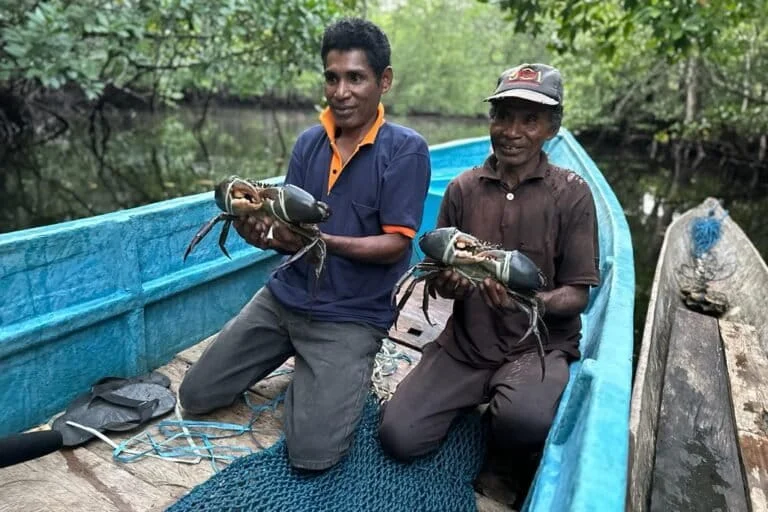
The Aru Archipelago, a sprawling cluster of islands located in the Maluku province of Indonesia, serves as a critical bastion of biodiversity and a cradle for indigenous culture. Stretching across the Arafura Sea, this region is characterized by its pristine tropical rainforests, vast mangrove ecosystems, and intricate marine networks. For the indigenous communities residing here, these natural assets are not merely economic resources; they are the bedrock of their social, spiritual, and physical existence. However, the region currently faces a complex struggle as the push for large-scale industrial development—ranging from timber extraction to expansive agribusiness—collides with traditional conservation methods that have sustained these islands for centuries.
The Foundation of Indigenous Conservation: The Sasi System
At the heart of Aru’s environmental management is sasi, an ancient customary law that regulates the extraction of natural resources. The sasi system acts as a communal moratorium, prohibiting the harvesting of specific forest products or marine life within designated zones for a set period. This practice allows ecosystems to undergo natural regeneration, ensuring that fish populations, crabs, sea cucumbers, and seaweed stocks remain resilient against overexploitation.
The decision to lift a sasi is never unilateral; it is a collective agreement reached once the community determines that the ecosystem has sufficiently recovered. This cyclical approach to resource management is fundamentally rooted in the principle of intergenerational equity. By limiting current consumption, the people of Aru ensure that their descendants inherit a functioning, productive landscape rather than a degraded environment.
The Ecological Vulnerability of Aru
Geographically, Aru is highly sensitive to ecological disruption. As a collection of small, interconnected islands, the stability of the archipelago relies on the health of its forest cover and mangrove belts. The forests are essential for water retention and filtration, providing the primary freshwater supply for the islanders. Conversely, the mangroves act as a natural buffer against coastal erosion and serve as the critical nursery for the rich marine life of the Arafura Sea.
Scientific assessments of the region have consistently highlighted that the destruction of these forests leads to immediate water scarcity and disrupts the marine food chain. Given that the Arafura Sea is one of Indonesia’s most productive fishing grounds, any inland environmental degradation directly threatens the food security and economic viability of the entire coastal population.
The Save Aru Movement and the Philosophy of Sita Kaka Walike
The threat to Aru’s ecosystem intensified significantly in the early 2010s, when large-scale plans for industrial logging, massive palm oil plantations, and extensive cattle farming were proposed by private entities. These projects threatened to convert hundreds of thousands of hectares of primary forest into monoculture estates. In response, the indigenous people of Aru launched the "Save Aru" movement, a grassroots resistance campaign that garnered national and international attention.
The resilience of the Save Aru movement is underpinned by the local philosophy of Sita Kaka Walike. This cultural doctrine asserts that all people of Aru are interconnected, functioning as a single family unit. This collective identity allowed the communities to form a unified front against industrial incursions, transcending village boundaries to protect their shared ancestral domain.
Chronology of Conflict and Resistance
The tension in Aru did not emerge overnight; it is the culmination of years of administrative and economic pressure:

- 2010–2012: Initial concessions for massive industrial projects were granted by local authorities, triggering deep concern among indigenous leaders regarding the potential displacement and destruction of traditional lands.
- 2013: The Save Aru movement officially gained momentum as residents began occupying local government offices, demanding the revocation of permits issued to private logging and plantation firms.
- 2014: Due to intense public pressure and the mobilization of civil society, the Ministry of Forestry and the regional government faced significant scrutiny. This led to a temporary freeze on new industrial permits in the region.
- 2015–Present: While major industrial projects were stalled, the region remains in a state of "cautious equilibrium." Communities continue to advocate for formal legal recognition of their customary forest rights (Hutan Adat) to prevent future encroachment.
Supporting Data and Environmental Impact
Forest Watch Indonesia (FWI) has conducted several studies on the status of Aru’s forests. Their data indicates that the archipelago remains one of the largest remaining contiguous forest blocks in Indonesia. However, the rate of fragmentation has accelerated near proposed development corridors.
According to data from the Ministry of Environment and Forestry (KLHK), the Aru Islands are home to several endemic species, including the Aru bird of paradise and various marsupials that are found nowhere else in the world. The conversion of these forests would lead to an irreversible loss of biodiversity. Furthermore, the carbon sequestration potential of the Aru mangroves and peatlands is significant; their destruction would release substantial amounts of stored carbon, directly contradicting Indonesia’s national climate commitment to reduce greenhouse gas emissions under the Paris Agreement.
Perspectives from the Frontline: A Call for Sustainability
In discussions regarding the future of the archipelago, leaders such as Mika Ganobal, the current Head of Aru Utara Timur District, emphasize the distinction between short-term industrial gain and long-term sustainability. Ganobal and other local leaders argue that the "development" proposed by external entities often overlooks the economic value of healthy ecosystems.
"We are not against development," Ganobal has noted in policy forums, "but we are against development that leaves us with nothing but scars."
Mufti Ode, while serving as the Executive Director of Forest Watch Indonesia, has frequently highlighted that the case of Aru represents a broader national struggle. The core issue is whether Indonesia chooses to prioritize extractive industries or empower community-based management. Ode emphasizes that the wisdom of the sasi system provides a blueprint for what global conservationists now call "Nature-based Solutions." By empowering the indigenous people to act as stewards, the state can achieve environmental protection at a fraction of the cost required for top-down enforcement.
Broader Implications: Mata Air vs. Air Mata
The narrative of the Aru Islands has become a microcosm for the global debate on sustainable development. The catchphrase, "inheriting mata air (springs/water sources), not air mata (tears)," serves as a poignant reminder of the stakes involved. If the "springs" are protected, the community flourishes; if the environment is destroyed, the result is only the "tears" of future generations who will inherit a barren, polluted, and impoverished land.
The implications of the Aru experience extend beyond the borders of Indonesia. It challenges the conventional economic model that treats natural capital as an infinite resource to be liquidated. Instead, the Aru model demonstrates that economic security can be derived from ecosystem services—provided the ecosystem remains intact.
Policy Recommendations and Path Forward
For the Aru Archipelago to remain a bastion of resilience, several policy shifts are necessary:
- Legal Recognition of Customary Land Rights: The state must expedite the formal recognition of indigenous land titles. This provides the most robust legal defense against arbitrary land grabbing by private corporations.
- Community-Led Conservation Initiatives: Future development plans must be co-designed with indigenous leaders. This ensures that any economic activities are compatible with traditional sasi zones and seasonal cycles.
- Strengthened Ecological Monitoring: The government should provide the necessary resources for local communities to conduct their own monitoring and reporting of environmental quality, leveraging local knowledge alongside modern mapping technology.
- Inclusive Economic Alternatives: Support for sustainable livelihoods—such as eco-tourism, sustainable harvesting of non-timber forest products, and community-managed fisheries—should replace the push for large-scale, high-impact industrial projects.
The story of Aru is far from over. As Indonesia continues to navigate its path toward becoming a global economic power, the Aru Islands remain a litmus test for the country’s commitment to sustainability. The solidarity shown by the people of Aru, rooted in their ancient philosophy of Sita Kaka Walike, remains the most potent tool in their arsenal. By respecting this wisdom, policymakers have the opportunity to transform a potential site of environmental tragedy into a global model of indigenous-led conservation and sustainable development. The future of Aru depends not just on the decisions made in Jakarta, but on the continued vigilance of a people who understand that they do not own the land—they are merely borrowing it from their children.

