
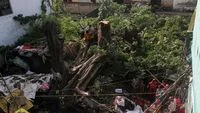
The South Asian subcontinent is grappling with a severe humanitarian crisis as unrelenting torrential rains, fueled by intense storm systems, have unleashed widespread devastation across northern India and Nepal. The dual-pronged disaster, characterized by massive flash floods and devastating landslides, has resulted in a significant loss of life and widespread infrastructure failure. As of Sunday, September 27, 2026, official reports confirm at least 56 fatalities in India, while authorities in Nepal have recorded 14 deaths, with at least 11 individuals still listed as missing. The catastrophe has displaced thousands, severed critical supply lines, and plunged major regions into darkness as power grids succumb to the deluge.
The Meteorological Context and Escalating Rainfall
The intensity of the current weather event has caught regional meteorologists off guard, particularly in India’s most populous state, Uttar Pradesh. According to Hrishikesh Bhaskar Yashod, the Commissioner of Disaster Management for Uttar Pradesh, the region experienced an unprecedented rainfall volume between September 25 and the morning of September 27. Data shows that the state received approximately 66.5 millimeters of rain during this 48-hour window, a staggering figure compared to the historical average of 7.6 millimeters for the same timeframe. This anomaly represents nearly nine times the expected precipitation, overwhelming existing drainage systems and triggering a rapid rise in water levels across major river basins.
In Nepal, the National Disaster Risk Reduction and Management Authority (NDRRMA) has issued emergency alerts for 49 out of the country’s 77 administrative districts. The hydrological situation is critical, as the discharge rates of major rivers—including the Kosi, Gandak, and Bagmati—have surged past danger thresholds. Shanti Mahat, a spokesperson for the NDRRMA, emphasized that the situation remains fluid, with the potential for further flash flooding as runoff from higher elevations continues to feed into lowland river systems.
A Chronology of the Disaster
The current crisis follows a period of extreme vulnerability in the Himalayan region. While the most recent fatalities occurred over the weekend, the roots of the current devastation lie in a sustained period of heavy monsoon-like activity that has persisted throughout September.
On September 25, the initial wave of heavy rain began inundating the Terai plains of Nepal and the northern plains of India. By the morning of September 26, local authorities in Uttar Pradesh and Bihar began reporting the first instances of house collapses and mudslides. As the rain intensified overnight into September 27, the situation deteriorated rapidly.
In a tragic incident separate from the widespread flooding, a massive avalanche struck a base camp on Mount Himlung Himal in the Manang district of northern Nepal. The avalanche, triggered by the severe weather, buried 10 local workers who were in the process of establishing infrastructure for an upcoming climbing season. While no international climbers were reported to be at the site, the incident highlights the secondary risks posed by the storm in high-altitude terrains, where snowpack instability often follows heavy rainfall.
Infrastructure Collapse and Energy Crisis
The impact of the storms extends far beyond the immediate loss of life, causing a systemic breakdown of critical infrastructure. In Nepal, the Ministry of Energy has reported a total blackout in the districts of Manang, Mustang, Myagdi, and Baglung. The loss of electricity has crippled rescue efforts and hampered the ability of local hospitals to provide emergency care.
Of particular concern is the damage sustained by the nation’s energy sector. Minister of Sumber Daya Air and Energi, Biraj Bhakta Shrestha, confirmed that the flooding of the Rahuganga River has severely damaged the transmission towers of a 40-megawatt hydroelectric power plant. Such projects are the backbone of Nepal’s energy independence, and their destruction poses long-term economic challenges for the mountainous nation.
Telecommunications have also suffered. Minister of Communications Bikram Timilsinha reported that the destruction of fiber-optic cables and the loss of power to cell towers have created "communication black holes" in several remote districts. This isolation makes it increasingly difficult for the central government in Kathmandu to coordinate disaster relief and assess the full scale of the destruction.
Regional Vulnerability and Historical Context
The current tragedy is compounded by the memory of recent disasters. Shanti Mahat noted that regions such as Rasuwa and Nuwakot, which are currently on high alert, were previously devastated by flooding last month. That earlier event was historically significant, resulting in over 1,450 deaths and leaving thousands missing. While those regions are not currently categorized as being at the highest risk compared to other districts, the collective trauma of the population and the compromised state of the land—already saturated from previous rainfall—leaves them exceptionally vulnerable to even moderate further precipitation.
In India, the Central Water Commission (CWC) is monitoring 30 river gauging stations that have officially entered "severe" status. The rivers Gangga, Gandak, Kosi, Bagmati, and Narmada are all reported to be flowing well above their danger levels. This creates a cascading risk for low-lying areas, where the embankments are being tested by the relentless pressure of rising water.
Government Response and Mitigation Efforts
Both the Indian and Nepalese governments have mobilized military and civil defense forces to conduct search and rescue operations. In India, state governments have been directed to prioritize the evacuation of citizens from inundated zones and to establish temporary shelters equipped with food, water, and medical supplies.
The Uttar Pradesh government has moved to address the economic fallout for the agricultural sector, which has been hit hard by the premature destruction of crops. Officials have been ordered to conduct a comprehensive assessment of damaged farmlands to facilitate the distribution of financial compensation to affected farmers. This is a critical step, as the region’s economy is heavily reliant on small-scale agriculture, and the loss of a harvest can lead to long-term food insecurity and poverty.
In Nepal, the government is focusing on stabilizing communication lines and restoring power to the most affected districts. The NDRRMA is coordinating with international aid agencies to ensure that medical supplies and clean water are distributed to areas currently cut off by road damage and landslides.
Analysis: Climate Change and Future Implications
The frequency and intensity of these weather events have prompted a renewed debate regarding the impact of climate change on the Himalayan ecosystem. Scientists have long warned that rising global temperatures would lead to more volatile monsoon seasons, characterized by shorter, more intense bursts of rainfall. This pattern makes traditional flood-prevention infrastructure—such as levees and dams designed based on older historical data—increasingly obsolete.
The humanitarian implications are profound. As the region becomes more susceptible to "compound disasters"—where a flood, followed by a landslide, followed by a power outage occurs in quick succession—the capacity for local governments to respond is consistently stretched to the breaking point. The loss of 1,000 homes in India and the destruction of critical power generation facilities in Nepal underscore the need for a shift in disaster management strategy. Future efforts will likely need to focus on "climate-resilient infrastructure," which includes building further away from river floodplains and investing in decentralized renewable energy systems that are less susceptible to large-scale grid failures.
As the rescue operations continue and the waters slowly begin to recede, the immediate priority remains the recovery of the missing and the stabilization of the affected populations. However, the tragedy in India and Nepal serves as a stark reminder of the mounting human cost of climate instability in the 21st century. The path to recovery will be long, requiring not only immediate relief but a sustained commitment to rebuilding in a way that accounts for the increasingly unpredictable nature of the regional climate.

