
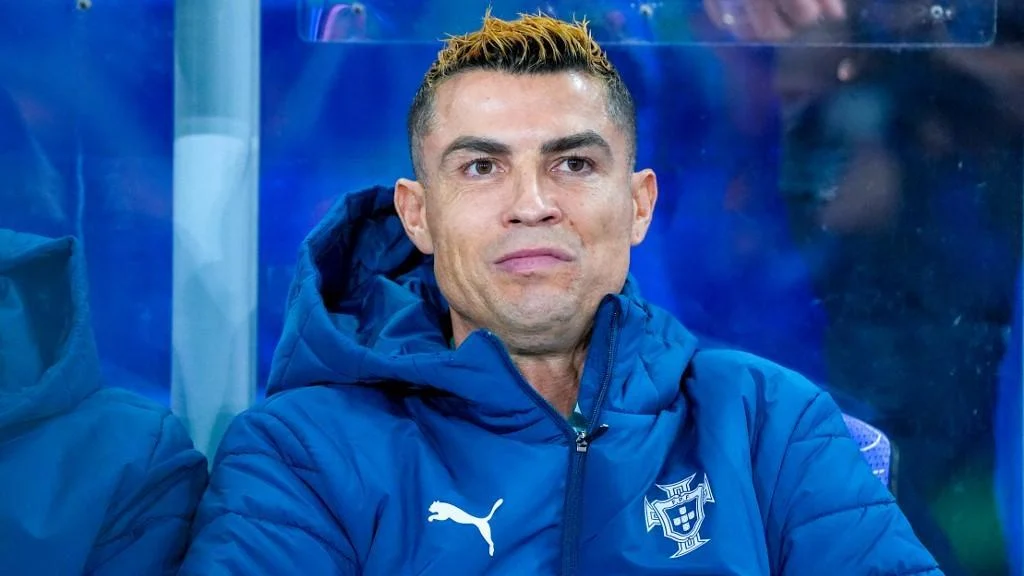
Oslo — The UEFA Nations League group stage delivered a high-stakes encounter as Portugal traveled to the Norwegian capital to face a formidable home side at the Ullevaal Stadium. In a tactical masterclass orchestrated by head coach Jorge Jesus, the Seleção das Quinas secured a hard-fought 2-1 victory over Norway on Monday, September 28, 2026. However, the pre-match headlines and post-match discussions were overwhelmingly dominated by a single, historic decision: the exclusion of veteran captain Cristiano Ronaldo from the starting line-up.
For the first time in nearly two decades, the iconic forward watched an entire international fixture from the substitutes’ bench, marking a rare milestone in a storied international career spanning over twenty years. Despite the absence of their talisman on the pitch, Portugal executed a disciplined game plan that ultimately neutralized a potent Norwegian attack anchored by Erling Haaland, lifting the visitors to a crucial three points in Group D of Europe’s premier international tournament.
Pre-Match Anticipation and Strategic Overhaul
The buildup to the matchday two fixture had generated immense excitement across European football. Broadcasters, pundits, and fans anticipated a marquee individual duel between two generations of elite goalscorers: the evergreen Cristiano Ronaldo, remarkably still playing at the highest level at 41 years old, and Manchester City’s prolific Norwegian striker, Erling Haaland. Ticket sales surged, and global media outlets framed the fixture as a generational clash.
However, Jorge Jesus had alternative priorities. Recognizing the physical demands of modern international football and the rigorous scheduling of the UEFA Nations League, the Portuguese tactician opted for a strategic rotation. Ronaldo was left out of the starting eleven, with Jesus choosing to partner Benfica forward Gonçalo Ramos alongside creative playmaker João Félix in the attacking third.
This tactical adjustment immediately altered Portugal’s dynamic on the pitch. Félix operated in a floating role behind Ramos, designed to exploit the spaces between Norway’s defensive and midfield blocks. The decision proved to be an instant vindication of Jesus’s tactical acumen, as the reconfiguration unlocked the Norwegian defense and provided Portugal with sustained offensive fluidity throughout the first half.
Chronology of the Match: How Portugal Overcame Norway
The match commenced at a ferocious pace, with both sides pressing high to assert early dominance. Norway, roared on by a capacity crowd at the Ullevaal Stadium, sought to utilize Haaland’s physical presence to disrupt Portugal’s backline. Yet, it was the visitors who struck first.
In the opening half, João Félix capitalized on defensive disorganization within the Norwegian ranks. Receiving the ball in a dangerous area, the forward unleashed a precise effort that beat the home team’s goalkeeper, putting Portugal 1-0 ahead and silencing the partisan crowd. The goal underscored the effectiveness of Jesus’s revamped frontline, with Félix seamlessly stepping into the creative focal point usually occupied or heavily influenced by Ronaldo.
Entering the second half with a slender lead, Portugal anticipated a fierce tactical response from the hosts. That reaction materialized swiftly. Just minutes after the interval, Erling Haaland demonstrated his world-class poaching ability. Capitalizing on a momentary lapse in concentration within the Portuguese penalty area, the towering striker latched onto a loose ball and drove it home, leveling the score at 1-1 and reigniting Norwegian hopes.
The equalizer forced Portugal to respond, and the visitors did not hesitate to press for a winner. In the 59th minute, Gonçalo Ramos rewarded his coach’s faith by finding the back of the net, restoring Portugal’s lead at 2-1. Ramos briefly thought he had secured a brace moments later when he struck again, but the goal was subsequently disallowed following a Video Assistant Referee (VAR) review, which flagged a narrow offside infraction in the buildup.
Despite the disallowed goal, Portugal maintained structural discipline. As the match entered its closing stages, Norway threw numbers forward in search of a second equalizer, leaving vast spaces on the counterattack. Jorge Jesus made several tactical substitutions to shore up the midfield and defense, but notably, Cristiano Ronaldo remained seated on the bench for the duration of the ninety minutes. When the referee blew the final whistle, the scoreboard confirmed a vital 2-1 away victory for the visitors.
A Rare Historical Milestone for Ronaldo
The decision to keep Ronaldo on the bench for the entirety of the match holds profound historical significance. Prior to this encounter in Oslo, Ronaldo had been a fixture of Portugal’s starting line-up for nearly two decades, rarely missing competitive minutes unless sidelined by injury or suspension.
Statistical records indicate that this fixture marked the first time in 18 years that Ronaldo watched an entire competitive international match from the substitutes’ bench without entering the field of play. The last time a fully fit Ronaldo was completely unused by a Portugal manager in a competitive fixture dates back to the UEFA Euro 2008 group stage, when the team faced Switzerland on matchday three under coach Luiz Felipe Scolari—a tournament phase where Portugal had already secured qualification.
Consequently, the much-anticipated on-field confrontation between Ronaldo and Erling Haaland never materialized, leaving supporters disappointed regarding the personal duel, though undoubtedly satisfied with the team’s collective result.
The Managerial Rationale: Physical Management and Squad Depth
In the post-match press conference, Jorge Jesus directly addressed the intense media scrutiny surrounding his decision to bench the national team captain. Speaking to the prominent Portuguese sports publication A Bola, Jesus explained that the omission was purely a matter of sports science, workload management, and physical preservation.
"Today is the third day [since the previous match]," Jesus explained. "In Alvalade, Cris played almost 70 minutes, and I felt that today he could not play two consecutive games [as a starter]."
Portugal had faced Wales just days prior in their opening fixture of the international break, a match in which Ronaldo started and exerted considerable energy before being substituted. Given his age and the physical intensity required in elite international competition, Jesus emphasized that modern squad rotation is non-negotiable, even for legendary figures.
"We want Ronaldo in these four matches, with more or less playing minutes, but we want him on the pitch," Jesus added, signaling that the veteran forward remains a central pillar of his long-term tactical blueprint, provided his physical load is managed judiciously across congested international windows.
Broader Implications for Portugal’s UEFA Nations League Campaign
This victory carries significant strategic weight for Portugal’s campaign in Group D of the UEFA Nations League. Collecting three points away from home against a direct rival like Norway solidifies the team’s standing at the top of the group table and reinforces their status as strong contenders to advance to the knockout rounds.
More broadly, the match demonstrated that Portugal’s tactical evolution under Jorge Jesus is moving toward greater tactical flexibility. By successfully securing a high-pressure away victory without relying on Ronaldo for the full ninety minutes, the coaching staff has demonstrated viable squad depth. The performance of younger forwards such as Gonçalo Ramos and João Félix signals that the national team possesses the attacking resources necessary to transition smoothly into future phases of international competition.
As the UEFA Nations League group stage progresses, the management of veteran assets like Cristiano Ronaldo will undoubtedly remain a focal point for the technical staff. Balancing the immense commercial and sporting value of their captain with the physiological realities of an elite 41-year-old athlete will dictate Portugal’s strategy as they pursue further continental glory.

