
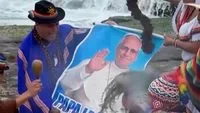
On Sunday, November 8, a contingent of traditional Andean shamans gathered on the outskirts of Lima, Peru, to perform a series of ancestral rituals aimed at ensuring the health and safety of Pope Leo XIV during his forthcoming apostolic journey to South America. Dressed in vibrant, hand-woven ponchos and traditional Andean shawls, the spiritual practitioners arranged symbolic offerings, including coca leaves, floral arrangements, and local amulets, before a large-scale portrait of the pontiff. This ceremony, which blends indigenous spiritual heritage with modern geopolitical events, marks the commencement of a week of intense preparation across the Peruvian capital as the nation anticipates the arrival of the head of the Roman Catholic Church.
The Apostolic Itinerary: A South American Pilgrimage
The apostolic journey of Pope Leo XIV is a multi-national endeavor, reflecting the Vatican’s strategic focus on Latin America—a region that remains home to a significant percentage of the world’s Catholic population. According to the official Vatican schedule, the Pope is slated to arrive in Lima on Wednesday, November 11. This leg of the journey follows high-profile visits to Uruguay and Argentina, two nations where the Church has been navigating complex social and political landscapes.
The visit to Peru is not merely a diplomatic stopover; it is viewed by observers as a pivotal moment for the Church in the Andean region. The Pope’s itinerary includes meetings with state officials, interfaith dialogues, and mass public liturgies intended to address themes of social inequality, environmental stewardship, and the preservation of indigenous cultural rights. The arrival in Lima will be the culmination of a rigorous travel schedule, requiring significant logistical coordination between the Holy See and the Peruvian government.
The Ritual: Cultural Syncretism in the Andes
The ritual performed on Sunday is a testament to the enduring influence of Andean cosmology in contemporary Peruvian society. While Peru is officially a predominantly Catholic nation, the cultural fabric remains deeply intertwined with pre-Columbian traditions. The shamans, often referred to as "curanderos" or healers, serve as intermediaries between the physical and spiritual realms.
In their ceremony, the shamans utilized a "mesa"—a traditional altar containing sacred objects—to channel energy for the Pope’s protection. The use of coca leaves, which hold deep ceremonial significance in the Andes, was central to the petition. "We are asking the spirits of the mountains, the Apus, to guide his path and keep his health resilient," stated one of the lead practitioners during the proceedings. This practice highlights the unique religious syncretism of the region, where ancestral rites and Christian devotion frequently coexist in the public sphere, often with the tacit acceptance of local ecclesiastical authorities who recognize these customs as integral to the Peruvian identity.
Chronology of the Papal Visit
The planning for this visit has been underway for several months, involving intensive diplomatic channels. The following timeline outlines the key phases of the apostolic journey:
- Early October: Initial security and logistical surveys conducted by the Swiss Guard and the Peruvian National Police in Lima.
- November 6: Departure from Vatican City.
- November 7–8: State visit to Uruguay, focusing on dialogue with local government officials regarding regional economic stability.
- November 9–10: Apostolic activities in Argentina, centering on humanitarian outreach and youth engagement.
- November 11: Scheduled arrival at Jorge Chávez International Airport in Lima, followed by a formal welcome ceremony at the Government Palace.
- November 12–14: Main events in Lima, including an outdoor Mass and meetings with representatives of indigenous communities.
Supporting Data and Demographic Context
The significance of this visit can be measured by the demographic landscape of the region. Peru is home to approximately 33 million people, with over 75% of the population identifying as Catholic. However, recent census data from the Peruvian National Institute of Statistics and Informatics (INEI) indicates a slow but steady increase in secularism and the growth of evangelical denominations.
The Vatican’s strategic focus on Peru, therefore, serves a dual purpose: to reinforce the faith of the existing Catholic demographic and to address the challenges posed by a diversifying religious landscape. Furthermore, economic indicators suggest that the Pope’s visit comes at a time of political fluidity in Peru. The Church maintains a unique position as a mediator in national crises, and the Pope’s presence is expected to provide a platform for discussions on national reconciliation and the alleviation of poverty, which affects roughly 25% of the Peruvian population.
Official Responses and Security Preparations
The Peruvian government has mobilized significant resources to ensure the success of the apostolic journey. The Ministry of the Interior has announced a state-wide security protocol involving over 15,000 police officers tasked with managing crowds and securing the Pope’s transit routes.
Government spokesperson Maria Elena Vargas stated, "The arrival of Pope Leo XIV is a matter of national importance. We are collaborating closely with the Holy See to ensure that the events remain safe, orderly, and respectful of the dignity of the office. We welcome all expressions of support, including those from our traditional spiritual communities, provided they comply with public safety regulations."
From the ecclesiastical side, the Archdiocese of Lima has expressed gratitude for the prayers offered by the various segments of society. While the Church maintains a clear distinction between formal liturgy and indigenous folk rituals, local bishops have historically shown an openness to the cultural expressions of the Andean people, viewing them as a manifestation of the nation’s spiritual fervor.
Broader Impact and Geopolitical Implications
The arrival of Pope Leo XIV carries significant weight in the context of Latin American geopolitics. The Vatican’s "soft power" remains an essential component of regional diplomacy. By visiting Uruguay, Argentina, and Peru in succession, the Pope is effectively signaling the Church’s commitment to addressing the specific vulnerabilities of the "Southern Cone" and the Andean nations.
One of the primary implications of this trip is the focus on "Integral Ecology," a concept championed by the Pope that links environmental conservation with social justice. Given that the Amazon basin and the Andean highlands are currently facing unprecedented ecological pressures, the Pope’s visit is expected to catalyze conversations about sustainable development and the rights of indigenous populations to their ancestral lands.
Moreover, the ritual conducted by the shamans reflects a growing global interest in the role of indigenous wisdom in addressing contemporary crises. By positioning the Pope within this indigenous context, the shamans are symbolically linking the global Church with the local, earth-centered spirituality of the Andes. This intersection is expected to be a recurring theme throughout the week, as the Pope is anticipated to address the importance of "listening to the periphery"—a recurring motif in his papacy that advocates for the inclusion of marginalized voices in the decision-making processes of the global Church.
Future Outlook and Closing Remarks
As the countdown to Wednesday’s arrival continues, the atmosphere in Lima is one of cautious anticipation. The municipal government has begun decorating the city’s major arteries, and local parishes are finalizing preparations for the massive influx of pilgrims expected to descend upon the capital.
While the ritual performed by the shamans on Sunday is distinct from the official Vatican proceedings, it serves as a powerful reminder of the deep-seated cultural traditions that define the Peruvian experience. Whether or not these rituals have a tangible effect on the pontiff’s itinerary, they are undeniably a part of the vibrant tapestry that greets the Pope upon his arrival.
As Pope Leo XIV concludes his tenure in Argentina and prepares for the final leg of his South American mission, the eyes of the world remain fixed on Lima. The success of this visit will be measured not only by the efficiency of the logistics or the size of the crowds but by the depth of the dialogue that unfolds between the Vatican and the diverse, resilient people of Peru. For many, the visit represents a rare moment of unity in a nation often defined by its political fragmentation, offering a temporary reprieve and a focus on the shared values of hope, faith, and common humanity.
In the coming days, as the Pope moves through the streets of Lima, he will be met by a populace that—whether through the lens of Catholic dogma or the ancient traditions of the Andes—is united in the belief that this visit marks a significant turning point for the nation’s social and spiritual future. The journey of Pope Leo XIV, characterized by its focus on the marginalized and the environment, appears perfectly aligned with the needs and aspirations of the Peruvian people, setting the stage for what many expect to be a historic and transformative apostolic visit.

