
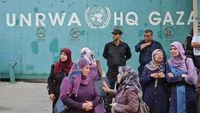
United Nations Secretary-General Antonio Guterres has issued a robust defense of the United Nations Relief and Works Agency for Palestine Refugees in the Near East (UNRWA), explicitly calling for the international community to safeguard the agency’s financial stability. Amidst a deepening humanitarian crisis in Gaza and the occupied Palestinian territories, the UN chief underscored that any reduction in funding for the organization would have catastrophic consequences for millions of Palestinian refugees who rely on the agency for basic survival, education, and healthcare.
The reaffirmation of support, delivered by UN spokesperson Stephane Dujarric on Friday, comes as the agency faces an unprecedented financial squeeze, grappling with an $80 million cash-flow deficit. This funding gap threatens the continuity of essential services that have been the backbone of Palestinian refugee life for over seven decades.
A Crisis of Funding and Operations
The financial plight of UNRWA is not a new development, but it has reached a critical inflection point. On Thursday, November 5, the agency released an urgent statement detailing the severity of its fiscal situation. The $80 million shortfall represents more than a mere accounting discrepancy; it signifies a potential collapse in the delivery of food aid, medical supplies, and educational infrastructure.
UNRWA’s operational capacity has been stretched to its absolute limit. In its statement, the agency noted that “increasingly restrictive operational conditions” have compromised its ability to fulfill its mandate. The agency is currently struggling to maintain a delicate balance between its recurring financial obligations—which include salaries for thousands of teachers, doctors, and logistics staff—and the soaring demand for emergency relief in conflict-stricken areas.
The Secretary-General’s directive to member states is clear: UNRWA’s work is indispensable and must be fully funded to prevent a total humanitarian collapse. Dujarric emphasized that Guterres is fully committed to defending the agency’s fundamental role, noting that the international community has a moral and political imperative to ensure that the services provided by UNRWA remain uninterrupted.
Historical Context and Geopolitical Pressures
The current crisis facing UNRWA is inextricably linked to the broader, volatile geopolitical landscape of the Middle East. Since its establishment in 1949, UNRWA has served as the primary provider of health, education, and social services for registered Palestinian refugees in Gaza, the West Bank, Jordan, Lebanon, and Syria.
In recent years, the agency has faced mounting challenges from the Israeli government, which has frequently accused the agency of institutional bias and political partiality. These tensions have manifested in legal, administrative, and practical hurdles that have hindered the agency’s ability to operate effectively. Israel’s persistent critiques, often accompanied by efforts to curtail the agency’s activities in the occupied territories, have complicated the diplomatic landscape for UNRWA’s donor nations.
The agency’s reliance on voluntary contributions from member states makes it uniquely vulnerable to political shifts. When donor nations pause funding or reduce support due to political pressure or shifting global priorities, the impact is felt almost immediately on the ground, where the agency is the sole lifeline for the majority of the population in the Gaza Strip.
The Human Toll: Devastation in Gaza
The urgency of the funding crisis is compounded by the staggering human cost of the ongoing conflict. According to data provided by the Palestinian news agency Wafa, the death toll in the Gaza Strip has climbed to 74,640 since the escalation of hostilities in October 2023. The number of injured is equally alarming, currently standing at approximately 175,947 individuals.
The intensity of the conflict remains unabated. In the 48-hour period leading up to the most recent reports, hospitals across the Gaza Strip recorded at least 10 additional deaths and 22 injuries. Since the brief pause in hostilities on October 11, the death toll has continued to rise, with 1,610 Palestinians killed by airstrikes and artillery fire.
Perhaps most harrowing is the report regarding the recovery of bodies. Authorities have confirmed that 849 bodies have been extracted from beneath the rubble of destroyed buildings, though this figure is widely considered an underestimate. Thousands more remain trapped under collapsed structures, beyond the reach of rescue teams that lack the heavy machinery, fuel, and safety equipment necessary to conduct effective search and rescue operations. Ambulance services are similarly crippled, often unable to reach those in need due to the destruction of infrastructure and active combat zones.
The Fragility of Humanitarian Infrastructure
The implications of an $80 million deficit extend far beyond immediate emergency aid. UNRWA manages a vast network of schools, health clinics, and vocational training centers. If funding ceases, the education of hundreds of thousands of children could be suspended, and medical facilities—already overflowing with trauma victims—could be forced to shutter.
Analysts point out that the financial crisis is also a test of the international community’s commitment to the rules-based order. By failing to secure the agency’s funding, the international community risks signaling that the needs of millions of refugees are secondary to geopolitical disputes. The United Nations has consistently argued that UNRWA is not merely a service provider but a symbol of the international community’s commitment to a just and lasting resolution for the Palestinian refugee issue.
Chronology of the Current Escalation
- October 2023: The conflict escalates significantly, leading to a surge in casualties and the displacement of a vast majority of Gaza’s population.
- November 2023: UNRWA warns of the most severe funding crisis in its history, citing an $80 million shortfall.
- November 5, 2024: The agency issues a formal statement expressing that its ability to maintain essential services is under existential threat.
- November 6, 2024: UN Secretary-General Antonio Guterres reaffirms his support for the agency, calling on the international community to avoid budget cuts and ensure full funding.
Broader Implications and Future Outlook
The stalemate surrounding UNRWA’s funding highlights a dangerous trend in international humanitarian affairs: the politicization of aid. When essential relief agencies are treated as political pawns, the civilian population inevitably pays the price.
Looking forward, the agency faces a multifaceted challenge. Internally, it must streamline operations to account for the current deficit while maintaining core services. Externally, it must navigate a hostile diplomatic environment where its very legitimacy is frequently questioned. The backing of the Secretary-General provides a crucial layer of political cover, but it remains to be seen whether this support will translate into tangible financial commitments from member states.
The international community is now at a crossroads. As the death toll in Gaza continues to mount, the erosion of the humanitarian infrastructure provided by UNRWA would likely lead to a secondary wave of mortality—this one caused not by direct conflict, but by the collapse of basic services, sanitation, and health care.
In the coming weeks, diplomatic efforts are expected to intensify, with the UN leadership likely to engage in direct discussions with major donor countries to bridge the $80 million gap. However, even if the current deficit is addressed, the long-term sustainability of UNRWA remains an open question. Without a broader political solution to the conflict and a renewed consensus on the agency’s role, the cycle of crisis and funding volatility is likely to continue, leaving the most vulnerable populations in the Middle East in a state of perpetual uncertainty.
For now, the message from the United Nations is one of steadfastness. By explicitly prioritizing the funding of UNRWA, the UN is attempting to ensure that even in the darkest hours of the conflict, there remains a functioning body dedicated to the survival and dignity of the Palestinian people. The global response to this call for funding will be a critical indicator of the international community’s capacity to uphold its humanitarian commitments in the face of profound political division.

