
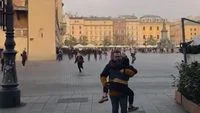
The historic heart of Krakow, a city renowned for its medieval architecture and vibrant cultural heritage, was transformed into a scene of chaotic violence on Saturday, November 7, as a mass shooting left nine individuals dead and sent shockwaves through the Polish nation. The incident, which began in the bustling city center, has prompted a massive investigation by national security services and sparked an urgent debate regarding the rise of radicalization within the country.
A Chronology of the Assault
The violence erupted at approximately 2:15 p.m. local time on Saturday. According to eyewitness reports and preliminary data from local law enforcement, a lone gunman armed with a semi-automatic weapon opened fire on pedestrians near the Main Market Square (Rynek Główny). The initial barrage of gunfire lasted for several minutes, causing widespread panic as tourists and locals alike scrambled to find cover in nearby shops and alleyways. Amateur footage captured on mobile devices shows civilians fleeing in terror, while the rhythmic, sharp reports of gunfire echoed against the ancient stone facades of the city’s historic buildings.
By 2:30 p.m., police units from the Krakow Metropolitan Police arrived on the scene. A tense standoff ensued as the assailant attempted to retreat into the narrow, winding streets of the Old Town. Officers engaged in a brief but intense firefight with the suspect, eventually pinning him down in a residential alleyway. The suspect, a male Polish national whose identity has not yet been formally released pending legal proceedings, was apprehended at approximately 2:45 p.m. after being wounded in the exchange.
The tragedy took a grimmer turn later that evening. While securing the suspect’s residence in the outskirts of Krakow, investigators discovered the bodies of three additional individuals. Forensic teams confirmed that these victims had been killed prior to the public shooting, suggesting that the event was not a spontaneous outburst but rather the culmination of a pre-meditated act of violence.
The Scope of the Tragedy
The death toll stands at nine confirmed fatalities. Six victims were identified at the scene of the public shooting, while the remaining three were recovered from the suspect’s property. Medical personnel from the Krakow University Hospital reported that several others remain in critical condition, having sustained gunshot wounds during the public rampage.
Authorities have classified the event as an act of domestic terrorism. While the investigation remains in its early stages, early findings suggest the perpetrator was motivated by extremist right-wing ideologies. Intelligence services are currently examining the suspect’s digital footprint, including manifestos and communication logs, to determine whether he acted as part of a broader network or was a "lone wolf" actor influenced by online propaganda.
Contextualizing Political Radicalization in Poland
This incident occurs against a backdrop of increasing political polarization in Poland. Over the past decade, the country has seen a marked rise in nationalist rhetoric. Sociologists and political analysts point to the proliferation of fringe online forums where extremist ideologies—ranging from anti-immigrant sentiment to ultra-nationalist revisionism—have found fertile ground.
According to data from the European Union Agency for Law Enforcement Cooperation (Europol), the threat posed by domestic violent extremism has evolved significantly in Central Europe. While historical concerns were focused on organized crime or international terrorism, recent years have shifted the focus toward individuals radicalized through social media platforms. In Poland specifically, government reports have highlighted a concerning trend of young men being recruited into decentralized radical groups that promote violence as a legitimate tool for political expression.
Official Responses and Government Action
The government in Warsaw reacted swiftly to the crisis. Prime Minister Mateusz Morawiecki addressed the nation late Saturday, describing the shooting as a "dark day for the Republic of Poland" and promising a transparent and exhaustive investigation. "We will not allow our peaceful society to be intimidated by hate-filled ideologies," he stated during a press conference.
The Mayor of Krakow, Jacek Majchrowski, announced a period of public mourning in the city. "Krakow is a city of peace, culture, and history. We will stand united against those who seek to destroy the fabric of our community," Majchrowski said. He also expressed gratitude to the first responders who prevented a higher casualty count through their rapid intervention.
On the international stage, European Commission leaders expressed their condolences, with several officials emphasizing the need for stronger EU-wide cooperation in monitoring radical content online. The European Commissioner for Home Affairs stated that the Krakow incident serves as a "stark reminder of the fragility of internal security" and urged member states to double down on de-radicalization programs.
Analysis: Implications for Security and Society
The Krakow shooting raises critical questions about the current state of public safety in Poland’s most iconic urban centers. The city, which hosts millions of visitors annually, relies heavily on its reputation as a safe, walkable, and historic destination. The breach of this security has forced a reassessment of police presence in tourist zones and the effectiveness of current counter-radicalization strategies.
- Security Infrastructure: There is an ongoing discussion regarding whether to increase the frequency of armed patrols in high-traffic pedestrian areas. While some argue this is necessary to deter future attacks, civil liberties groups warn against the militarization of public spaces, noting that such measures could erode the open atmosphere that defines cities like Krakow.
- Online Radicalization: The most significant challenge identified by security experts is the "de-platforming" of radical content. As traditional social media companies crack down on hate speech, extremist groups have migrated to encrypted messaging apps and decentralized platforms. Tracking these communications requires sophisticated digital intelligence capabilities that are currently being stretched thin across European intelligence agencies.
- Societal Cohesion: The broader implication of this event is the potential for further societal fragmentation. If the shooter is indeed confirmed to have acted based on right-wing extremist ideology, it will likely intensify the existing debate regarding political discourse in Poland. Political parties on both sides of the aisle are under pressure to temper their rhetoric, as critics argue that inflammatory language from mainstream figures can create a permissive environment for radicals to act.
Looking Ahead
As the investigation continues, the focus will remain on the suspect’s background, the timeline of his radicalization, and the potential identification of any accomplices. Forensic experts are conducting ballistic tests and digital forensics to piece together the final hours leading up to the attack.
For the citizens of Krakow, the days ahead will be defined by mourning and reflection. Memorials have begun to spring up near the Main Market Square, where residents have placed candles and flowers. The resilience of the local community is being tested, but as historical precedent in Poland has shown, the nation has often emerged from periods of tragedy with a renewed commitment to democratic values and social stability.
The incident also serves as a somber alert for the international community. It underscores the reality that no nation is immune to the threat of domestic extremism. The rise of individual actors who are detached from society but highly connected to toxic ideological bubbles remains one of the most complex security challenges of the modern era.
As the authorities finalize their initial reports, the Polish government is expected to announce new initiatives aimed at community-based mental health interventions and enhanced monitoring of radicalization hotbeds. Whether these measures will suffice to curb the growing tide of extremist violence remains to be seen. For now, the people of Krakow are left to grapple with the loss of their fellow citizens, while the government faces the daunting task of reconciling a nation that is currently struggling to find common ground in an increasingly volatile political landscape.
The events of November 7 will undoubtedly be remembered as a pivotal moment in Poland’s contemporary history, forcing a reckoning with the darker side of modern political polarization and the urgent need for a unified approach to security and social cohesion.

