
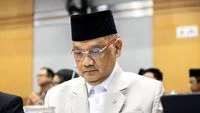
Jakarta, Indonesia – On Wednesday, April 15, 2026, the Indonesian government, under the direct instruction of President Prabowo Subianto, announced a significant allocation of Rp 1.77 trillion (approximately US$ 110 million, based on an assumed exchange rate of Rp 16,000/US$ 1 for contextual understanding, though the original article cited Rp 17,142/US$ for a specific airline quote) to subsidize the escalating costs of Hajj pilgrimage airfares. This decisive move aims to shield prospective Indonesian pilgrims from the burden of sharply increased jet fuel (avtur) prices, ensuring that the sacred journey remains accessible to its citizens. Minister of Hajj and Umrah, Mochamad Irfan Yusuf Hasyimz, widely known as Gus Irfan, revealed that this substantial financial commitment comes alongside an unprecedented decision by President Prabowo to further reduce the overall Hajj pilgrimage cost by Rp 2 million per pilgrim for the 2026 season.
The announcement follows a period of intense negotiations and critical financial assessments prompted by major airlines, Garuda Indonesia and Saudia Airlines, demanding substantial fare increases to cover their operational expenditures. Minister Hasyimz detailed the pressing situation, explaining that Garuda Indonesia initially sought an additional Rp 7 million per pilgrim, while Saudia Airlines requested an increase of US$ 485 per pilgrim. At the time of Saudia’s request, with an exchange rate of Rp 17,142 per US dollar, this translated to approximately Rp 8.31 million per pilgrim for the Saudi national carrier. These demands collectively presented a formidable financial challenge, signaling a potential total additional cost of Rp 1.77 trillion for the Indonesian Hajj program. The core of the problem, as Minister Hasyimz underscored, was the dramatic surge in jet fuel prices, which had climbed from Rp 13,656 per liter to Rp 23,551 per liter.
The Escalating Cost of Hajj Travel and Global Fuel Dynamics
The Hajj pilgrimage, one of the five pillars of Islam, holds immense spiritual significance for millions of Indonesians. As the country with the world’s largest Muslim population, Indonesia consistently sends the largest contingent of pilgrims to Saudi Arabia annually. The affordability of this journey is therefore a matter of national importance and public welfare. The recent volatility in global energy markets, particularly crude oil prices, directly translates into fluctuating jet fuel costs, posing a recurring challenge for Hajj organizers worldwide. The period preceding the airlines’ requests was characterized by peak global oil prices, driven by a confluence of geopolitical tensions, supply chain disruptions, and robust post-pandemic demand. This environment created an untenable situation for airlines, whose operational costs are heavily weighted towards fuel.
Garuda Indonesia, as the national flag carrier, plays a pivotal role in transporting Indonesian pilgrims. Its request for an additional Rp 7 million per pilgrim underscored the severity of the financial strain. Similarly, Saudia Airlines, a major international carrier facilitating Hajj travel, faced similar cost pressures. The total estimated additional expenditure of Rp 1.77 trillion for both airlines highlighted the scale of the financial gap that emerged due to the fuel price hikes. This figure represents a substantial portion of the overall Hajj operational budget, necessitating an immediate and comprehensive government response.
Presidential Intervention and Policy Directives: A Commitment to Pilgrims
Upon being informed of the dire situation and the potential financial burden on pilgrims, President Prabowo Subianto acted swiftly and decisively. Minister Hasyimz recounted the President’s unequivocal directive: "The President said this additional cost must not be passed on to the pilgrims. This is the President’s commitment to Hajj pilgrims." This statement reflects a fundamental principle of the current administration to prioritize the welfare of its citizens, especially concerning religious obligations as significant as the Hajj.
Beyond merely absorbing the additional costs, President Prabowo went a step further, demonstrating an extraordinary commitment to making Hajj more accessible. He mandated a reduction of Rp 2 million in the overall Hajj cost for 2026. This unprecedented move is a clear signal of the government’s dedication to supporting its citizens’ spiritual journeys, potentially setting a new standard for Hajj affordability. The Rp 1.77 trillion allocated for subsidies will directly compensate the airlines for the increased fuel costs, preventing any direct impact on the pilgrims’ already paid fees. This dual approach—subsidizing the increase and actively reducing the base cost—is expected to be met with widespread relief and gratitude across the nation.
Chronology of a Crisis: From Airline Requests to Government Resolution
The events unfolded rapidly, highlighting the urgency of the situation:
- Approximately Ten Days Prior to April 15, 2026: Both Garuda Indonesia and Saudia Airlines formally submitted requests for significant fare adjustments. These requests were a direct consequence of the sharp increase in jet fuel prices, which had seen avtur costs surge by over 70% from Rp 13,656 to Rp 23,551 per liter. The airlines, operating on tight margins, deemed these adjustments necessary to maintain operational viability for the Hajj season.
- Intensive Negotiations and Assessments: The Ministry of Hajj and Umrah, led by Minister Mochamad Irfan Yusuf Hasyimz, immediately engaged in rigorous discussions with the airlines. The ministry meticulously reviewed the justifications for the requested increases, scrutinizing fuel cost data and operational expenditure reports. During this period, the minister emphasized the criticality of the situation, describing it as "ten crucial days."
- Reporting to the Highest Authority: Recognizing the profound implications for national policy and pilgrim welfare, Minister Hasyimz presented the full scope of the challenge, including the airlines’ demands and the total projected additional cost of Rp 1.77 trillion, directly to President Prabowo Subianto.
- Presidential Decree and Financial Commitment: Following the briefing, President Prabowo issued his clear directive: the additional costs would not be borne by the pilgrims. He simultaneously approved the allocation of Rp 1.77 trillion from state coffers as a subsidy to cover the increased airfare components. Crucially, he also announced the additional Rp 2 million reduction in the overall Hajj cost for 2026, signaling a broader commitment to affordability.
- Dynamic Market Response: Minister Hasyimz noted a significant development subsequent to the airlines’ initial requests. He explained, "Now, jet fuel prices are falling. They submitted these requests before the ceasefire, when oil prices were at their peak." This indicates that the global energy market has begun to cool down, potentially driven by eased geopolitical tensions or increased supply, leading to a reduction in jet fuel costs from their previous highs. This dynamic situation suggests that the actual amount required for the subsidy might even be lower than the initially calculated Rp 1.77 trillion, a possibility the ministry is actively exploring through continued negotiations.
The Mechanics of Jet Fuel Prices and Global Energy Markets
Jet fuel, or avtur (aviation turbine fuel), is a refined petroleum product that powers jet-engine aircraft. Its price is directly correlated with crude oil prices, which are notoriously volatile. Several factors contribute to this volatility:
- Geopolitical Events: Conflicts, political instability in oil-producing regions, and sanctions can disrupt supply chains and trigger price spikes. The mention of "before the ceasefire" in Minister Hasyimz’s statement strongly implies that ongoing global conflicts or significant international tensions had pushed oil prices to their zenith, directly impacting avtur costs.
- Supply and Demand: Global economic growth drives demand for air travel and freight, increasing jet fuel consumption. Conversely, oversupply or reduced demand can lead to price drops.
- OPEC+ Decisions: The Organization of the Petroleum Exporting Countries and its allies (OPEC+) often influence global supply through production quotas, impacting prices.
- Refining Capacity: The availability and efficiency of refineries to process crude oil into jet fuel can also affect supply and pricing.
- Exchange Rates: For countries like Indonesia, the strength of the local currency against the US dollar (the primary currency for oil transactions) plays a significant role in the domestic cost of imported fuel.
The surge from Rp 13,656 to Rp 23,551 per liter represents an approximate 72.4% increase, a staggering jump that would be catastrophic for airline profitability without fare adjustments. The subsequent decline in prices, as observed by Minister Hasyimz, offers a glimmer of hope for potential savings on the government’s subsidy outlay and highlights the necessity of flexible financial planning in such dynamic environments.
Indonesia’s Hajj Management: A National Priority and Economic Implication
Managing the Hajj pilgrimage for over 200,000 pilgrims annually (Indonesia’s typical quota) is a colossal logistical and financial undertaking. The Indonesian government, primarily through the Ministry of Religious Affairs and the Hajj Financial Management Agency (BPKH), plays a central role in ensuring the smooth execution and financial sustainability of the pilgrimage. The BPKH manages the Hajj funds, which consist of deposits from prospective pilgrims, and invests them to generate returns that can then be used to subsidize various Hajj components, including accommodation, transportation, and living expenses.
Historically, Hajj costs in Indonesia have always involved a degree of subsidy, drawing from the investment returns of the BPKH. However, a direct, substantial state budget allocation of Rp 1.77 trillion specifically to offset unexpected airfare surges is a significant fiscal decision. This demonstrates the government’s deep commitment to the principle of "istitha’ah" or financial capability, ensuring that unexpected external shocks do not render the pilgrimage unaffordable for those who have long saved and prepared.
Implications for Airlines and Ongoing Negotiations
For Garuda Indonesia and Saudia Airlines, the government’s subsidy provides crucial relief. Without it, they would face the unenviable choice of either operating Hajj flights at a significant loss or passing on the full cost increase to pilgrims, potentially leading to widespread cancellations and public outcry. The Rp 1.77 trillion allocation ensures that their operational costs, specifically the fuel component, are covered.
However, Minister Hasyimz indicated that negotiations with the airlines are not entirely concluded. "However, according to Gus Irfan, his party will continue to negotiate even though the government has allocated Rp 1.77 trillion to compensate for avtur prices," the article states. This is a strategic move. Given that jet fuel prices have now reportedly decreased from their peak, there is a strong possibility that the actual cost burden on the airlines might be lower than initially projected. The government, therefore, aims to renegotiate the exact compensation amount, potentially reducing the final subsidy outlay if fuel prices remain subdued. This proactive approach demonstrates fiscal prudence while upholding the commitment to pilgrims.
Economic and Fiscal Analysis of the Subsidy
The Rp 1.77 trillion subsidy, while essential for pilgrim welfare, represents a significant expenditure from the state budget. The precise source of these funds—whether directly from the national budget or via transfers to the BPKH for disbursement—will be critical in assessing its fiscal impact.
- Fiscal Impact: While substantial, the government prioritizes the social and religious welfare aspects. This allocation must be balanced against other national development priorities. It highlights the vulnerability of Hajj financing to global market fluctuations.
- Sustainability: Relying on ad-hoc state budget subsidies for such large sums might not be a sustainable long-term strategy if fuel prices remain volatile. It underscores the need for robust hedging mechanisms or diversified Hajj fund investments that can absorb such shocks.
- Precedent: President Prabowo’s decision to absorb costs and even reduce Hajj fees sets a strong precedent. Future administrations may face similar expectations from the public regarding Hajj affordability.
- Economic Stimulus: While a cost for the government, the Hajj program itself generates economic activity through travel, logistics, and services, both domestically and in Saudi Arabia. Ensuring its continuity without price shocks can have positive ripple effects.
Pilgrim Sentiment and Public Reaction
The news is expected to be met with immense relief and gratitude among the hundreds of thousands of prospective Indonesian Hajj pilgrims. Many save for decades to undertake the pilgrimage, and unexpected cost increases can shatter these long-held dreams. The President’s commitment ensures that their meticulously planned finances are not disrupted by external economic factors. This move is likely to significantly bolster public trust and approval for the current administration, demonstrating a tangible commitment to the welfare of its citizens.
Looking Ahead: Long-Term Hajj Financing Strategies
The current situation highlights the critical need for comprehensive, long-term strategies for Hajj financing in Indonesia. Potential avenues include:
- Diversified Investments of Hajj Funds: The BPKH’s investment portfolio could be further diversified to generate higher and more stable returns, providing a stronger buffer against cost fluctuations.
- Fuel Price Hedging: Exploring financial instruments to hedge against future jet fuel price volatility could provide greater predictability for Hajj airfare costs, reducing reliance on ad-hoc subsidies.
- Operational Efficiencies: Continuous efforts to identify and implement efficiencies in all aspects of Hajj operations, from transportation to accommodation and ground services, can help keep overall costs in check.
- Airline Partnerships: Developing more stable, long-term partnerships with airlines, possibly including fuel price clauses that share risk, could be beneficial.
- Transparency and Communication: Maintaining transparent communication with pilgrims about cost structures and any changes is crucial for managing expectations.
In conclusion, President Prabowo Subianto’s decisive action to allocate Rp 1.77 trillion in subsidies and further reduce Hajj costs by Rp 2 million underscores the Indonesian government’s unwavering commitment to ensuring the accessibility and affordability of the Hajj pilgrimage for its citizens. While providing immediate relief from the pressures of volatile global jet fuel prices, this event also serves as a poignant reminder of the complex interplay between global economic forces and national religious obligations, prompting a continued focus on robust and sustainable long-term financing strategies for this sacred journey. The ongoing negotiations regarding the final subsidy amount, given the recent decline in avtur prices, reflect a prudent approach to fiscal management even amidst a strong commitment to public welfare.

