
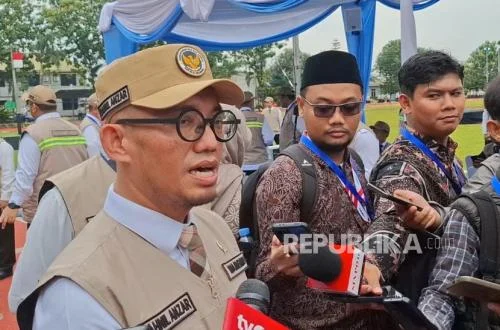
JAKARTA – As the Hajj season for 2026 draws closer, Indonesian authorities are sounding a critical alarm regarding the alarming proliferation of unauthorized Hajj pilgrimage promotions that promise immediate departure without the customary lengthy waiting periods. These deceptive schemes, frequently advertised on social media and various online platforms, market packages for "Hajj 2026 without queue" at exorbitant prices, often reaching US$29,900 (approximately Rp512 million), falsely claiming the use of official Furoda or Mujamalah visas. The Deputy Minister of Hajj and Umrah, Dahnil Anzar Simanjuntak, has vehemently reiterated that the only guaranteed visa for Hajj is the one issued under the official government-to-government quota, urging the public to exercise extreme caution and avoid falling victim to these high-risk, unofficial offers.
The allure of bypassing the notoriously long Hajj waiting list in Indonesia has created a fertile ground for unscrupulous agents to prey on the fervent desire of Muslims to fulfill their religious obligation. Advertisements, such as those prominently displayed by entities like Hajifuroda.id, detail comprehensive packages including airfare, accommodation, meals, and spiritual guidance in the Holy Land. Some even dangle the enticing promise of early departure in Dzulhijjah 1447 H and offer a "100 Percent Money-Back Guarantee" should the visa not materialize. However, the government’s warning underscores the fragile nature of such assurances, emphasizing that the issuance of non-quota visas lies solely with the Saudi Arabian government, making any third-party claims of certainty highly dubious.
The Sacred Journey and Indonesia’s Hajj Dilemma
Hajj, the annual pilgrimage to Mecca, Saudi Arabia, is one of the five pillars of Islam, a spiritual journey that every able-bodied Muslim is expected to undertake at least once in their lifetime. For Indonesians, who constitute the world’s largest Muslim-majority population, the aspiration to perform Hajj is profound and deeply ingrained in their faith and culture. Each year, millions express their desire to embark on this sacred journey, but the logistical realities of accommodating such a vast global contingent mean that Saudi Arabia allocates specific quotas to each Muslim-majority nation.
Indonesia, despite consistently receiving the largest Hajj quota globally – for instance, approximately 221,000 pilgrims in recent years – faces an unprecedented challenge: an exceptionally long waiting list. The average waiting period for regular Hajj pilgrimage in Indonesia currently stretches to an astounding 20 to 40 years, depending on the province of registration. In some densely populated regions, this wait can even exceed 45 years. This protracted delay, driven by overwhelming demand far outstripping the annual quota, creates immense pressure and emotional distress for many prospective pilgrims, particularly the elderly, who fear they may not live long enough to fulfill their lifelong dream. It is this desperate yearning and the desire for a faster path that unscrupulous individuals exploit, leading to the proliferation of "Hajj without queue" schemes.
Understanding Mujamalah and Furoda Visas: A Closer Look
The terms "Mujamalah" and "Furoda" have become central to these deceptive promotions, often misused or misunderstood. It is crucial to differentiate between their legitimate application and their dubious use by unauthorized travel agents.
-
Mujamalah Visa: Also known as a "royal invitation visa" or "private invitation," a Mujamalah visa is issued directly by the Kingdom of Saudi Arabia to individuals by special invitation, typically extended to prominent figures, diplomats, or those with unique connections. These visas are outside the official Hajj quota system agreed upon between Saudi Arabia and other countries. Crucially, Mujamalah visas are non-transferable and are granted on a highly discretionary basis. When travel agencies claim to "procure" or "guarantee" a Mujamalah visa for a fee, they are often operating in a gray area, as the direct issuance from the Saudi government to an ordinary pilgrim through a third party is highly irregular and usually not legitimate. The process is opaque, lacks official oversight from the pilgrim’s home country, and carries significant risks of fraud.
-
Furoda Visa: While often used interchangeably with Mujamalah in common parlance, "Furoda" (which translates to "private" or "individual") generally refers to Hajj visas obtained outside the regular government quota. These are also typically issued directly by the Saudi Ministry of Foreign Affairs or other Saudi entities. While legally recognized by Saudi Arabia if properly issued, the means by which Indonesian travel agents claim to acquire these for a fee are often unregulated by the Indonesian government. The key distinction from the official quota Hajj is the absence of direct oversight from the Indonesian Ministry of Religious Affairs (Kemenag). This lack of governmental regulation in Indonesia makes Furoda packages offered by private entities inherently riskier, as pilgrims lack the protection and guarantees afforded by official Hajj programs.
The fundamental issue highlighted by Deputy Minister Simanjuntak is the "certainty" of these visas. "Once again, the only certain visa is the Hajj visa based on the Hajj quota," Dahnil stated unequivocally during an interview with Republika following a discussion with the Minister of Immigration and Correctional Affairs, Agus Andrianto, at the Ministry of Hajj and Umrah office in Jakarta on Wednesday, April 15, 2026. He further elaborated that numerous Mujamalah visa offers circulating online lack any guarantee of departure. The authority to issue such visas rests exclusively with the Saudi Arabian government, meaning no travel agent can genuinely guarantee their issuance. "Because later there will be people selling on the internet as if they can get Mujamalah visas, the level of certainty for those is very low," he warned.
Chronology of Warnings and Inter-Agency Coordination
The Indonesian government’s proactive stance against Hajj fraud is not new, but the warnings have intensified as the 2026 Hajj season approaches. The timeline of official pronouncements and coordinated efforts illustrates the gravity of the situation:
-
January 30, 2026: Deputy Minister Dahnil Anzar Simanjuntak participated in a briefing for Indonesian Hajj officers at the Galaxy Field, Air Operations Command Headquarters 1, Halim Perdanakusuma, East Jakarta. While the primary focus of this briefing would have been operational readiness and service quality for the upcoming Hajj, it is highly probable that early warnings regarding potential scams and the importance of educating prospective pilgrims about legitimate channels would have been a significant agenda item. Equipping Hajj officers with information to counter misinformation is a crucial preventive measure.
-
Leading up to April 15, 2026: Throughout the preceding months, a noticeable surge in online advertisements promoting "Hajj 2026 without queue" packages was observed across various social media platforms, travel agency websites, and even messaging applications. These promotions leveraged persuasive language, attractive imagery, and often, misleading endorsements, capitalizing on the high demand and long waiting lists. The promise of immediate departure, combined with seemingly comprehensive packages and financial guarantees, made these offers particularly enticing to vulnerable individuals.
-
April 15, 2026: The definitive warning from Deputy Minister Dahnil Anzar Simanjuntak came after his meeting with Minister of Immigration and Correctional Affairs, Agus Andrianto. This specific interaction underscores a coordinated effort between the Ministry of Religious Affairs (which oversees Hajj and Umrah) and the Ministry of Law and Human Rights (which includes immigration). The presence of the Minister of Immigration suggests that the government is not only focused on public awareness but also on potential enforcement actions against fraudulent travel agents and tighter scrutiny of travel documents. Such a high-level meeting indicates a serious commitment to addressing the issue comprehensively, from prevention to potential legal recourse.
The Mechanics of Deception: How Scams Operate
Fraudulent Hajj schemes often follow a predictable pattern designed to exploit the emotional and financial vulnerability of prospective pilgrims:
-
Aggressive Online Marketing: Scammers heavily utilize social media platforms (Facebook, Instagram, WhatsApp groups), paid search ads, and dedicated websites (like Hajifuroda.id mentioned in the article) to reach a wide audience. They use compelling visuals, testimonials (sometimes fabricated), and urgent calls to action to create a sense of exclusivity and limited availability.
-
False Promises of Visa Certainty: The core of the deception lies in promising "guaranteed" Mujamalah or Furoda visas. They often claim to have "special connections" or "exclusive allocations" from the Saudi government, which are rarely true for mass pilgrims.
-
Exorbitant Pricing with "Premium" Facilities: The high price point (US$29,900 or Rp512 million) is presented as justified by the "exclusivity" of the visa and the "premium" services, including luxury hotels, private transport, and personalized religious guidance. While some legitimate Furoda packages exist at higher price points, the problem arises when the visa itself is not guaranteed or when the services promised are not delivered.
-
Misleading Financial Guarantees: The "100% Money-Back Guarantee if visa fails to issue" is a common tactic. In reality, victims often find it impossible to reclaim their funds once the visa fails. The agencies disappear, become unreachable, or stall the refund process indefinitely, citing various fabricated bureaucratic hurdles. The legal recourse for pilgrims in such cases can be protracted and often unsuccessful.
-
Lack of Transparency and Official Registration: Many of these operators are either unregistered, operate under misleading names, or lack the necessary licenses from the Indonesian Ministry of Religious Affairs to organize Hajj travel. This lack of official oversight makes it difficult for authorities to track them and for pilgrims to seek redress.
Broader Impact and Implications
The repercussions of these Hajj scams extend far beyond individual financial losses, impacting pilgrims, government institutions, and even international relations:
-
Devastating Financial and Emotional Loss: For many Indonesian pilgrims, the Hajj fund represents a lifetime of savings, accumulated through immense sacrifice. Losing such a substantial amount not only causes severe financial hardship but also profound emotional distress and spiritual disappointment, as their ultimate religious aspiration is shattered.
-
Reputational Damage to Indonesia: When Indonesian citizens are repeatedly involved in unauthorized Hajj attempts or fall victim to scams, it can negatively impact Indonesia’s standing with Saudi Arabian authorities. It can lead to stricter scrutiny of Indonesian travelers and even potentially affect future Hajj quota negotiations.
-
Strain on Saudi Hajj Infrastructure: Unauthorized pilgrims, even if they manage to enter Saudi Arabia, strain the meticulously planned logistics and resources intended for official quota pilgrims. This can lead to overcrowding, logistical bottlenecks, and compromise the safety and comfort of all pilgrims. Saudi authorities have strict penalties for individuals found performing Hajj without proper permits.
-
Legal Consequences for Pilgrims and Agents: While pilgrims are often victims, they can still face legal consequences in Saudi Arabia, including deportation, fines, and even a ban from future travel to the Kingdom, if caught without valid Hajj permits. For fraudulent agents, Indonesian law provides for severe penalties, including imprisonment and substantial fines, under various consumer protection and Hajj and Umrah travel regulations. However, enforcement remains a challenge due to the often transient nature of these operations.
-
Erosion of Trust: Such incidents erode public trust in travel agencies and even, indirectly, in the government’s ability to protect its citizens and regulate religious travel.
Official Responses and Recommendations for Prospective Pilgrims
To combat this persistent problem, the Indonesian government, primarily through the Ministry of Religious Affairs, is actively engaged in public awareness campaigns and inter-agency coordination.
-
Public Awareness Campaigns: The Ministry regularly issues advisories through official channels, social media, and religious leaders, urging citizens to verify the legality and licensing of any Hajj or Umrah travel agency with the Ministry of Religious Affairs. Prospective pilgrims are advised to only register for Hajj through official government programs or with travel agencies explicitly approved and monitored by Kemenag.
-
Inter-Agency Collaboration: The meeting between Deputy Minister Dahnil Anzar Simanjuntak and Minister Agus Andrianto highlights the crucial collaboration between religious affairs and immigration authorities. This partnership is vital for monitoring suspicious travel patterns, identifying potential visa fraud, and taking legal action against perpetrators. Immigration authorities can play a key role in preventing individuals with suspicious travel documents from departing Indonesia.
-
Legal Enforcement: The government is committed to pursuing legal action against fraudulent travel agents. This involves investigations, arrests, and prosecution to deter others from engaging in similar illicit activities. However, the transient nature of many online scams makes tracking and prosecuting difficult.
For prospective pilgrims, the message is clear and consistent:
- Verify Licensing: Always check if a travel agency has an official Hajj and Umrah operating license from the Ministry of Religious Affairs (Kemenag). This can usually be done through the Ministry’s official website or by contacting their call center.
- Be Skeptical of "No Queue" Promises: Any offer promising immediate Hajj departure outside the official quota system should be treated with extreme suspicion. The Hajj waiting list is a known and unavoidable reality.
- Avoid Unofficial Channels: Do not engage with individuals or entities promoting Hajj packages through informal social media groups or personal contacts without official verification.
- Understand Visa Types: Be fully aware of the differences between official quota Hajj visas and private visas. Understand that the latter carries significant risks if not acquired through legitimate and transparent means directly sanctioned by Saudi authorities.
- Report Suspicious Activity: Report any suspicious Hajj or Umrah promotions to the Ministry of Religious Affairs or relevant law enforcement agencies.
The Indonesian government’s firm warnings serve as a critical reminder of the pervasive risks associated with unregulated Hajj packages. While the dream of performing Hajj is deeply cherished, it is imperative for prospective pilgrims to prioritize safety, legality, and official channels to ensure their spiritual journey is undertaken genuinely and without the heartbreak of financial loss and unfulfilled promises. The path to Mecca must be through legitimate means, safeguarding the sanctity of the pilgrimage and the well-being of the pilgrims.

