
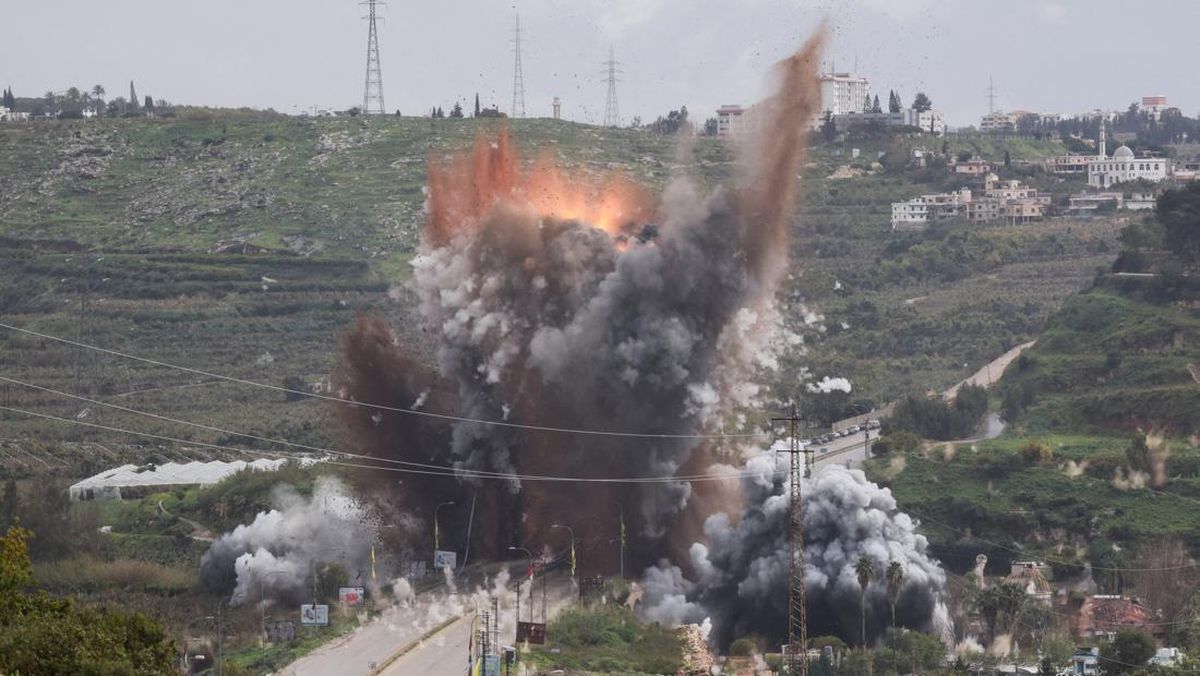
The United States military has launched a series of intense airstrikes against Iranian infrastructure in recent days, culminating in the destruction of at least six critical bridges in Iran’s southern Hormozgan province on Thursday, July 16. This marks the fifth consecutive night of US operations targeting Iranian military capabilities and represents the most significant escalation of hostilities between Washington and Tehran since a fragile ceasefire and memorandum of understanding (MoU) were established over three months prior in June. The Pentagon asserts these precision strikes aim to disrupt vital supply lines allegedly used by Iran’s Islamic Revolutionary Guard Corps (IRGC) to support drone attacks against commercial shipping traversing the strategically crucial Strait of Hormuz.
The sustained campaign of strikes, which commenced as the first major offensive since April, has deliberately targeted a network of bridges and associated infrastructure, primarily concentrated around the port city of Bandar Abbas. This area is not only home to Iran’s largest commercial port but also a principal naval base for the IRGC, making its connectivity paramount for both military logistics and the broader Iranian economy. According to US Central Command (CENTCOM), the operations are designed to "further degrade Iran’s military capabilities." President Donald Trump, commenting on the renewed conflict, indicated his belief that the previous June MoU, intended to de-escalate tensions, had effectively "ended."
Chronology of Escalation and Breakdown of Diplomatic Efforts
The recent wave of attacks did not emerge in a vacuum but is rooted in a prolonged period of heightened tensions between the United States and Iran, exacerbated by the Trump administration’s "maximum pressure" campaign following its withdrawal from the Joint Comprehensive Plan of Action (JCPOA) in 2018. This strategy has involved severe economic sanctions coupled with a robust military presence in the Persian Gulf, leading to numerous confrontations.
Prior to the current escalation, the region had witnessed a series of provocative incidents, including alleged attacks on oil tankers, the downing of a US surveillance drone by Iran, and retaliatory cyberattacks. These events brought both nations to the brink of direct military conflict on multiple occasions. A brief period of de-escalation was observed after a reported ceasefire agreement and memorandum of understanding were reached in June. While the precise terms of this MoU were not publicly disclosed in detail, it was widely understood to involve a mutual commitment to reduce military activities and refrain from direct provocations, possibly brokered by regional intermediaries. The expectation was that this agreement would open a pathway for indirect communication or even future negotiations to address the broader security concerns in the Gulf.
However, the fragile nature of this understanding became apparent with the US claim of continued Iranian support for drone attacks on shipping. These alleged actions, which Washington views as a direct violation of international maritime law and a threat to global energy security, seemingly provided the impetus for the renewed and intensified military response. The decision to target critical infrastructure, rather than isolated military assets, signals a significant shift in the US strategy, indicating a resolve to inflict more substantial logistical and strategic damage. The current offensive, now in its fifth night of continuous operations by July 17, underscores a deliberate and sustained effort by the United States to degrade Iran’s ability to project power and interfere with maritime commerce in the region.
Strategic Importance of Targeted Bridges
The six bridges specifically targeted by US forces are located in the Hormozgan province, primarily within the Bandar Khamir district, west of Bandar Abbas. Their destruction significantly impairs the vital transportation network connecting Bandar Abbas, Iran’s primary maritime gateway and a key strategic military hub, with the broader Iranian hinterland.
-
Kahurestan Bridge: Situated in the Kahurestan region, this bridge formed part of a critical arterial road connecting Bandar Abbas to the interior provinces of Hormozgan and Fars. Its disruption has severe implications for both civilian and commercial traffic, impeding the flow of goods and people essential for the region’s economy. The semi-official Iranian news agency Tasnim reported civilian casualties, including fatalities, after a vehicle reportedly plunged from the bridge following the attack, highlighting the humanitarian cost of the strikes.
-
Geriveh Bridge: Located on the Bandar Abbas-Bandar Khamir-Lar highway, this bridge served as a crucial East-West transportation axis. Its role in facilitating the movement of cargo and personnel between the Persian Gulf coastline and southern Iran’s interior made it a significant logistical choke point. Its destruction has created substantial detours and delays, impacting regional trade and military mobility.
-
Latidan Bridge: Near Latidan village, this bridge was integral to the coastal transportation corridor west of Bandar Abbas. It offered an alternative route between Bandar Abbas and Bandar Khamir, enhancing regional road connectivity. Its disablement further strains the remaining infrastructure and complicates movement along the coast.
-
Fars Bridges (Two smaller bridges): These two smaller bridges were components of the highway linking Bandar Abbas with Lar in the adjacent Fars province. Their targeting aims to further impede the smooth flow of traffic on one of southern Iran’s main road arteries, connecting the coast to inland cities and potentially disrupting broader supply chains.
-
Bandar Khamir Bridge (Unfinished): This bridge, though incomplete, was under construction on the Bandar Khamir-Keshar-Bandar Abbas road. It was intended to bolster transportation capacity and alleviate congestion in the western Hormozgan region. While not yet operational for traffic, its destruction prevents future infrastructure improvements and signifies a broader effort to pre-emptively undermine Iran’s long-term logistical capabilities.
-
Marou Bridge: Serving local villages within the Bandar Khamir district, the Marou Bridge connected these communities to the wider road network leading to Bandar Abbas. While less strategically significant for large-scale military or commercial operations, its destruction severely impacts local transportation and access to essential services for residents, adding to the civilian hardship.
The collective impact of these strikes extends beyond mere physical damage. By targeting these bridges, the US aims to severely complicate Iran’s ability to move military equipment, personnel, and supplies, particularly for the IRGC’s naval operations based in Bandar Abbas. This could potentially hinder Iran’s capacity to launch or support drone attacks or other maritime harassments in the Strait of Hormuz, a critical international waterway through which a significant portion of the world’s oil supply transits.
Official Responses and Regional Ramifications
The United States, through CENTCOM, has consistently justified its actions as defensive and proportionate, aimed at neutralizing threats to international shipping and regional stability. The repeated emphasis on disrupting "supply lines used by Iran to support drone attacks against ships" frames the operations as a direct response to Iranian aggression. President Trump’s declaration that the June MoU was "over" signals a shift back to a more confrontational stance, indicating a loss of faith in diplomatic solutions under the current circumstances.
Iran’s official response, while not detailed in the original report, can be logically inferred based on past patterns. Tehran is expected to vehemently condemn these attacks as flagrant violations of its sovereignty and territorial integrity. Iranian officials would likely deny US accusations regarding the use of these specific supply lines for drone attacks or frame any such activities as legitimate defensive measures against perceived US aggression and economic warfare. The reporting of civilian casualties from the Kahurestan Bridge strike will undoubtedly be leveraged by Iran to highlight the human cost of the US military actions and rally international condemnation. Calls for retaliation, potentially through asymmetric means, are also a strong possibility, further escalating the cycle of violence.
Regionally, these strikes reverberate across the Middle East. Neighboring states, particularly those in the Gulf Cooperation Council (GCC) that share maritime borders with Iran and rely heavily on the Strait of Hormuz for their oil exports, will view these developments with profound concern. While some might privately welcome measures to curb Iranian influence, the risk of wider conflict poses an existential threat to their stability and economic prosperity. International bodies, including the United Nations and the European Union, are likely to issue calls for immediate de-escalation, urging both Washington and Tehran to exercise restraint and return to dialogue to prevent a full-blown regional war. The disruption of global oil supplies and trade routes is a major concern for the international community, making the stability of the Strait of Hormuz a top priority.
Broader Impact and Implications
The destruction of these bridges carries significant geopolitical, economic, and humanitarian implications:
Geopolitical Implications:
The most immediate consequence is a dramatic escalation of tensions, pushing the US and Iran further away from any diplomatic resolution. This heightened military confrontation increases the risk of miscalculation, accidental engagements, and a broader regional conflict that could draw in other actors. The strategic balance in the Persian Gulf is now even more precarious, with an increased naval and air presence from both sides.
Economic Implications:
The targeting of infrastructure around Bandar Abbas, Iran’s primary commercial port, will undoubtedly have a substantial economic impact on Iran. Disruptions to transportation networks will impede domestic trade, increase costs for goods, and complicate exports and imports. This comes at a time when Iran’s economy is already reeling from stringent US sanctions. For the global economy, the increased instability in the Strait of Hormuz, through which approximately 20% of the world’s petroleum liquids pass, could lead to spikes in oil prices and disrupt global supply chains, affecting various industries worldwide.
Humanitarian and Social Implications:
The reported civilian casualties from the Kahurestan Bridge strike are a grim reminder of the human cost of military actions. The destruction of essential infrastructure like bridges not only affects military logistics but also disrupts the daily lives of civilians, hindering access to essential services, emergency aid, and economic opportunities. Local communities in Hormozgan province will face significant challenges in transportation and connectivity.
Military and Strategic Implications:
From a US perspective, these strikes aim to degrade Iran’s ability to conduct maritime asymmetric warfare, particularly through drone attacks. By severing key logistical arteries, Washington hopes to reduce the operational effectiveness of the IRGC and its proxies. However, Iran possesses significant asymmetric capabilities and could respond with various measures, including further harassment of shipping, cyberattacks, or kinetic strikes against US interests or allies in the region. The effectiveness of the US strategy in permanently altering Iranian behavior remains to be seen.
Diplomatic Fallout:
The complete breakdown of the June MoU signifies a major setback for any de-escalation efforts. The path to future negotiations or even indirect communication becomes significantly more challenging. International mediators will find it harder to bring both sides to the table in an environment of active military confrontation. The credibility of future agreements will also be scrutinized, given the rapid collapse of the previous understanding.
Looking ahead, the situation remains highly volatile. The United States has demonstrated its willingness to employ military force to counter what it perceives as Iranian aggression. Iran, in turn, is likely to seek opportunities to retaliate, possibly through its proxies or by targeting maritime assets, further perpetuating the cycle of conflict. The international community faces a daunting task in attempting to de-escalate these mounting tensions and prevent the Persian Gulf from descending into a wider, more devastating conflict. The destruction of these bridges is not merely a tactical victory for one side but a stark illustration of the deepening chasm between two powerful adversaries, with profound implications for regional and global stability.

