
Jakarta, Indonesia – A series of coordinated terrorist attacks, unequivocally linked to the Islamic State of Iraq and Syria (ISIS) group, rocked the heart of Jakarta on January 14, 2016, leaving multiple fatalities and injuries in its wake. Indonesian security forces swiftly responded to the assaults, which involved a combination of bombs, grenades, and firearms, eventually neutralizing the perpetrators and bringing the situation under control. The attacks primarily targeted a police post and a Starbucks cafe situated in the bustling commercial district along Jalan M.H. Thamrin, a prominent thoroughfare in Central Jakarta, underscoring the attackers’ intent to sow fear and disrupt public order in the nation’s capital.
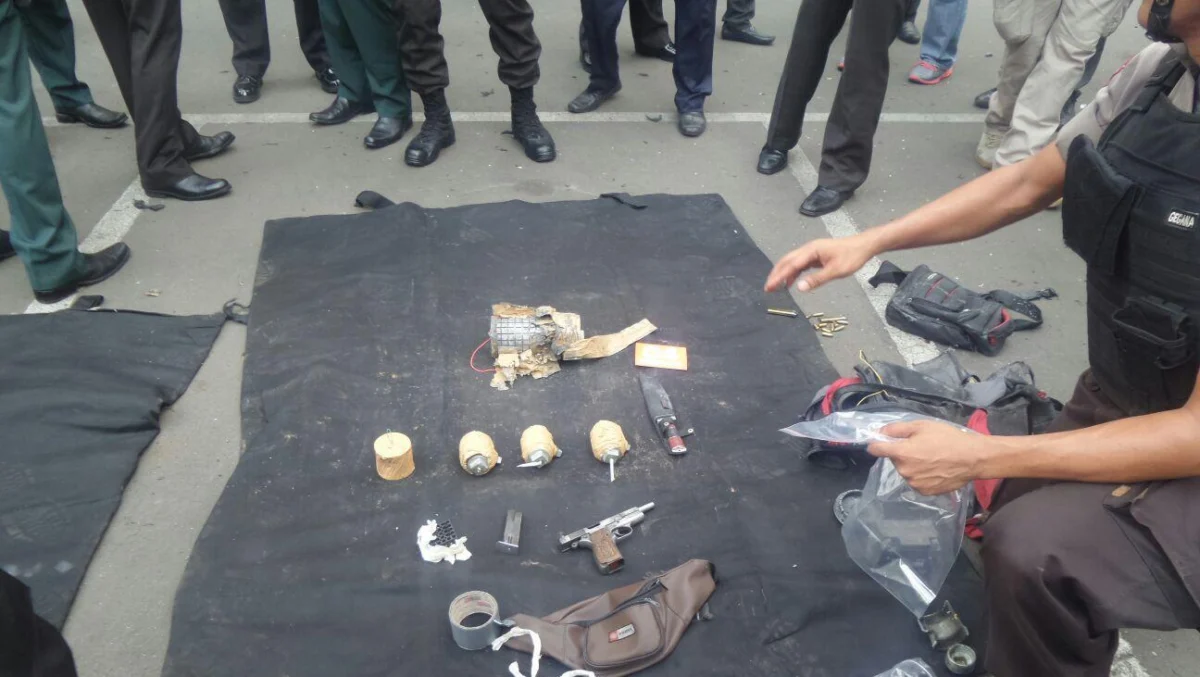
Komjen Budi Gunawan, then Deputy Chief of the Indonesian National Police (Wakapolri), confirmed the ISIS connection from the scene, stating, "It is true, ISIS." His statement, delivered amidst ongoing security operations, provided the first official confirmation of the international terrorist group’s direct involvement in the brazen daylight attacks. Gunawan elaborated on the weaponry employed by the terrorists, noting, "There were FN-type firearms. There were also bombs, grenades, and some bombs and grenades that were still active." This indicated a planned and sophisticated assault rather than a spontaneous act of violence. The presence of unexploded ordnance further complicated the immediate aftermath, requiring meticulous work from bomb disposal units to ensure public safety.
Chronology of a Day of Terror
The calm of a Thursday morning in Jakarta was shattered shortly after 10:30 AM local time when the first explosion ripped through a police post located near the Sarinah department store on Jalan M.H. Thamrin. This initial blast served as a brutal opening to a multi-pronged assault. Almost immediately, a second explosion occurred inside a Starbucks coffee shop, a popular establishment often frequented by locals and expatriates. Eyewitnesses reported scenes of panic and chaos as people scattered, seeking cover from the unfolding horror.
Following the initial blasts, gun battles erupted between the perpetrators and responding police officers. The attackers, numbering at least four, engaged security personnel in intense firefights, demonstrating a willingness to confront law enforcement directly. Videos and photographs shared rapidly on social media depicted heavily armed police officers taking cover and exchanging fire with the terrorists in the streets, highlighting the bravery and rapid response of Indonesia’s security apparatus. The situation remained fluid and highly dangerous for several hours as police worked to isolate and neutralize the threats.
Throughout the ordeal, law enforcement urged the public to remain indoors and avoid the affected areas. Major intersections and roads leading to Jalan Thamrin were quickly sealed off, creating a secure perimeter while elite counter-terrorism units, including Detachment 88 (Densus 88), moved in. Komjen Budi Gunawan reassured the public that there were no other hostage situations or active explosions elsewhere in Jakarta, confirming that all known threats were contained within the Thamrin area. "All is under control, although there have been several victims," he stated, providing a crucial update that helped to mitigate widespread panic beyond the immediate vicinity of the attacks.
By early afternoon, Indonesian authorities declared the situation fully under control. The rapid and coordinated response from multiple security agencies, including the National Police and the military, was instrumental in preventing further casualties and containing the spread of the attacks.
Casualties and Victims
The attacks tragically claimed the lives of eight individuals, including the four perpetrators. Among the non-perpetrator fatalities were two Indonesian civilians, one police officer, and one foreign national. The foreign national killed was identified as a Canadian citizen, while another foreign national, an Algerian, was among the injured. The source article noted, "There was one foreign national who became a victim," and clarified, "one dead and one injured" among foreign nationals, which aligns with the commonly reported figures of one foreign national killed and one injured. In total, more than 20 people sustained injuries, including several police officers, highlighting the direct threat faced by those responding to the crisis.
Komjen Budi Gunawan confirmed the casualty figures from the scene, stating, "Data sementara, BG menyampaikan 4 pelaku teror dipastikan tewas, lalu ada dua warga dan satu polisi. Untuk warga asing, satu tewas dan satu terluka." (Preliminary data, BG stated that 4 perpetrators were confirmed dead, then there were two citizens and one police officer. For foreign nationals, one was killed and one injured.) He further indicated that the attackers had specific targets in mind: "There were indeed security personnel who were targeted, command posts, there were also government officials. Including foreign objects." This insight suggested a calculated strategy to inflict maximum psychological impact by attacking symbols of state authority and international presence.
Background and Context: ISIS’s Foothold in Southeast Asia
The 2016 Jakarta attacks marked a chilling escalation in the threat posed by ISIS in Southeast Asia. While Indonesia has a long history of grappling with domestic extremist groups, notably Jemaah Islamiyah (JI), the Jakarta assault represented the first major attack explicitly claimed or directly linked to ISIS on Indonesian soil. This shift indicated a worrying trend: the global jihadist movement was successfully establishing a dangerous foothold in the region, drawing on local sympathizers and returning foreign fighters.
Indonesia, the world’s most populous Muslim-majority nation, had long been on alert for the return of its citizens who had traveled to Syria and Iraq to fight alongside ISIS. These "foreign terrorist fighters" (FTFs) were seen as a significant security threat, possessing combat experience, ideological radicalization, and potentially a mandate from ISIS leadership to carry out attacks in their home countries. Bahrun Naim, an Indonesian militant believed to be fighting with ISIS in Syria, was quickly identified by Indonesian authorities as the mastermind behind the Jakarta plot. Naim, a skilled propagandist and bomb-maker, had actively used social media to radicalize individuals and call for attacks in Indonesia, demonstrating the group’s evolving modus operandi through online recruitment and remote command.
The attacks were not merely an isolated incident but rather a manifestation of ISIS’s broader strategy to expand its caliphate beyond the Middle East. By inspiring and directing attacks in Southeast Asia, ISIS aimed to demonstrate its global reach, destabilize regional governments, and rally new recruits to its cause. This posed a complex challenge for Indonesian security forces, who had largely been successful in dismantling traditional terrorist networks but now faced a more decentralized, digitally-savvy, and ideologically driven threat.
Official Responses and Declarations
Immediately following the attacks, the Indonesian government condemned the acts of terror in the strongest possible terms. President Joko Widodo, cutting short a visit to West Java, returned to Jakarta and visited the scene of the attacks. In a televised statement, President Widodo called the attacks "acts of terror" and urged the nation not to be afraid. "Our nation and our people should not be afraid, these acts of terror will not defeat us," he declared, embodying a spirit of defiance and resilience. He also praised the swift action of the security forces and called for heightened vigilance across the country.
International condemnation poured in from around the globe. Leaders from various countries and international organizations expressed solidarity with Indonesia, offering condolences to the victims and their families. Many pledged support for Indonesia’s counter-terrorism efforts, recognizing the global nature of the threat posed by ISIS.
Komjen Budi Gunawan emphasized the ongoing need for vigilance even after the immediate threat was contained. "We still need to anticipate so that we are not caught off guard," he stated, urging citizens to report any suspicious new residents or activities in their communities. This call for public participation underscored the idea that national security is a shared responsibility, requiring cooperation between law enforcement and the civilian population.
Broader Impact and Implications
The 2016 Jakarta attacks had significant implications for Indonesia’s security landscape, counter-terrorism strategies, and broader societal resilience.
- Heightened Security Measures: The attacks immediately triggered a nationwide security alert. Security was visibly beefed up at public places, government buildings, foreign embassies, and critical infrastructure. The incident prompted a reassessment of existing security protocols and led to the implementation of more stringent measures to prevent future attacks.
- Legislative Reforms: The attacks reignited debates about Indonesia’s anti-terrorism laws. Critics argued that existing laws were insufficient to deal with the evolving threat, particularly concerning issues like foreign fighters, online radicalization, and preemptive arrests. The incident provided impetus for legislative reforms aimed at strengthening the government’s hand in combating terrorism, though these reforms often faced scrutiny over potential impacts on civil liberties.
- International Cooperation: The attacks underscored the necessity of robust international cooperation in counter-terrorism. Indonesia intensified its collaboration with regional and global partners, sharing intelligence, expertise, and resources to track terrorist networks, combat radicalization, and address the flow of foreign fighters.
- Economic Impact: While the immediate economic impact was relatively contained, such attacks inevitably raise concerns for tourism and foreign investment. Indonesia’s resilient economy and quick recovery helped to mitigate long-term negative effects, but the threat of terrorism remained a factor in risk assessments for businesses and travelers.
- Social Cohesion and Resilience: In the aftermath, Indonesian society largely responded with unity and defiance. The popular hashtag #KamiTidakTakut ("We Are Not Afraid") trended globally, symbolizing the nation’s refusal to succumb to fear. This collective resilience was crucial in preventing the terrorists from achieving their broader goal of sowing widespread panic and division. However, the attacks also highlighted the ongoing challenge of addressing radical ideologies within society and fostering interfaith harmony.
- Evolving Threat Landscape: The Jakarta attacks confirmed the shift in the global jihadist threat, moving from centralized, hierarchical organizations to a more decentralized, franchise-like model. ISIS’s ability to inspire and direct attacks remotely, utilizing social media for propaganda and recruitment, presented a new frontier for counter-terrorism efforts. This necessitated a multi-faceted approach, combining traditional law enforcement with intelligence gathering, cyber-security measures, and deradicalization programs.
In the years following the 2016 attacks, Indonesian authorities have continued to face and counter numerous terror plots, demonstrating persistent vigilance. The Thamrin attacks served as a stark reminder that even a nation with extensive experience in combating extremism must remain perpetually alert to evolving threats and continuously adapt its strategies to safeguard its people and national security. The memory of that day remains a somber testament to the sacrifices made and the enduring resolve of the Indonesian nation against the forces of terror.

