
The relentless pace of modern urban life—dictated by demanding academic schedules, organizational commitments, and high-stress professional environments—frequently drives individuals to seek mental and physical pauses. For many young adults and students, the constant barrage of digital connectivity and daily responsibilities leaves little room for environmental immersion or personal reflection. To counteract this lifestyle fatigue, the concept of a vision board has gained traction as a psychological tool for manifesting desires, particularly the aspiration to reconnect with nature and disconnect from systemic pressure. On February 23, 2026, this abstract aspiration materialized into a concrete physical journey, as a one-day hiking expedition to Mount Papandayan in Garut, West Java, offered a profound reminder of the restorative power of short-duration outdoor escapes.
This rapid wilderness excursion highlights a broader sociological and tourism trend: the rise of micro-adventures and single-day ecotourism. As holiday allowances shrink and burnout rates among younger demographics climb, travel habits have shifted toward high-impact, short-duration trips. Mount Papandayan, situated in Garut Regency, has increasingly positioned itself as an ideal destination for these micro-adventures, specifically catering to novice hikers and time-constrained nature enthusiasts.
Chronology of the Expedition: A Day in the Life of a Micro-Adventurer
The logistical framework of the journey was designed for maximum efficiency, minimizing time away from academic and professional obligations while maximizing exposure to natural landscapes. The expedition commenced in the early hours of February 23, 2026, departing from the capital of West Java, Bandung, toward the mountainous terrain of Garut.
To facilitate the trip without the complexities of organizing a private convoy, the traveler opted for an open trip—a collective travel model where solo participants or small groups join a pre-scheduled itinerary organized by tour operators. This format has surged in popularity across Indonesia, providing a cost-effective and socially dynamic alternative to traditional private travel.
At approximately 01:00 Western Indonesia Time (WIB), the transport vehicle departed Bandung, navigating the quiet early-morning arterial roads toward Garut Regency. The journey progressed smoothly through the pre-dawn darkness, arriving at the base camp area of Mount Papandayan at approximately 03:00 WIB.
Despite the brisk mountain air and pitch-black surroundings, preparation for the ascent began immediately. Climber registration, gear checks, and brief alignments among the open trip participants—who had never met prior to the departure—took place under the dim light of headlamps. By 04:00 WIB, the first deliberate steps toward the hiking trail were initiated.
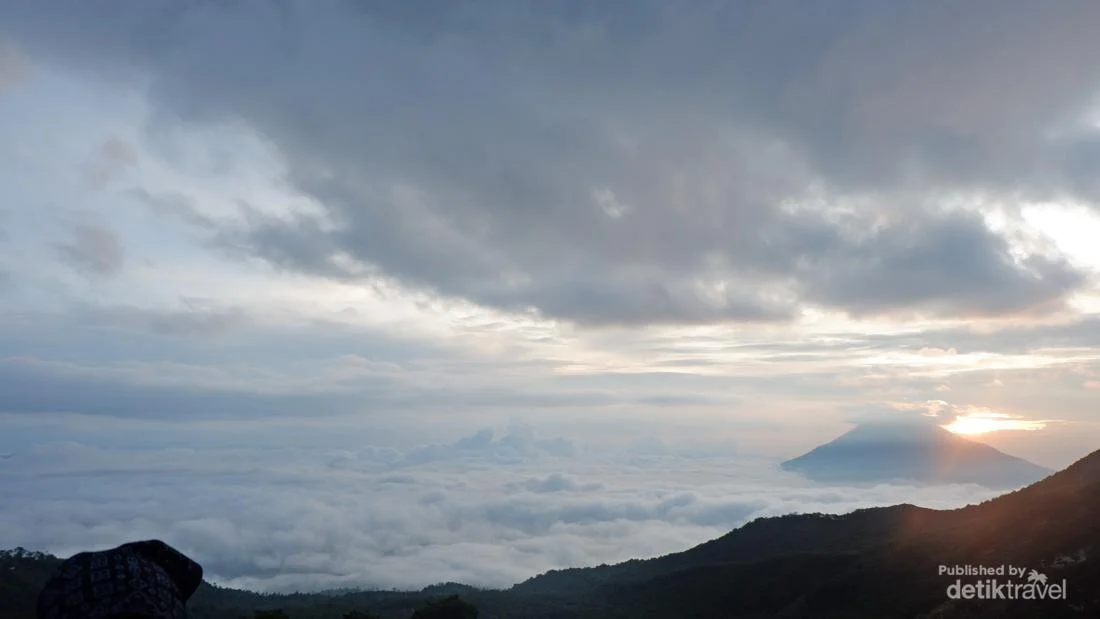
For a novice hiker with a sedentary daily routine, the initial phase of the ascent proved physically demanding. The incline tested cardiovascular endurance and leg strength, illustrating the stark physiological transition from a sedentary urban lifestyle to active high-altitude exertion. However, the physical discomfort was systematically counterbalanced by the shifting environmental spectacle overhead. As the hiking party progressed, the predawn sky gradually transitioned from deep indigo to soft hues of amber and gold. The emergence of the sunrise served as the first major visual reward of the expedition, casting a warm glow over the rugged terrain and energizing the fatigued climbers.
Navigating the Geological Wonders of Mount Papandayan
Following the sunrise observation, the expedition navigated deeper into the mountain’s distinct ecological zones. The trail led the group directly into the iconic Dead Forest (Hutan Mati), a surreal landscape characterized by bleached, blackened tree trunks standing starkly against pale volcanic ash—the remnants of past volcanic activities that left a hauntingly beautiful aesthetic.
Progressing further, the trail unveiled a diverse tapestry of high-altitude ecosystems. Walkers traversed expansive fields of Javanese edelweiss (Anaphalis javanica), a protected alpine flower renowned for its resilience in harsh climatic conditions. The route subsequently offered panoramic vistas of high-altitude lakes and sulfur streams, notably the Sungai Belerang (Sulfur River) area, where active geothermal vents release plumes of steam, offering a vivid reminder of the mountain’s active volcanic status.
The concentration of such diverse geographical features within a compact radius is precisely what makes Mount Papandayan a prime location for a single-day itinerary. Unlike larger stratovolcanoes that require multi-day camping expeditions to fully appreciate, Papandayan allows visitors to experience crater landscapes, dead forests, and sulfur fields within a matter of hours.
The Socio-Cultural Dynamics of Open Trips
Beyond its geological and ecological appeal, the expedition underscored the evolving social dynamics of modern travel. The open trip framework assembled a cohort of strangers, varying in background, profession, and age, yet unified by a singular objective: escaping urban congestion to find solace in nature.
Throughout the strenuous climb, organic bonds formed among the participants. Physical challenges acted as a social catalyst; mutual assistance on steep inclines, shared pauses to catch one’s breath, and collective appreciation of scenic vistas fostered an atmosphere of camaraderie. This phenomenon highlights a distinct shift in travel behavior, where the destination is no longer the sole source of value. The interpersonal connections forged with strangers often rival the physical scenery in terms of psychological impact.
Sociologists and tourism analysts note that open trips democratize travel, making outdoor recreation accessible to individuals who lack a pre-existing peer group with matching schedules or interests. For urban professionals and university students, these excursions offer a safe, structured environment to expand social networks while engaging in healthy physical pursuits.
Psychological Implications and the Power of the "Micro-Jeda"
The underlying thesis of the Mount Papandayan expedition centers on the psychological necessity of the "jeda" (pause). In contemporary psychological discourse, chronic exposure to dense urban stimuli and high-stress environments is directly linked to cognitive fatigue, anxiety, and diminished productivity.
When individuals immerse themselves in natural environments—a concept frequently studied under Attention Restoration Theory (ART)—the brain’s directed attention mechanisms are allowed to rest. Unlike urban environments, which demand constant, active cognitive filtering of traffic, noise, and digital alerts, natural settings engage "soft fascination," allowing the mind to wander and recover.
The journey to Mount Papandayan demonstrated that cognitive restoration does not necessitate extended sabbaticals or weeks of travel. A tightly curated, single-day excursion can effectively reset an individual’s mental baseline. By the time the descent began—initiated shortly after midday (zuhr)—and the return journey to Bandung commenced, the participants had experienced a complete psychological circuit breaker.
Returning from the mountain in the afternoon, the travelers arrived back in urban centers with renewed perspective. The expedition proved that profound personal experiences, physical invigoration, and social enrichment can be successfully compressed into a 24-hour window.
Industry Outlook and Ecotourism Management
From a broader economic and environmental perspective, the popularity of single-day climbs at Mount Papandayan reflects the vitality of Garut Regency’s tourism sector. Local tourism authorities and conservation agencies have increasingly focused on balancing visitor accessibility with environmental preservation.
Managing high volumes of day-trippers and open trip operators requires strict regulatory oversight to prevent trail degradation, waste accumulation, and damage to fragile alpine flora such as the edelweiss fields. Park management data from regional forestry and conservation units consistently emphasize the importance of carrying-capacity limits, waste-pack-in-pack-out policies, and designated trail adherence.
Industry observers suggest that as the demand for micro-adventures continues to escalate through 2026 and beyond, regional destinations like Mount Papandayan will need to leverage digital registration systems and real-time visitor tracking to ensure sustainable management. By doing so, these natural assets can continue to offer urban populations a vital psychological sanctuary without compromising ecological integrity.
Ultimately, the single-day ascent of Mount Papandayan on February 23 stands as a testament to modern adaptive tourism. It illustrates that in an era defined by hyper-connectivity and relentless schedules, the antidote to burnout is often closer and more accessible than imagined—requiring nothing more than a vision, a willingness to step outside one’s comfort zone, and a single day dedicated to the quiet majesty of the natural world.

