
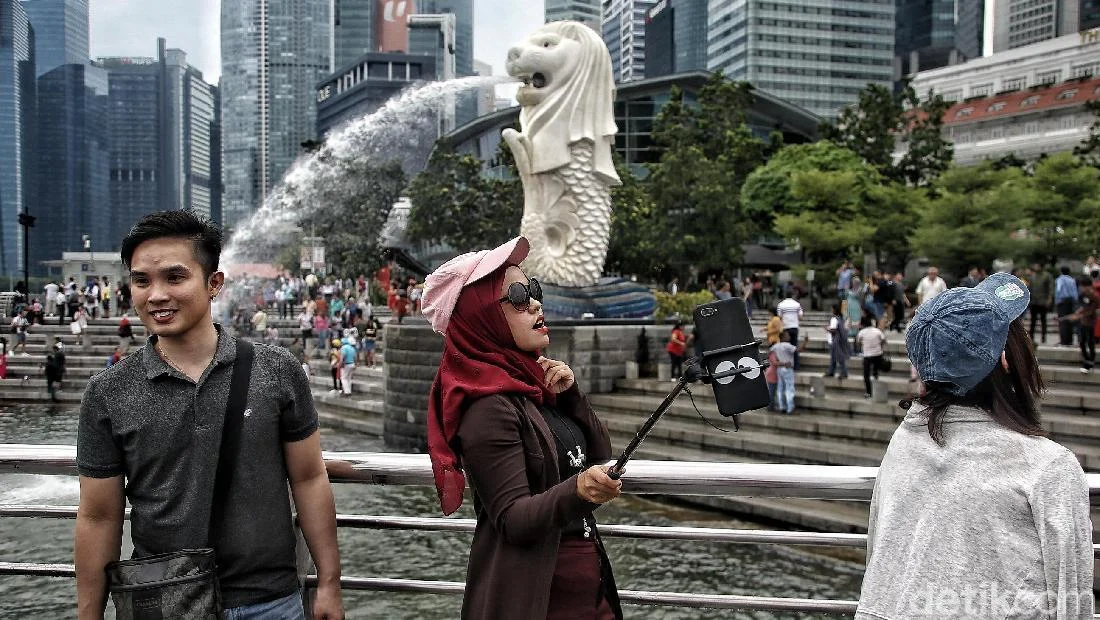
The global tourism landscape continues to experience a complex post-pandemic readjustment, and the Republic of Singapore is no exception to these shifting dynamics. Long celebrated as one of the most vibrant and preferred international destinations for travelers across Southeast Asia—particularly among Indonesian tourists affectionately and colloquially referred to in digital spaces as citizens of "warga +62"—Singapore is currently navigating a noticeable moderation in inbound visitor arrivals. Recent official statistics released by the Singapore Tourism Board (STB) and highlighted by regional media outlets indicate a subtle yet significant contraction in the city-state’s tourism metrics for the year 2026.
According to data compiled up to late September 2026, Singapore recorded a cumulative total of 11.43 million international visitor arrivals during the first eight months of the year. When evaluated against the corresponding period from the previous year, this figure represents a marginal overall decline of approximately 1.7 percent. While a minor percentage drop may initially appear negligible within the broader framework of international commerce, it underscores deeper underlying shifts in consumer behavior, regional economic pressures, and heightened competition within the global tourism marketplace. The data, originally cited from VN Express in late September 2026, points to a broader narrative of market correction following the aggressive post-pandemic travel surges of recent years.
Monthly Performance and Key Source Markets
A granular examination of the data reveals specific trends in monthly visitor volume. According to the latest figures published by the Singapore Tourism Board, the month of August 2026 welcomed approximately 1.61 million international tourists to the island nation. This performance marked a slight contraction of 1.2 percent compared to the preceding month of July 2026, while remaining relatively stagnant on a year-on-year basis when compared to August of the previous year.
Despite the fluctuating monthly figures, the composition of Singapore’s primary inbound tourism markets has remained structurally consistent, though internal growth rates within these markets have diverged significantly. During August 2026, the top five source markets contributing the highest volume of travelers to Singapore were the People’s Republic of China, Indonesia, Malaysia, Japan, and India. However, beneath this familiar hierarchy lies a divergence in momentum. Performance data indicates that while certain key corridors maintained positive trajectories, other traditional strongholds experienced notable deceleration. Specifically, the tourism flows originating from Indonesia and India exhibited a pronounced cooling trend, raising questions among tourism analysts regarding the shifting preferences of travelers from these vital demographic regions.
The Indonesian Factor: A Shift in Historical Dominance
For decades, Indonesia has occupied an unassailable position as one of the absolute bedrock pillars of Singapore’s tourism economy. Geographically proximate, culturally linked, and deeply integrated through robust trade, education, healthcare, and leisure networks, Indonesian travelers have historically constituted a massive share of Singapore’s foreign arrivals. Year after year, Indonesia has consistently ranked at or near the absolute top of foreign visitor volume contributions to the Lion City, serving as a reliable engine for Singapore’s retail, hospitality, and entertainment sectors.
Official historical metrics from the Singapore Tourism Board underscore this deep integration, noting that Indonesian arrivals historically hover around the impressive milestone of 2.4 million visits annually, traditionally establishing Indonesia as either the single largest or the second-largest tourism source market, closely rivaling China. Given this historical supremacy, the recent deceleration in Indonesian visitor numbers observed through the middle quarters of 2026 has caught the attention of industry observers.
Interestingly, official bodies such as the STB have not explicitly detailed the precise macroeconomic or micro-level catalysts driving this specific downward adjustment from the Indonesian market. Industry analysts, however, point to a confluence of potential domestic and international factors. These may include fluctuating currency valuations impacting purchasing power parity, domestic economic adjustments within Indonesia, shifting consumer preferences toward alternative regional destinations offering high-value experiences, or a maturation of the outbound travel market where frequent travelers seek novel destinations beyond the traditional short-haul weekend getaways to Singapore.
Divergent Recovery Paths Among Core Markets
The cooling trend observed in the Indonesian and Indian markets contrasts sharply with the performance of other core contributors. A closer look at the August 2026 data released by Singaporean authorities reveals that out of the top five principal source markets, only two—China and Malaysia—managed to register positive annual growth in visitor contributions during that specific month.
The steady recovery and expansion of outbound tourism from China continue to serve as a vital stabilizing force for regional tourism economies across Asia. Driven by the progressive restoration of international aviation capacity, streamlined visa facilitation policies implemented over recent years, and a sustained, albeit cautious, release of pent-up travel demand, Chinese travelers have steadily reclaimed their status as a dominant volume driver for Singapore. Similarly, Malaysia—bolstered by shared land borders, frequent business travel, and strong family visitation ties—has demonstrated resilience, maintaining a reliable upward trajectory in visitor volume.
The divergence between these expanding markets and the softening numbers from Indonesia and India highlights an increasingly competitive and fragmented global travel environment. Tourism boards can no longer rely on broad-brush promotional campaigns; instead, they must deploy highly targeted strategies to address the unique behavioral shifts occurring within each distinct national demographic.
Strategic Tourism Investments and 2026 Targets
Facing a complex geopolitical landscape, intensifying regional competition from neighboring Association of Southeast Asian Nations (ASEAN) member states, and fluctuating travel patterns, the Singaporean government and relevant statutory boards have proactively escalated their public investments in the tourism sector. According to comprehensive reports from The Straits Times, Singapore’s strategic tourism roadmap for 2026 is anchored by ambitious yet calculated targets, aiming to attract a total of between 17 million and 18 million international visitors over the course of the calendar year.
To achieve these benchmarks amidst headwinds such as currency volatility, inflationary pressures on travel services, and regional geopolitical tensions, Singapore has adopted a multifaceted stimulus approach. Rather than relying solely on traditional marketing, the city-state is heavily investing in infrastructure enhancement, large-scale entertainment programming, business tourism (MICE – Meetings, Incentives, Conferences, and Exhibitions), and high-profile cultural and sporting events designed to command global attention and justify discretionary travel spending.
Enhancing Connectivity and Capturing Late-Year Demand
As part of its comprehensive strategy to fortify its tourism pipeline and capture robust late-year travel demand, Singapore is actively working to expand its global connectivity network. Recognizing that seat capacity and direct flight availability are primary determinants of international travel volume, aviation authorities and tourism stakeholders have initiated coordinated efforts to introduce new operational routes and increase flight frequencies connecting Changi Airport with major tourism and business hubs across Asia and Europe.
These expanded air links are strategically designed to lower logistical barriers for travelers, reduce transit times, and stimulate competitive pricing among commercial airlines. By reinforcing Singapore’s status as a premier global aviation mega-hub, the nation aims to entice both long-haul travelers from Western markets seeking multi-destination Asian itineraries and short-haul regional visitors looking for seamless, hassle-free holiday experiences.
Economic Implications and Future Outlook
The subtle contraction in visitor arrivals observed during the first eight months of 2026 carries significant implications for Singapore’s broader domestic economy. Tourism is a multi-sectoral economic engine that directly influences retail turnover, hotel occupancy rates, food and beverage revenues, transportation services, and employment opportunities across the island. A prolonged softening in high-volume source markets like Indonesia, even if partially offset by gains from China and Malaysia, necessitates a strategic recalibration among local business owners and policymakers.
Economists and hospitality analysts suggest that the current market adjustment should not be interpreted as a structural crisis, but rather as a normal phase of post-pandemic market maturation. As global travel patterns settle into a permanent post-crisis equilibrium, destinations are required to compete more aggressively on value proposition, service excellence, and experiential innovation rather than relying on historical reputation alone.
For Singapore, maintaining its competitive edge will depend heavily on its ability to continually reinvent its tourism product portfolio. By diversifying attractions, deepening engagement with emerging demographic segments, leveraging digital innovations in tourism marketing, and proactively addressing the underlying factors causing temporary slowdowns in traditional strongholds like Indonesia, Singapore remains well-positioned to navigate current headwinds. The remainder of 2026 will serve as a critical proving ground for these strategic initiatives, determining whether the nation can successfully bridge the gap toward its ambitious annual visitor volume targets.

