
The landscape of international travel has shifted dramatically in recent years, particularly in regions marked by geopolitical instability and abrupt regime changes. For Arunima IP, a content creator and avid backpacker hailing from Palakkad in the southern Indian state of Kerala, a journey intended to document remote cultures transformed into a harrowing ordeal. Traveling solo through the rugged terrain of Afghanistan, Arunima found herself detained by members of the Taliban, sparking widespread concern and shedding light on the precarious realities faced by female travelers in the war-affected nation. Her experience underscores the severe restrictions imposed on women under the current administration, the vulnerabilities inherent in independent tourism within conflict zones, and the rapid mobilization of digital networks during international emergencies.
Main Facts and Incident Overview
Arunima IP embarked on her backpacking expedition to Afghanistan with the objective of exploring rural villages and documenting her experiences for her dedicated YouTube audience and social media followers. Approximately two weeks into her expedition, and one week after venturing into remote settlements, her itinerary was abruptly interrupted. On Monday, September 7, she was intercepted by armed members of the Taliban who identified themselves as regional security personnel authorized by the de facto government.
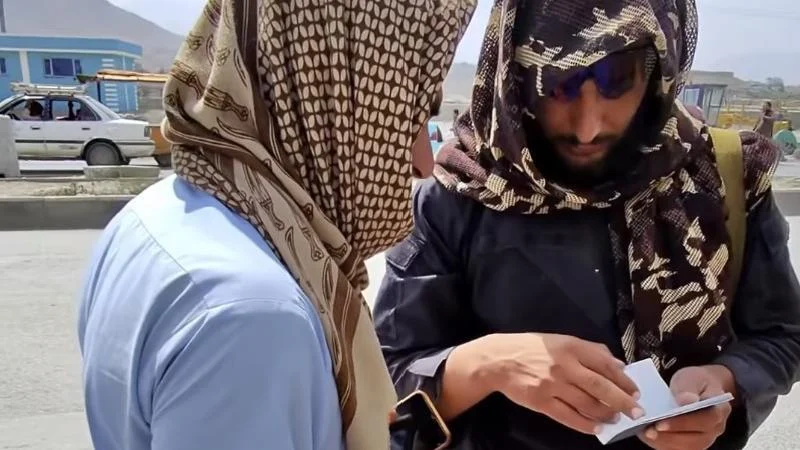
The detention occurred at a roadside checkpoint, a common feature of the heavily policed infrastructure currently managed by the Taliban across Afghanistan. Armed with rifles, the patrol officers demanded travel documentation. Arunima presented her Indian passport, but the language barrier and unfamiliarity with foreign travel documents immediately complicated the interaction. Because she was traveling alone—a direct violation of strict local edicts governing female mobility—the situation escalated quickly.
According to Arunima’s subsequent video accounts, individual Taliban fighters frequently operate with broad, localized autonomy, often assuming roles akin to law enforcement officials with unchecked authority. Her attire further exacerbated the tension; unlike the local women in the villages she visited, whose faces were entirely concealed save for an opening for their eyes, Arunima’s face remained uncovered. This deviation from rigid dress codes, combined with her status as an unaccompanied female traveler, formed the primary basis for her detention, which lasted for agonizing hours and left her fearing for her safety.
Chronology of Events
The unfolding of events can be mapped across a tense 24-hour timeline that tested the limits of digital communication and consular safety nets in an isolated region:
Two Weeks Prior: Arunima IP arrives in Afghanistan, beginning an ambitious solo backpacking trip across various regions.
One Week Prior: She ventures deeper into remote, rural villages to capture lifestyle content for her digital channels.
Monday, September 7: Arunima is stopped at a Taliban checkpoint by armed guards. Her Indian passport is examined, and she is detained due to traveling alone and not adhering to local dress expectations regarding face coverings.
During Detention: Experiencing severe psychological distress, Arunima manages to issue an emergency SOS via social media, appealing for assistance to contact the Indian Embassy.
Tuesday Morning (Approximately 24 hours later): Arunima shares an update on Instagram confirming her release and stating, "I am safe now."
Tuesday Evening: She secures transport via a local freight truck heading toward Banyan. During transit, she notes the profound rarity of her presence as a woman in public spaces, drawing intense scrutiny from locals and armed men at a roadside tea stall who photograph her.
Post-Release Trajectory: Arunima prepares to cross the border into Uzbekistan, located approximately 500 kilometers away, while awaiting an Iranian visa, remaining anxious about potential further checkpoints along her route.
Contextual Background: Women’s Rights and Tourism in Taliban-Controlled Afghanistan
To fully comprehend the gravity of Arunima’s detention, it is essential to examine the broader sociopolitical landscape of Afghanistan since the Taliban’s return to power in August 2021. The administration has progressively dismantled the rights and freedoms of women and girls, implementing severe edicts that regulate almost every aspect of public and private life. Among these regulations are strict bans on women traveling medium-to-long distances without a male chaperone, known as a mahram. Furthermore, stringent dress codes mandating total face coverings in public have been rigorously enforced by the Ministry for the Propagation of Virtue and the Prevention of Vice.
Despite these draconian conditions, a niche sector of adventurous tourism has emerged. Known colloquially as "dark tourism" or off-the-beaten-path travel, a small number of international backpackers and content creators seek out Afghanistan, drawn by its dramatic landscapes, historical significance, and the relative quiet following decades of active warfare. However, these travelers often underestimate the friction between international norms of mobility and the fundamentalist ideology governing the country. While the Taliban has intermittently expressed a desire to encourage foreign tourism to bolster its isolated economy, the reality on the ground remains volatile, unpredictable, and perilous, particularly for solo female travelers who defy local cultural and legal mandates.
The Role of Digital SOS and Social Media in Modern Crises
Arunima’s case highlights the dual-edged sword of digital connectivity for travelers in distress. Content creators operating in remote regions rely heavily on mobile data and social media platforms to upload vlogs and maintain engagement with their audiences. In this instance, the digital infrastructure served as a critical lifeline.
Trapped in a room with armed men and uncertain of her fate, Arunima utilized her online presence to issue a digital SOS. By broadcasting her situation and tagging followers with requests to alert the Indian diplomatic mission, she mobilized a virtual community. The rapid amplification of her distress signal created immediate external pressure. While official diplomatic channels often operate with deliberate caution and bureaucratic slowness, the viral nature of a distress call on platforms like Instagram and YouTube can accelerate institutional awareness. Within roughly 24 hours of her initial detention and digital plea, her release was secured, demonstrating how real-time digital documentation can influence outcomes in high-risk environments.
Official Silence and Diplomatic Implications
As of the reporting of this incident, neither the Taliban administration nor the Ministry of External Affairs of India has issued a formal statement regarding Arunima IP’s detention and subsequent release. This silence is indicative of complex diplomatic realities. India, like most nations, does not officially recognize the Taliban government, maintaining only a technical team in Kabul to oversee humanitarian assistance rather than a fully functioning embassy. Consequently, consular protection for Indian nationals in Afghanistan is severely constrained, relying heavily on backchannel communications and local contacts rather than formal diplomatic intervention.
For the Taliban, acknowledging the arbitrary detention and subsequent release of a foreign tourist—particularly a solo female—can present public relations challenges. The de facto regime is keen to project an image of internal stability, institutional control, and hospitality toward foreign visitors to legitimize its rule and eventually attract international investment. Incidents highlighting the harassment or detention of tourists directly contradict this narrative, likely explaining the preference for quiet resolutions over public commentary.
Broader Impact and Analysis of Solo Travel Risks
The ordeal faced by the Indian content creator serves as a stark case study for the global travel community, travel insurance agencies, and government advisory boards. Major governments, including India, routinely issue stringent travel advisories urging their citizens to avoid all travel to Afghanistan due to the high risks of armed conflict, civil unrest, and arbitrary detention by local authorities.
Experts in risk management and international travel point out that independent travel in active conflict zones or under authoritarian regimes strips visitors of standard consular protections. When travelers bypass registered tour operators or local fixers who understand the nuanced dynamics of regional commanders, they expose themselves to immense vulnerabilities. In regions where local fighters possess discretionary police powers and divergent interpretations of law, minor infractions—such as an uncovered face or the absence of a male escort—can rapidly escalate from a cultural misunderstanding into a life-threatening detention.
Looking Ahead: The Journey to Uzbekistan and Continuing Concerns
Following her release, Arunima resumed her transit, navigating the logistical challenges of exiting Afghanistan. Her itinerary involves traveling approximately 500 kilometers toward the border of Uzbekistan, from where she hopes to secure onward transit documentation for Iran. Despite her physical liberation, her accounts reflect lingering psychological trauma and acute anxiety regarding potential encounters with further security patrols along the remaining stretch of her Afghan journey.
The incident is expected to reverberate within the community of independent travel vloggers and adventure tourists, prompting renewed debates regarding ethical travel, the responsibilities of digital content creators in high-risk zones, and the limits of state protection for citizens who venture into unrecognized territories. As Arunima makes her way toward the Uzbek border, her experience remains a cautionary tale of the friction between modern wanderlust and the unyielding realities of life under fundamentalist rule.

