
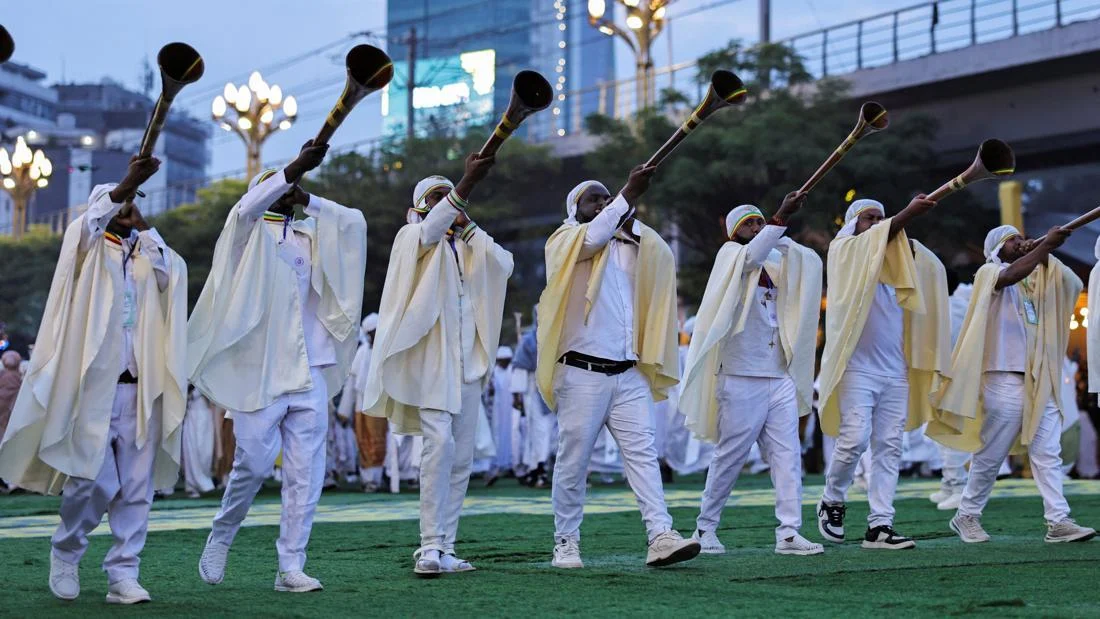
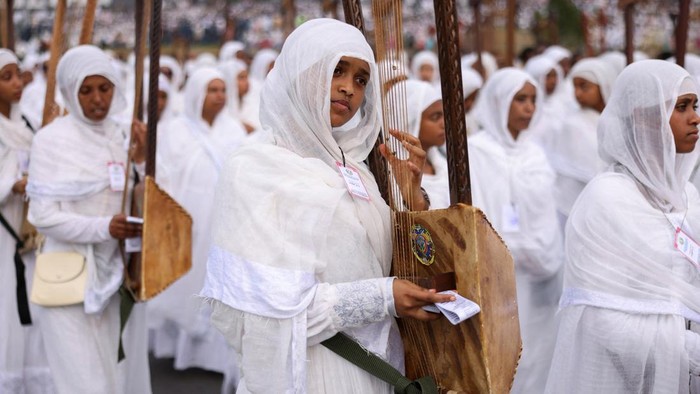
The vibrant and deeply spiritual atmosphere of Addis Ababa served as the epicenter of devotion on September 26, 2026, as thousands of Ethiopian Orthodox Christians convened at the iconic Meskel Square. Clad in traditional white vestments, members of the Ethiopian Orthodox church choir stood at the forefront of the celebrations, their harmonious voices carrying religious hymns across the sprawling public square. The annual Meskel Festival, which commemorates the historic discovery of the True Cross—the crucifix upon which Jesus Christ is traditionally believed to have been crucified—remains one of the most significant events on the religious and cultural calendar of East Africa. Blending ancient Christian traditions with indigenous community customs, the festival offered both a solemn reflection on faith and a vibrant display of cultural heritage, even as contemporary socio-political anxieties cast a shadow over the proceedings.
Historical Roots and the Legend of the True Cross
To fully understand the profound cultural weight of the Meskel Festival, one must look back to the historical narratives that have sustained it for over 1,600 years. According to Ethiopian Orthodox tradition, the festival marks the fourth-century discovery of the True Cross by Empress Helena, the mother of Roman Emperor Constantine the Great. Historical chronicles state that Empress Helena dispatched a mission to Jerusalem to locate the crucifix. Following divine guidance and the burning of aromatic incense—the smoke of which reportedly indicated the exact burial location—she unearthed the sacred relic.
A portion of this revered artifact was subsequently sent to the Ethiopian imperial court, cementing a permanent spiritual link between the ancient kingdom and the origins of Christianity. This narrative has been preserved through centuries of oral and written tradition, ultimately evolving into a foundational pillar of Ethiopian identity. In recognition of its unique cultural value and enduring community traditions, the United Nations Educational, Scientific and Cultural Organization (UNESCO) officially inscribed the Meskel Festival onto its Representative List of the Intangible Cultural Heritage of Humanity in December 2013.

The Chronology of Celebration: From Processions to the Demera
The celebration of Meskel follows a precise and centuries-old chronological sequence that engages communities nationwide. The lead-up to the main event involves weeks of localized preparations, culminating on the eve of the festival with the central ritual known as the Demera.
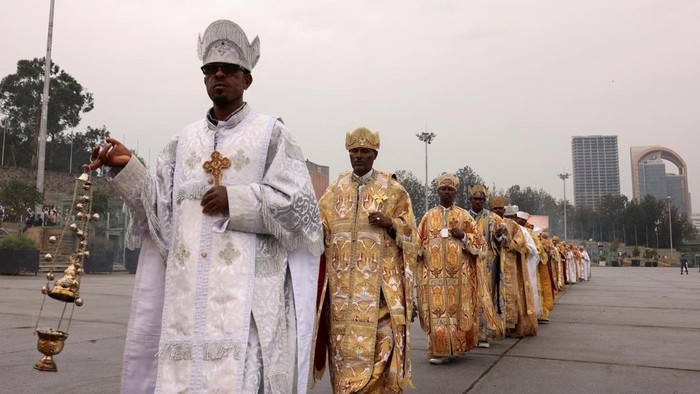
As daylight fades on September 26, attention shifts to central gathering points such as Meskel Square in Addis Ababa. Here, a towering cone-shaped pyre made of branches and decorated with daisies—locally known as Meskel flowers—is erected. Priests, deacons, and choir members process around the structure, chanting hymns and waving ceremonial crosses. The climax of the evening arrives when religious leaders ignite the pyre, creating a massive bonfire that illuminates the night sky.

The direction in which the fire collapses and the manner in which the smoke rises are traditionally interpreted by local elders and religious figures as omens for the coming year, symbolizing everything from agricultural yields to regional peace. Following the burning of the Demera, families return home to feast on traditional dishes such as doro wat (chicken stew) and share local beverages, reinforcing communal bonds that transcend socioeconomic divisions.
Cultural Intersection: Marking the Shift of Seasons
Beyond its profound religious significance, the Meskel Festival holds a practical, ecological, and socio-cultural function within the traditional Ethiopian calendar. Anthropologists and cultural historians note that the timing of the festival coincides with a crucial environmental transition.
According to reports from international news agencies such as the Associated Press, the conclusion of Meskel traditionally marks the end of the heavy monsoon rainy season (Krempt) and heralds the arrival of spring (Bona), a period characterized by clear skies, blooming yellow daisies, and the preparation of agricultural lands for harvest. Consequently, the festival serves as a natural demarcation point in the agrarian cycle of Ethiopia, uniting spiritual devotion with thanksgiving for the renewal of the earth and the promise of agricultural abundance.
Contemporary Challenges and Prayers for Peace
While the 2026 Meskel Festival retained its customary visual splendor and liturgical solemnity, it unfolded against a backdrop of tangible geopolitical and social tension. Ethiopia has faced persistent internal strife in recent years, most notably regarding conflicts in the northern regions such as Tigray, which have strained national unity and displaced thousands of civilians.
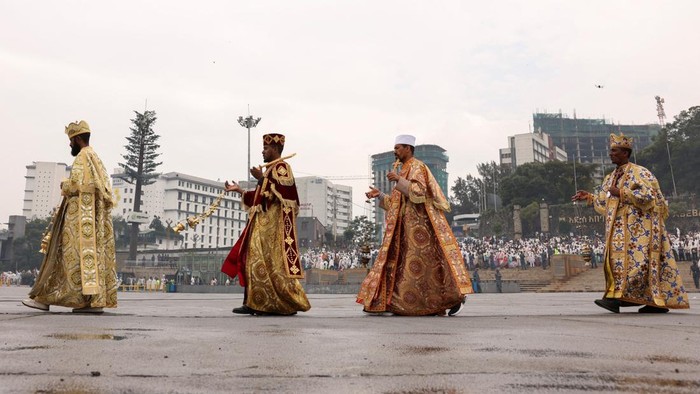
Recognizing these vulnerabilities, many participants and religious leaders utilized the sacred platform of Meskel Square to transcend political divisions and voice collective aspirations for national reconciliation. Observers noted that the hymns sung by the church choirs and the prayers offered by the clergy frequently emphasized themes of harmony, forgiveness, and endurance. For millions of faithful, the act of gathering around the Demera bonfire was interpreted not merely as a historical commemoration, but as an urgent plea for divine intervention to secure lasting peace and stability across the Horn of Africa.
Socio-Economic and International Implications
The annual observance of the Meskel Festival also carries broader socio-economic implications for Ethiopia. As one of the nation’s premier cultural tourism events, it attracts international researchers, diaspora members, and foreign travelers eager to witness one of Christianity’s oldest living traditions. The influx of visitors provides a temporary economic stimulus to the hospitality, transport, and artisan sectors in Addis Ababa and surrounding regions.
However, analysts point out that the realization of tourism potential and national economic recovery remains inextricably linked to internal security. The ability of the federal government and regional administrations to ensure safe passage and peaceful observances during major religious holidays like Meskel serves as a barometer of institutional stability. As Ethiopia continues to navigate complex political transitions, the preservation of ancient cultural anchors such as the Meskel Festival highlights the resilience of its population, demonstrating how shared historical traditions can continue to foster national cohesion even in times of profound uncertainty.

