
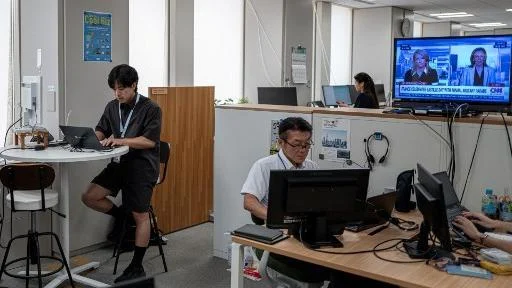
Tokyo, Japan – In a significant shift of workplace attire norms, the Tokyo Metropolitan Government has begun permitting its employees to wear shorts to the office. This progressive policy change, implemented amidst increasingly extreme summer temperatures and a national drive to conserve energy, aims to enhance employee comfort and reduce reliance on air conditioning, thereby mitigating soaring energy costs. The move, however, has sparked a divided reaction across Japan, with some embracing the newfound freedom as a welcome comfort, while others express reservations about the appropriateness of casual attire in professional settings.
The policy, initially announced by Governor Yuriko Koike in the spring, encourages civil servants to adopt more relaxed dress codes, including polo shirts, t-shirts, sneakers, and, notably, shorts, provided they are suitable for the nature of their duties. This initiative builds upon the government’s long-standing "Cool Biz" campaign, a pioneering energy-saving program launched in 2005 when Koike served as the Minister of the Environment. The original "Cool Biz" campaign encouraged workers to shed formal business attire such as suits and ties during the summer months to facilitate a higher thermostat setting and reduce air conditioner usage. The latest iteration of this policy represents an evolution, acknowledging the escalating heat challenges and the persistent need for energy efficiency.
A Shift Driven by Escalating Heat and Energy Concerns
The impetus behind this sartorial loosening is multifaceted, rooted in both the undeniable realities of a warming climate and Japan’s ongoing energy security concerns. The Japanese archipelago has been grappling with unprecedented heatwaves, with the Japan Meteorological Agency reporting that 2023 marked the hottest summer on record, with temperatures frequently soaring above 40 degrees Celsius (104 degrees Fahrenheit). This phenomenon has led meteorological authorities to introduce the official term "kokusho" – literally meaning "suffocating heat" – to describe the increasingly frequent and intense heatwaves plaguing the nation.
Scientists attribute this alarming trend to human-induced climate change, which is amplifying the frequency, duration, and intensity of extreme weather events globally. For Japan, a nation heavily reliant on imported energy and vulnerable to the impacts of global warming, these environmental shifts pose significant challenges to both public well-being and economic stability. The high cost of energy, exacerbated by global market fluctuations and geopolitical events, further underscores the urgency of implementing energy-saving measures.
Governor Koike’s administration views the relaxation of dress codes as a practical and immediate step towards addressing these twin challenges. By allowing employees to wear more comfortable clothing, the government hopes to reduce the overall demand for electricity used in air conditioning. This pragmatic approach aims to create a more sustainable and resilient work environment that can better adapt to the physiological demands of extreme heat while simultaneously contributing to national energy conservation goals.
Employee Reactions: Comfort vs. Convention
The personal experiences of Tokyo Metropolitan Government employees offer a glimpse into the immediate impact of this policy shift. Noboru Watanabe, a 50-year-old employee at one of the Tokyo Metropolitan Government offices, admitted to initial feelings of self-consciousness upon his first day at work in shorts. “At first, it felt embarrassing,” he shared, as quoted by AFP. “But after wearing them, I realized how comfortable they actually are.” Despite his newfound appreciation for the comfort, Watanabe indicated that he still opts for formal shirts when required by specific professional engagements, acknowledging that these garments can feel warmer in the prevailing temperatures.
His sentiment is echoed by Takuya Ozawa, a 38-year-old colleague, who described his commute home as significantly more pleasant since adopting shorts. "It feels much cooler," he stated, highlighting the tangible relief the policy offers during sweltering journeys. For many, the ability to adjust personal attire in response to the heat represents a practical and welcome solution to the daily discomfort of extreme temperatures.
However, the policy has not been universally embraced, igniting a lively debate across social media platforms and within professional circles. Takayuki Deguchi, a 30-year-old marketing company employee whose firm still mandates suits, expressed a sense of envy towards the Tokyo government’s progressive stance. "I think being able to wear shorts in very hot weather is a very flexible approach because it helps regulate body temperature," he commented, underscoring the perceived benefits of such flexibility.
Conversely, some individuals find the notion of wearing shorts in a professional environment to be inappropriate and a transgression of established workplace decorum. Sachie Koike, a 52-year-old real estate agent, while acknowledging the merit of shedding ties and jackets in summer heat, believes that shorts cross a line. "I consider shorts to be synonymous with holiday attire," she remarked, articulating a sentiment shared by many who associate the garment with leisure rather than professional settings. She further expressed concern about the perceived lack of neatness when men’s legs, which can be hairy, are exposed in the workplace. This perspective highlights a deeper societal expectation regarding professional appearance and the perceived boundaries between personal comfort and professional presentation.
A History of "Cool Biz" and Energy Conservation
The current policy allowing shorts is not an isolated event but rather a logical extension of Japan’s long-standing commitment to energy conservation during the summer months. The "Cool Biz" campaign, initiated in 2005, was a landmark effort to reduce electricity consumption by encouraging a less formal workplace dress code. The campaign successfully lobbied businesses and government agencies to allow employees to forgo suits and ties, and to adjust air conditioning settings to a more energy-efficient 28 degrees Celsius (82.4 degrees Fahrenheit).
The initial success of "Cool Biz" demonstrated the potential for widespread behavioral change in response to environmental and economic imperatives. Data from the Ministry of the Environment indicated that the campaign, in its early years, led to a significant reduction in electricity consumption, estimated to be around 1.46 million kiloliters of oil equivalent, contributing to a decrease in carbon dioxide emissions.
Over the years, the "Cool Biz" initiative has evolved, with various iterations and extensions encouraging increasingly casual attire. However, the unprecedented heatwaves of recent years have necessitated a more robust and direct approach. The Tokyo Metropolitan Government’s decision to explicitly permit shorts signifies a recognition that traditional professional attire may be increasingly incompatible with the physiological demands of extreme heat, pushing the boundaries of what is considered acceptable workplace dress.
Broader Implications and Future Outlook
The Tokyo Metropolitan Government’s decision to permit shorts in the workplace is more than just a minor adjustment to a dress code; it is a potent symbol of adaptation in the face of pressing environmental and economic realities. The policy’s success, and the public discourse it has generated, will likely influence workplace norms not only within Japan but potentially in other nations experiencing similar challenges.
The debate highlights a fundamental tension between tradition and innovation, comfort and professionalism, and the evolving understanding of what constitutes appropriate workplace attire in a rapidly changing world. As climate change continues to drive more extreme weather events, governments and corporations globally will face increasing pressure to balance employee well-being with operational efficiency and energy conservation.
The implications of this policy extend beyond mere comfort. By actively encouraging energy-saving measures through relaxed dress codes, the Tokyo government is not only addressing immediate concerns but also fostering a culture of environmental awareness and responsibility within its workforce. This can have a ripple effect, influencing employee attitudes and behaviors beyond the office.
Furthermore, the policy’s reception offers valuable insights into societal attitudes towards work and formality. The divided reactions suggest that while many are ready to embrace practical solutions to cope with heat, deeply ingrained notions of professionalism and decorum remain influential. Future policy implementations will need to carefully navigate these differing perspectives, perhaps through clear guidelines on acceptable styles of shorts and continued dialogue with employees and employers.
Looking ahead, it is plausible that other prefectures and private sector companies in Japan, particularly those in sectors less bound by strict dress codes, may follow Tokyo’s lead. The effectiveness of such policies will hinge on continued public engagement, clear communication of objectives, and a willingness to adapt as environmental conditions and societal expectations evolve. The conversation around workplace attire in Japan, sparked by the simple act of allowing shorts, underscores a broader global dialogue about how we can best live and work sustainably in an era of unprecedented environmental challenges. The experience of Tokyo’s civil servants, navigating their professional lives in more casual attire, serves as a compelling case study in this ongoing adaptation.

