
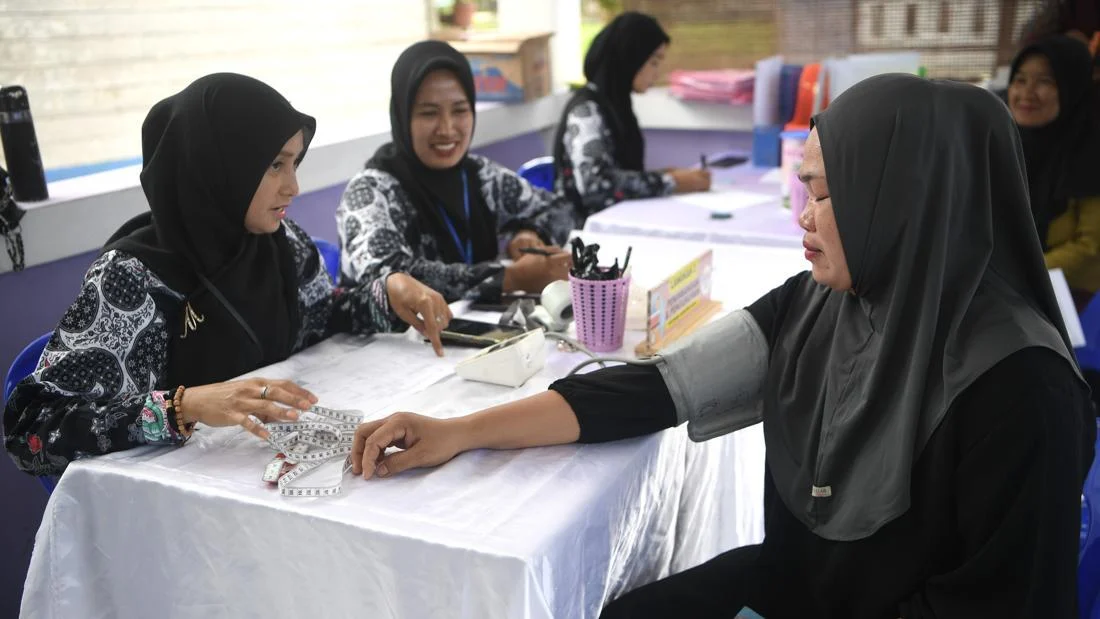
The Foto Health program, initiated at the Posyandu (Integrated Health Post) ILP Sebatik Tengah, has significantly bolstered the capacity for early disease detection and enhanced promotive-preventive healthcare services for the residents residing in the strategically vital border region between Indonesia and Malaysia. This initiative, launched with the objective of bridging healthcare accessibility gaps and empowering communities with vital health knowledge, represents a crucial step forward in safeguarding the well-being of those living in remote and often underserved areas. The program’s multifaceted approach, encompassing regular health screenings, educational outreach, and the provision of essential health information, aims to create a more resilient and healthier population along this critical frontier.
Background and Genesis of the Foto Health Program
The genesis of the Foto Health program can be traced back to a growing recognition of the unique health challenges faced by communities situated on the Indonesian-Malaysian border. These areas, characterized by their geographical isolation, limited access to specialized medical facilities, and often lower socioeconomic status, are particularly vulnerable to the spread of communicable diseases and the delayed diagnosis of non-communicable ailments. The Posyandu, a cornerstone of Indonesia’s primary healthcare system, has long served as the frontline for delivering basic health services. However, the ILP Sebatik Tengah Posyandu identified a need to augment its existing services with more targeted and proactive health interventions.
The ILP Sebatik Tengah Posyandu, located on Sebatik Island which is administratively divided between Indonesia and Malaysia, serves a population that navigates complex logistical and social landscapes. This geographical peculiarity necessitates a healthcare approach that is not only accessible but also culturally sensitive and responsive to the cross-border dynamics that may influence health-seeking behaviors. The Foto Health program was conceived as a direct response to these identified needs, aiming to leverage existing community structures while introducing innovative methods for health promotion and disease surveillance. The name "Foto Health" itself suggests a focus on visual aspects of health, possibly encompassing educational materials, early visual indicators of disease, or even leveraging technology for health monitoring.
The program’s establishment on Thursday, July 23, 2026, signifies a deliberate effort to integrate proactive health measures into the daily lives of border residents. The timing of its launch, amidst ongoing global health considerations and the continuous need for robust public health infrastructure, underscores its importance. The involvement of Agung Pambudhy, as reported by detikHealth, indicates a structured and documented effort to bring this initiative to fruition, likely involving extensive planning, resource allocation, and community engagement.
Core Components and Operational Framework
The Foto Health program is built upon a foundation of several key components designed to create a comprehensive health support system. At its heart is the commitment to early disease detection. This involves systematic screening for prevalent conditions, including but not limited to, hypertension, diabetes, tuberculosis, and malnutrition, particularly among vulnerable groups such as children, pregnant women, and the elderly. The program likely employs trained community health workers and volunteers who are equipped with the necessary tools and knowledge to conduct these screenings effectively within the Posyandu setting.
A significant aspect of the program is its emphasis on promotive and preventive services. This goes beyond mere diagnosis and treatment; it focuses on empowering individuals and communities with the knowledge and resources to maintain good health and prevent the onset of illness. This can manifest in various forms:
- Health Education Workshops: Regular sessions conducted at the Posyandu or within the community, covering topics such as hygiene, nutrition, family planning, maternal and child health, and the importance of vaccinations.
- Lifestyle Counseling: Providing guidance on healthy eating habits, physical activity, and stress management, especially crucial for combating the rise of non-communicable diseases.
- Immunization Drives: Ensuring high coverage rates for routine childhood immunizations and promoting adult vaccination programs where applicable.
- Sanitation and Environmental Health Promotion: Educating residents on maintaining clean living environments to prevent the spread of infectious diseases.
- Referral Systems: Establishing clear pathways for referring individuals who require further medical attention to higher-level health facilities, ensuring continuity of care.
The "Foto" element in the program’s name might also suggest the use of visual aids, such as posters, infographics, or even digital media, to convey health information more effectively, especially in areas where literacy rates might be a barrier. It could also imply a system for tracking visual health indicators, like skin conditions or early signs of eye diseases, through photographic documentation if appropriate technology is available and utilized.
Supporting Data and Evidence of Need
The implementation of the Foto Health program is grounded in a clear understanding of the health disparities and challenges prevalent in border regions. While specific statistical data for the ILP Sebatik Tengah Posyandu’s catchment area may not be publicly available in the initial reporting, broader trends from similar Indonesian border regions provide a strong justification for such initiatives.
For instance, data from the Ministry of Health often highlights higher incidences of certain infectious diseases in remote and border areas compared to urban centers. This can be attributed to factors such as limited access to clean water and sanitation, lower vaccination coverage, and increased risk of transmission due to cross-border movement. Non-communicable diseases are also a growing concern, with lifestyle changes and lack of regular health check-ups contributing to higher rates of hypertension and diabetes, often diagnosed at later, more critical stages.
According to national health surveys in Indonesia, approximately 30-40% of adults in rural and remote areas may have undiagnosed hypertension, a significant risk factor for stroke and heart disease. Similarly, rates of diabetes, while varying by region, are on an upward trend across the archipelago, and early detection is critical for effective management and prevention of complications.
Furthermore, maternal and child mortality rates, although declining nationwide, often remain higher in geographically challenging areas due to difficulties in accessing antenatal care, skilled birth attendants, and emergency obstetric services. The Posyandu, as a community-based service, plays a pivotal role in mitigating these risks by providing essential care and facilitating timely referrals. The Foto Health program aims to amplify these efforts, ensuring that no resident, regardless of their location on the border, is deprived of basic health services.
Timeline and Chronology of Implementation (Inferred)
While the article provides a specific launch date, the development of such a program would typically involve a preceding period of planning and preparation. A plausible timeline could be as follows:
- Phase 1: Needs Assessment and Planning (Months Prior to July 2026): This phase would involve the identification of health challenges specific to the ILP Sebatik Tengah Posyandu’s service area. This could include community surveys, consultation with local health authorities, and review of existing health data. During this period, the core objectives, components, and operational strategies of the Foto Health program would be formulated. Funding sources would be secured, and partnerships with relevant stakeholders, such as local government, NGOs, and community leaders, would be established.
- Phase 2: Resource Mobilization and Training (Weeks Prior to July 2026): This phase would focus on procuring necessary equipment, medical supplies, and educational materials. Crucially, community health workers and volunteers assigned to the program would undergo specialized training in early disease detection techniques, health education methodologies, and data collection.
- Phase 3: Program Launch and Initial Implementation (July 23, 2026, Onwards): The official launch of the Foto Health program at the Posyandu ILP Sebatik Tengah marks the commencement of its operational phase. This would involve the immediate rollout of health screening activities, educational sessions, and the establishment of robust referral mechanisms. The initial weeks and months would focus on building community awareness and encouraging participation.
- Phase 4: Monitoring, Evaluation, and Adaptation (Ongoing): Post-launch, the program would enter a continuous cycle of monitoring and evaluation. Data collected would be analyzed to assess its effectiveness, identify areas for improvement, and adapt strategies as needed. Regular feedback from the community and healthcare providers would be crucial in this phase.
Statements and Reactions from Related Parties (Inferred)
The successful implementation of a program like Foto Health relies heavily on the cooperation and support of various stakeholders. While direct quotes are not provided, it is reasonable to infer the general sentiment and expected reactions from key parties:
- Local Community Members: Residents of Sebatik Tengah would likely express gratitude and optimism regarding the increased accessibility of health services. They would see the program as a direct benefit, offering them opportunities for early health check-ups without the need for extensive travel, which can be costly and time-consuming. The promotive aspect would empower them to take better care of themselves and their families.
- Posyandu Staff and Volunteers: The dedicated individuals working at the Posyandu would likely feel a sense of purpose and empowerment, knowing they are contributing to a more impactful health initiative. They would appreciate the additional training and resources that enable them to serve their community more effectively.
- Local Health Authorities (e.g., Puskesmas/Community Health Centers): District or provincial health officials would view the Foto Health program as a valuable extension of their public health efforts. They would recognize its potential to reduce the burden on higher-level healthcare facilities by addressing health issues at the primary level. They would also likely emphasize the program’s role in achieving national health targets, particularly in remote areas.
- Government Representatives (Local and National): Officials responsible for border region development and public health would likely commend the initiative as a strategic investment in the well-being of their constituents. They would highlight its contribution to national security and sovereignty by ensuring the health and stability of border communities. They might also see it as a model for similar programs in other border areas.
- Potential Partner Organizations (NGOs, International Agencies): If external support was involved, these organizations would likely emphasize the program’s sustainability, its alignment with broader development goals, and its potential for replicability. They would highlight the importance of community-based approaches in achieving equitable healthcare access.
Analysis of Implications and Broader Impact
The Foto Health program at Posyandu ILP Sebatik Tengah carries significant implications, extending beyond the immediate health benefits to the local population.
Enhanced Disease Surveillance and Control
By facilitating early detection, the program contributes to more effective disease surveillance. Identifying cases of infectious diseases at their nascent stages allows for prompt isolation and treatment, thereby preventing wider outbreaks within the community and potentially across the border. This proactive approach is particularly crucial in border regions where movement between countries can facilitate disease transmission.
Reduction in Healthcare Costs
Early detection and prevention are invariably more cost-effective than treating advanced diseases. By identifying health issues early, the Foto Health program can help reduce the incidence of costly chronic conditions and acute illnesses that require extensive medical intervention and long-term care. This benefits both individual families and the broader healthcare system.
Empowerment of Border Communities
The promotive and preventive aspects of the program empower residents with knowledge and skills to manage their health proactively. This fosters a sense of ownership and responsibility for their well-being, leading to more sustainable health outcomes. An informed and healthy population is also a more productive population, contributing to the socio-economic development of the region.
Strengthening National Health Security
The health of border populations is intrinsically linked to national health security. By ensuring that residents in these often-vulnerable areas receive adequate healthcare, the Foto Health program contributes to a more robust national health defense system. It helps to prevent health crises from escalating and impacting the broader population.
A Model for Other Border Regions
The success of the Foto Health program in ILP Sebatik Tengah could serve as a valuable model for other Indonesian border regions facing similar challenges. The strategies and methodologies employed can be adapted and replicated, fostering a nationwide improvement in healthcare access and quality for all citizens, particularly those in geographically disadvantaged areas.
Cross-Border Health Cooperation
Given the location of Sebatik Island, the program also presents an opportunity for enhanced cross-border health cooperation. By standardizing some health promotion messages or sharing data on prevalent health issues (with appropriate privacy safeguards), Indonesia and Malaysia could collaborate to address shared health concerns more effectively, fostering a more integrated approach to regional public health.
In conclusion, the Foto Health program at Posyandu ILP Sebatik Tengah represents a vital and forward-thinking initiative. By focusing on early detection and robust promotive-preventive services, it addresses critical healthcare needs in a strategically important border region. Its success hinges on sustained community engagement, strong local partnerships, and a commitment to continuous improvement, ultimately contributing to a healthier, more resilient, and secure future for Indonesia’s border communities. The program’s impact is set to resonate far beyond the immediate health benefits, reinforcing the principle that equitable access to healthcare is a fundamental right for all citizens, regardless of their geographical location.

