
Two-thousand years ago, a Roman author and lawyer named Pliny the Younger penned a vivid, harrowing account of one of the most destructive natural disasters in human history, describing the cataclysmic eruption of Mount Vesuvius in 79 CE that decimated the Roman cities of Pompeii and Herculaneum. While his letters have long served as the primary historical framework for understanding the event—which claimed the life of his uncle, the famed naturalist Pliny the Elder, and approximately 2,000 others—modern science is now bridging the gap between historical narrative and absolute geological precision. A groundbreaking study published in the journal Science Advances demonstrates that by re-evaluating volcanic materials through a refined argon-argon dating method, researchers have achieved unprecedented accuracy in dating the Vesuvius eruption, providing a new benchmark for global volcanic monitoring and historical reconstruction.
The Science of Geochronology and the Argon Benchmark
At the heart of this study is the refinement of argon-argon geochronology, a method used to determine the age of rocks and minerals by measuring the ratio of stable argon isotopes. This technique relies on the radioactive decay of potassium-40 into argon-40 within volcanic minerals. Because the rate of this decay is constant and well-understood, scientists can calculate the time elapsed since the mineral crystallized from cooling magma.
For decades, the eruption of Vesuvius has been a primary calibration point for this dating method. However, achieving high-precision results requires a near-perfect alignment between physical evidence and historical records. The new study, led by researchers at the University of California, Berkeley, and the University of Padua, has successfully recalibrated this clock. By applying a sophisticated Bayesian statistical approach to analyze sanidine—a potassium-rich volcanic mineral found in Vesuvius’s ejecta—the team has reduced the margin of error significantly, confirming the eruption’s timeline with a precision of 0.7 percent and an accuracy of 0.4 percent.
A Legacy Unearthed: The Oplontis Samples
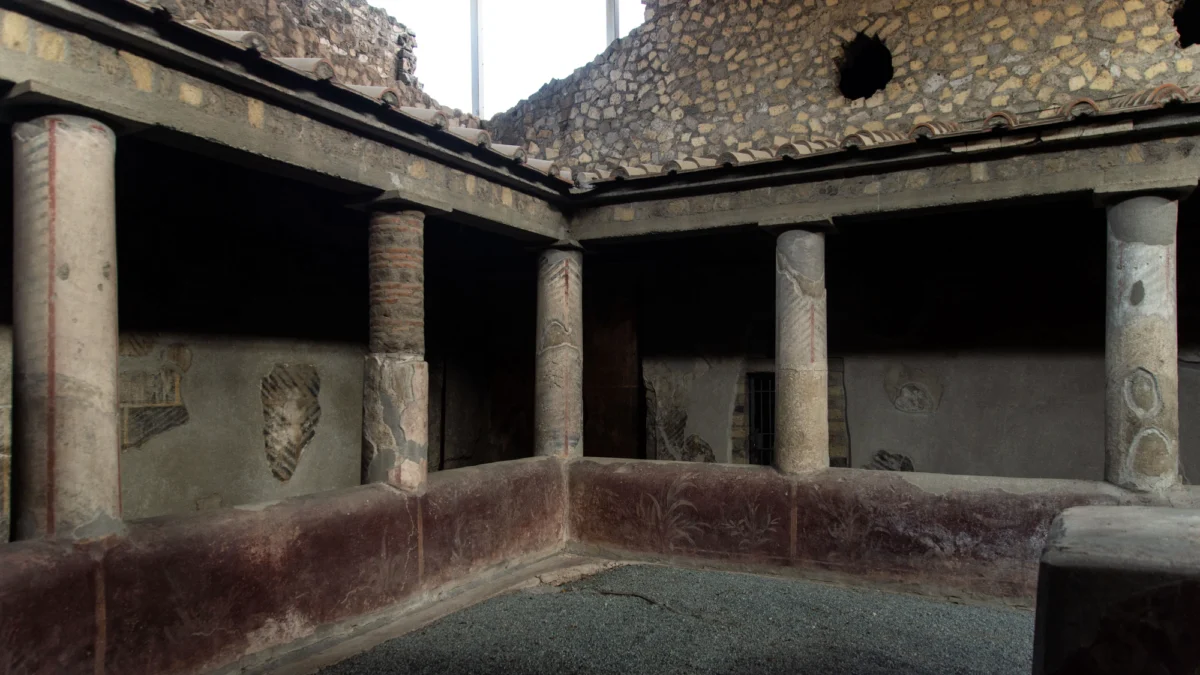
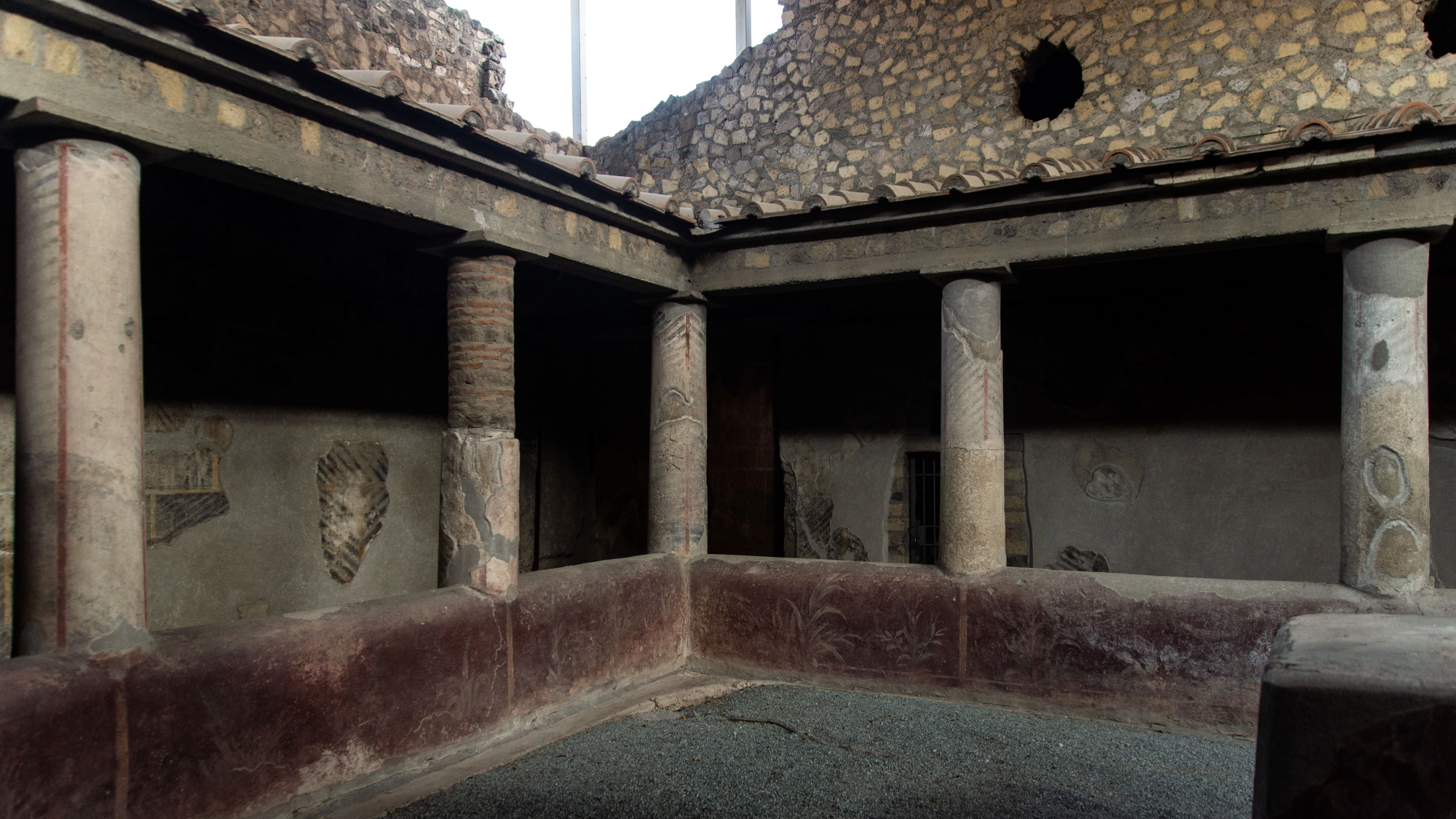
The success of this research hinges on a serendipitous discovery involving samples collected nearly three decades ago. In 1998, Dr. Andrea Marzoli of the University of Padua conducted extensive fieldwork at Oplontis, a wealthy suburban enclave located between Pompeii and Herculaneum. The site, famously known for the Villa Poppaea, was buried under several meters of ash and pumice during the 79 CE event.
Dr. Marzoli specifically targeted the lowest layers of the volcanic deposit. In stratovolcanoes like Vesuvius, magma chambers are often stratified by density and chemical composition. Iron and magnesium, being heavier, settle toward the bottom, while lighter, soluble elements like potassium rise to the top. Because the initial phase of the eruption tapped into the uppermost, potassium-rich layer of the magma chamber, the pumice found at the base of the deposit represents the precise "trigger" moment of the eruption.
These samples remained in storage for twenty-eight years, effectively waiting for technology to catch up with their scientific potential. It was not until graduate students Caroline Hasler, Anthony Fuentes, and Andy Tholt recognized the untapped value of these archived materials that the analysis was finally undertaken. Their decision to revisit these samples highlights a growing trend in geology: the vital importance of preserving physical specimens for future analytical techniques that may not yet exist at the time of initial collection.
Defining Accuracy and Precision in Geological Time
A central challenge addressed by the research team is the distinction between accuracy and precision—two terms often conflated in general scientific discourse. Accuracy pertains to how close a measurement is to the "true" value, whereas precision relates to the reproducibility of that measurement.
In the context of the Vesuvius study, the team tested eight individual sanidine crystals. Previous analytical attempts had placed the eruption at approximately 1,938 years ago. The new methodology, incorporating more rigorous Bayesian modeling and cross-referencing with the historical accounts provided by Pliny the Younger, adjusted this to 1,946 years. This shift, while seemingly minor, represents a major leap in geological reliability. By narrowing the window of the eruption date to within two months of historical records, the study provides a robust validation of the argon-argon method, proving that it can serve as a "master clock" for calibrating other dating techniques, such as radiocarbon dating, which is the standard for materials younger than 55,000 years.
Implications for Modern Volcanic Risk Assessment
The significance of this research extends far beyond the ruins of antiquity. Volcanic activity remains a constant, existential threat to major urban centers across the globe. Cities such as Naples, Italy, which sits in the shadow of Vesuvius; Mexico City, proximity to the volatile Popocatépetl; and the sprawling urban landscape of Yogyakarta, near Mount Merapi in Indonesia, all depend on accurate eruptive histories to develop effective disaster mitigation strategies.
"If you want to put together the eruptive history of a volcano in relatively recent time, precision and accuracy really count," said Paul Renne, a study co-author and geochronologist at the University of California, Berkeley. "The study shows that you can achieve that kind of highly useful precision and accuracy into the historical realm."
Understanding the "eruptive cadence"—the frequency and intensity of past events—is the foundation of modern volcanology. By improving the resolution of these historical timelines, scientists can better predict the behavior of active volcanoes. This allows local governments to improve evacuation protocols, land-use planning, and emergency response infrastructure, potentially saving thousands of lives.
Toward a Unified Geological Timeline
The research team aims to leverage this methodology to create a more unified approach to geological dating. By applying consistent mathematical frameworks and Bayesian statistical approaches, they hope to integrate disparate dating methods into a singular, cohesive system. As Renne noted, the goal is to bring more raw data into the analytical mix to create a more reliable picture of Earth’s history.
This has broader implications for fields outside of volcanology, including paleoclimatology and evolutionary biology. For instance, determining the precise timing of a volcanic eruption can help scientists establish causality between geological events and global climate shifts or mass extinction events. If a volcanic event can be dated with absolute precision, researchers can correlate it with ice core samples or sediment layers elsewhere in the world, allowing for a global synchronization of events that were previously viewed in isolation.
Conclusion: The Enduring Value of Historical Records
The convergence of 2,000-year-old historical letters and modern isotopic physics serves as a powerful reminder of the value of interdisciplinary research. Pliny the Younger could not have known that his observation of the "pine tree" shaped cloud rising over Vesuvius would one day be used to calibrate high-energy particle physics in a laboratory setting. Yet, his descriptive powers provided the necessary constraints to validate the work of modern geochemists.
As the scientific community continues to refine these techniques, the past will continue to inform the future. The ability to precisely date the events that shaped our world is not merely an academic exercise; it is an essential component of modern survival, ensuring that humanity is as prepared as possible for the next inevitable rumble of the earth. With this latest advancement, the shadow of Vesuvius has become a little clearer, providing a path toward better understanding the violent, creative forces that continue to shape our planet.

