
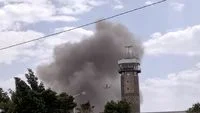
Saudi Arabia’s air defense systems successfully intercepted two ballistic missiles launched from Yemen, averting potential strikes on critical oil refineries in the western city of Yanbu. The interceptions, confirmed by Saudi authorities and corroborated by unnamed Greek security sources, highlight the persistent and escalating threat posed by the Iran-aligned Houthi movement to the Kingdom’s vital infrastructure and regional stability. The incident follows a period of heightened tensions and an explicit Houthi vow to retaliate against recent Saudi military actions, marking another dangerous chapter in the protracted Yemen conflict.
The Interception: A Defensive Success
The two ballistic missiles were reportedly shot down by sophisticated air defense systems, including those operated by Greek forces deployed in Saudi Arabia. Yanbu, a strategically significant port city on the Red Sea, is home to major oil refineries and industrial facilities, making it a frequent, albeit often unsuccessful, target for Houthi aggression. The successful interception underscores the robust multi-layered air defense capabilities employed by Saudi Arabia, often bolstered by international cooperation. Following the attempted attack, Saudi authorities issued brief warnings to residents in the cities of Jizan and Yanbu, advising caution and preparedness, a standard protocol during periods of elevated threat. The involvement of Greek military personnel operating Patriot missile systems in Saudi Arabia, part of a broader agreement to enhance the Kingdom’s defensive capabilities, demonstrates the international commitment to safeguarding critical infrastructure and ensuring regional security. This deployment, finalized in 2021, aims to protect Saudi energy facilities from aerial threats, particularly those originating from Yemen. The precision and effectiveness of these interceptor systems were crucial in preventing what could have been a significant economic and environmental disaster.
Escalating Rhetoric and Actions
The attempted missile strikes came on the heels of inflammatory statements from Houthi leadership, who had pledged to escalate their "blockade for blockade" campaign against Saudi Arabia. Mohammed Abdulsalam, the chief Houthi negotiator, explicitly accused Saudi Arabia of intensifying military pressure and economic blockades following what he termed the "failure" of the Kingdom’s eight-year military intervention in Yemen. Abdulsalam asserted that the Houthi movement was determined to counter Saudi actions, particularly those targeting critical Yemeni infrastructure and population centers. According to Al Masirah TV, a Houthi-run outlet cited by Al-Jazeera, Abdulsalam specifically warned against Saudi attacks on Hodeidah, Kamaran Island, and Sanaa airport. Hodeidah port is Yemen’s lifeline, receiving the vast majority of humanitarian aid and commercial goods, making any attack on it a potential humanitarian catastrophe. Kamaran Island, strategically located off Hodeidah, and Sanaa airport, the capital’s primary air link, are similarly vital. The Houthi negotiator’s threats explicitly linked Saudi actions to potential repercussions for the Kingdom’s own security and economy, signaling a readiness to broaden the scope of their attacks. This "blockade for blockade" strategy suggests an intent to mirror perceived Saudi economic pressure with retaliatory strikes designed to disrupt Saudi oil exports and international shipping lanes.
The Genesis of the Yemen Conflict
To understand the current escalation, one must delve into the complex origins of the Yemen conflict. The conflict began in earnest in late 2014 when the Houthi movement, a Zaidi Shia group from northern Yemen, seized control of Sanaa, the capital, ousting the internationally recognized government of President Abdrabbuh Mansur Hadi. This power grab was viewed by Saudi Arabia and its allies as a dangerous expansion of Iranian influence on its southern border. In March 2015, Saudi Arabia, leading a coalition of Arab states, launched "Operation Decisive Storm," a military intervention aimed at restoring Hadi’s government and curbing Houthi power. The conflict quickly devolved into a brutal proxy war, with the Saudi-led coalition receiving logistical and intelligence support from Western powers, while the Houthis reportedly received military and financial backing from Iran. The conflict has since claimed hundreds of thousands of lives, both directly from fighting and indirectly from disease, malnutrition, and lack of access to healthcare, pushing Yemen to the brink of famine and creating what the United Nations has repeatedly called the world’s worst humanitarian crisis.
A Humanitarian Catastrophe
The protracted conflict has had devastating humanitarian consequences. According to the United Nations Office for the Coordination of Humanitarian Affairs (OCHA), over 23.4 million people, or two-thirds of Yemen’s population, are in need of humanitarian assistance and protection. More than 4.3 million people have been internally displaced since the beginning of the conflict. The UN estimates that hundreds of thousands have died, with a significant portion of these deaths attributable to preventable diseases and starvation exacerbated by the conflict’s impact on infrastructure, healthcare, and food supply chains. The blockade, imposed by the Saudi-led coalition to prevent arms smuggling to the Houthis, has severely restricted the flow of essential goods, including food, fuel, and medicine, into the country, particularly through the vital port of Hodeidah. While the coalition insists on inspecting shipments to prevent weapons proliferation, aid organizations have consistently highlighted the devastating impact of these restrictions on the civilian population, creating a dire situation that the Houthis now threaten to reciprocate against Saudi Arabia.
A Pattern of Attacks: Houthi’s Missile and Drone Arsenal
The recent missile attempt on Yanbu is not an isolated incident but part of a well-established pattern of Houthi aggression targeting Saudi Arabia. Over the years, the Houthi movement has significantly developed its arsenal of ballistic missiles and armed drones, often with technical assistance and components believed to be supplied by Iran. These weapons have been used in numerous attacks on Saudi cities, airports, and oil infrastructure.
- Abha International Airport: Repeatedly targeted by Houthi drones and missiles, causing civilian casualties and disruptions.
- Riyadh: The Saudi capital has been subjected to multiple ballistic missile attacks, often intercepted by Patriot systems.
- Aramco Facilities (September 2019): Perhaps the most significant attack, a coordinated drone and missile strike severely damaged two major Saudi Aramco oil processing facilities at Abqaiq and Khurais, temporarily halving the Kingdom’s oil production. While the Houthis claimed responsibility, Saudi Arabia and the United States attributed the sophisticated attack directly to Iran.
- Jeddah: Oil facilities in Jeddah have also been targeted, including a significant attack on a fuel depot in March 2022.
These attacks demonstrate the Houthis’ intent to inflict economic pain and disrupt Saudi Arabia’s ability to export oil, which is the backbone of its economy. The targeting of Yanbu, a key Red Sea port and industrial hub, falls squarely within this strategy.
Saudi Arabia’s Layered Air Defense and International Support
Saudi Arabia possesses one of the most advanced air defense networks in the Middle East, a necessity given the persistent threats it faces. Its defensive capabilities include:
- Patriot Missile Systems (PAC-2 and PAC-3): These U.S.-made systems are the workhorse of Saudi air defense, capable of intercepting ballistic missiles, cruise missiles, and advanced aircraft. The Greek forces deployed in Saudi Arabia also operate Patriot systems, contributing to this defensive shield.
- THAAD (Terminal High Altitude Area Defense): Another U.S.-made system designed to intercept short, medium, and intermediate-range ballistic missiles in their terminal phase, offering an additional layer of protection.
- Other Systems: The Kingdom also operates various other air defense assets, including shorter-range systems, radar networks, and fighter jets capable of interception.
The effectiveness of this layered defense is crucial. While a high percentage of Houthi missiles and drones are intercepted, the sheer volume and sophistication of some attacks, particularly the 2019 Aramco strikes, underscore the challenges. The deployment of Greek Patriot systems represents a further strengthening of these defenses and highlights the growing international collaboration in countering regional threats. Greece’s decision to deploy its Patriot battery was part of a broader defense cooperation agreement with Saudi Arabia, aimed at enhancing mutual security and supporting stability in the wider region.
International Reactions and Diplomatic Standoff
The international community has largely condemned the Houthi attacks on Saudi Arabia while simultaneously calling for de-escalation and a political resolution to the Yemen conflict.
- Saudi Arabia: The Saudi Ministry of Foreign Affairs consistently condemns Houthi attacks as acts of terrorism, emphasizing the Kingdom’s right to self-defense and its commitment to protecting its citizens and vital infrastructure. Riyadh frequently calls on the international community to exert pressure on the Houthis and their Iranian backers to cease hostilities and engage meaningfully in peace talks.
- Houthi Leadership: As demonstrated by Abdulsalam’s statements, the Houthis frame their attacks as legitimate retaliation for Saudi aggression and a means to break the economic blockade. They often portray themselves as defending Yemeni sovereignty against foreign intervention.
- Greece: While not issuing extensive public statements on specific interceptions, Greece’s government has confirmed its military presence in Saudi Arabia is purely defensive, aimed at assisting an allied nation in protecting its critical infrastructure.
- United Nations: The UN Secretary-General and his Special Envoy for Yemen have repeatedly expressed grave concern over the escalating violence, calling for an immediate and comprehensive ceasefire and urging all parties to return to the negotiating table without preconditions. They emphasize the urgent need for humanitarian access and the protection of civilians.
- United States: While the Biden administration initially adopted a policy of ending support for offensive Saudi operations in Yemen, it has maintained its commitment to assisting Saudi Arabia in defending its territory. The U.S. has condemned Houthi attacks and urged restraint from all parties, advocating for a diplomatic solution.
- European Union: The EU has consistently called for an end to the conflict, expressing concern over regional instability and the humanitarian crisis. It supports UN-led peace efforts and condemns attacks on civilian infrastructure.
Despite these international calls, a political solution remains elusive, with deep-seated mistrust, competing regional interests, and the ongoing proxy dimension of the conflict continually undermining diplomatic efforts.
Economic Vulnerabilities and Global Energy Markets
The repeated targeting of Saudi oil facilities, particularly those in Yanbu, carries significant economic implications for both Saudi Arabia and global energy markets. Yanbu is a crucial hub for Saudi Arabia’s oil exports to Europe and North America via the Red Sea, bypassing the Strait of Hormuz. Any sustained disruption to its operations could:
- Impact Global Oil Prices: Even attempted attacks can introduce market volatility and push up crude oil prices, particularly in an already tight global supply environment. Successful attacks, like those on Aramco in 2019, have demonstrated the potential for immediate and severe price spikes.
- Threaten Shipping Security: Attacks near the Red Sea and the Bab-el-Mandeb Strait, a narrow chokepoint for global maritime trade, raise concerns about the safety of international shipping. This could lead to increased insurance premiums, longer transit times, and higher costs for goods passing through the vital waterway.
- Damage Investor Confidence: Persistent threats to critical infrastructure can deter foreign investment in Saudi Arabia and the wider Gulf region, impacting long-term economic diversification efforts.
Saudi Arabia, as the world’s largest oil exporter, plays a pivotal role in global energy security. The ability of non-state actors like the Houthis to threaten its production and export capabilities therefore has far-reaching consequences beyond the immediate conflict zone.
Prospects for Peace: A Stalled Process
The latest missile interception and the accompanying escalation in rhetoric underscore the grim reality that prospects for a comprehensive peace agreement in Yemen remain dim. Years of UN-led mediation efforts, including various ceasefires and confidence-building measures, have largely failed to yield a lasting political solution. Key challenges include:
- Lack of Trust: Deep mistrust between the warring parties, fueled by years of conflict and accusations of bad faith.
- External Interference: The continued involvement of regional powers, particularly Iran and Saudi Arabia, in supporting their respective proxies, complicates internal Yemeni dynamics.
- Internal Divisions: Beyond the primary Houthi-government divide, Yemen is fractured by numerous other armed groups and regional allegiances, making a unified political vision difficult to achieve.
- Houthi Demands: The Houthis’ insistence on certain preconditions, including a complete lifting of the blockade and an end to foreign intervention, often clash with the Saudi-led coalition’s security concerns and demands for Houthi disarmament.
The cycle of violence, characterized by Houthi attacks on Saudi Arabia and retaliatory strikes by the coalition in Yemen, perpetuates the conflict and exacerbates the humanitarian crisis. While all parties nominally express support for a political solution, their actions on the ground often contradict these statements, suggesting that a decisive military advantage or a significant shift in regional geopolitical alignments might be perceived as necessary before genuine compromise can be reached. The international community continues to press for dialogue, but without a fundamental change in the calculations of the principal actors, the conflict in Yemen, and its dangerous spillover effects into Saudi Arabia, appears set to continue for the foreseeable future.

