
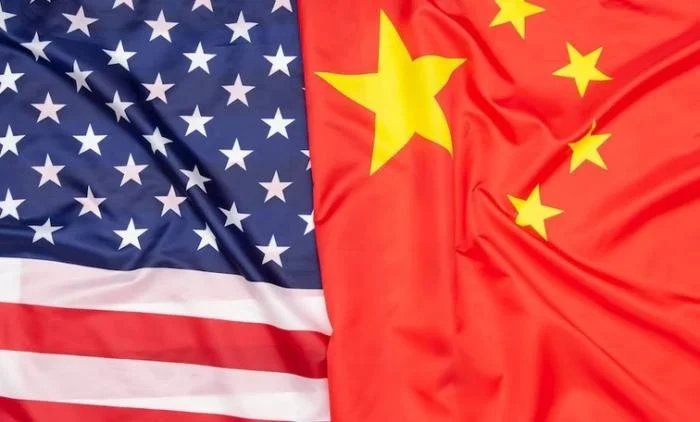
The United States government is escalating its ongoing campaign to secure its critical telecommunications infrastructure against foreign interference, with federal regulators moving to completely block Chinese telecom operators from accessing American telephone numbers directly. The initiative, spearheaded by the Federal Communications Commission (FCC), is officially aimed at mitigating the proliferation of fraudulent automated calls, commonly known as robocalls, while concurrently neutralizing broader national security threats stemming from adversarial foreign access to domestic communication pathways.
According to announcements from federal regulators, the FCC is scheduled to hold a formal vote on November 19 regarding a comprehensive policy proposal designed to systematically strip major Chinese state-owned telecommunications giants—including China Mobile, China Telecom, and China Unicom—of their ability to obtain American phone numbers directly. The proposed restrictions will extend beyond these primary carriers to encompass any telecommunications provider leveraging Voice over Internet Protocol (VoIP) and other internet protocol (IP) based technologies to interface directly with the United States numbering system.
Background Context and Technological Implications
Voice over Internet Protocol technology fundamentally transforms traditional analog voice signals into digital packets of data transmitted via broadband internet connections. For international telecommunications firms, direct access to domestic numbering systems provides a significant operational advantage, serving as a cost-effective mechanism that streamlines operations and facilitates the deployment of sophisticated communication features to global clientele. However, federal regulators argue that this same direct-access architecture creates severe vulnerabilities that can be exploited by malicious actors operating from foreign jurisdictions.
In the official statement outlining the upcoming vote, FCC Chairman Brendan Carr emphasized the strategic necessity of the regulatory action. "With this decision, the FCC will strengthen our first line of defense against entities with malicious intent and illegal robocall perpetrators," Carr stated. Regulators contend that foreign entities possessing unfettered or direct pathways into the American telecommunications grid can bypass critical oversight mechanisms, making it exceedingly difficult for domestic law enforcement and cybersecurity agencies to trace the origins of sophisticated financial scams, phishing campaigns, and deceptive automated communications that target American consumers daily.
Chronology of Regulatory Escalation
The impending vote represents the latest escalation in a multi-year, bipartisan effort by Washington to systematically disentangle the American telecommunications ecosystem from Chinese state-affiliated infrastructure. The regulatory pressure applied by the FCC and other federal agencies has evolved progressively over the past decade, driven by mounting concerns regarding industrial espionage, data privacy, and the integrity of national critical infrastructure.
Historically, major Chinese telecommunications firms operated with relative freedom within the American market, providing various international carrier services. However, the regulatory landscape shifted dramatically as geopolitical tensions between Washington and Beijing intensified. Prior to the current initiative, the FCC had already taken decisive action by systematically revoking or denying authorization for China Mobile, China Telecom, and China Unicom to provide international telecommunications services originating or terminating in the United States.
These earlier revocations were grounded in findings by intelligence and national security agencies that these state-owned enterprises were subject to the exploitation, influence, and control of the Chinese government, thereby posing an unacceptable risk to American national security. The current proposal to cut off direct access to United States telephone numbers serves as a logical continuation of these exclusionary policies, closing remaining regulatory loopholes that allowed these or similar IP-based entities to interface with the domestic communications architecture.
Broader Scope of the Proposed FCC Actions
Beyond the immediate restrictions on telephone number access, the sweeping regulatory proposal under consideration by the FCC incorporates several additional layers of enforcement aimed at insulating the American digital and telecommunications supply chain from foreign threats.

Under the expanded framework, the FCC plans to explicitly prohibit any IP-based service provider operating within the American ecosystem from utilizing equipment manufactured by companies that have been formally designated as national security threats. This designation prominently features major equipment manufacturers such as Huawei Technologies and ZTE Corporation, both of which have been heavily restricted or banned from participating in domestic broadband and cellular network deployments across the United States.
Furthermore, the regulatory agency is targeting the testing infrastructure that certifies electronic equipment for the American market. The FCC announced plans to implement a comprehensive prohibition preventing all testing laboratories based in China from evaluating and certifying electronic devices destined for use in the United States, with this specific restriction slated to take effect fully by December 2028. This measure is designed to eliminate potential vulnerabilities or backdoors introduced during the hardware and software testing phases of electronic manufacturing.
In addition to numbering and equipment restrictions, federal regulators are actively evaluating secondary measures that could further isolate Chinese telecommunications entities from the domestic market. These considerations include imposing total prohibitions preventing these firms from interconnecting with domestic American networks altogether, as well as restricting or outright banning the operation of commercial data centers owned or controlled by these enterprises within United States borders.
International and Diplomatic Reactions
The aggressive regulatory posture adopted by the FCC has predictably drawn sharp criticism from the government of the People’s Republic of China, as well as diplomatic representatives stationed in Washington.
The Chinese Embassy in Washington issued a formal statement strongly condemning the proposed policy. According to diplomatic spokespersons, the initiative represents an unwarranted politicization of commercial and technical issues, arguing that the restrictions severely disrupt normal economic and trade cooperation between business entities in China and the United States. Furthermore, Beijing asserted that the policy is fundamentally counterproductive, generating negative economic repercussions that ultimately harm American corporations, technology partners, and everyday consumers by increasing operational costs and fragmenting global communication standards.
Despite these diplomatic objections, United States regulators and national security hawks maintain that the economic friction caused by the restrictions is a necessary trade-off for safeguarding critical infrastructure against potential state-sponsored disruption.
Fact-Based Analysis of Market and Operational Implications
The implementation of the FCC’s proposed rules will carry substantial operational ramifications for multinational corporations, telecommunications carriers, and technology providers operating across the trans-Pacific corridor.
For Chinese telecommunications operators, the loss of direct access to United States telephone numbers effectively eliminates their ability to offer competitive, vertically integrated voice services to enterprise clients requiring seamless cross-border connectivity. Companies that rely on VoIP infrastructure to bridge communications between operations in China and the United States will be forced to restructure their routing architectures, likely relying on compliant third-party transit providers or entirely relinquishing their direct footprint in the American market.
Conversely, domestic American telecommunications providers may experience a temporary increase in administrative and compliance burdens as they audit their supply chains, IP-based peering arrangements, and routing protocols to ensure complete adherence to the new FCC mandates. However, major domestic carriers are expected to benefit over the long term through reduced exposure to fraudulent traffic and a more tightly regulated domestic numbering environment.
As the November 19 FCC vote approaches, the international telecommunications industry prepares for what is widely anticipated to be a unanimous or near-unanimous adoption of the proposed rules. This decisive regulatory action underscores a broader, enduring global trend toward the fragmentation of digital infrastructure, where national security imperatives increasingly override traditional models of globalized, open telecommunications integration.
