
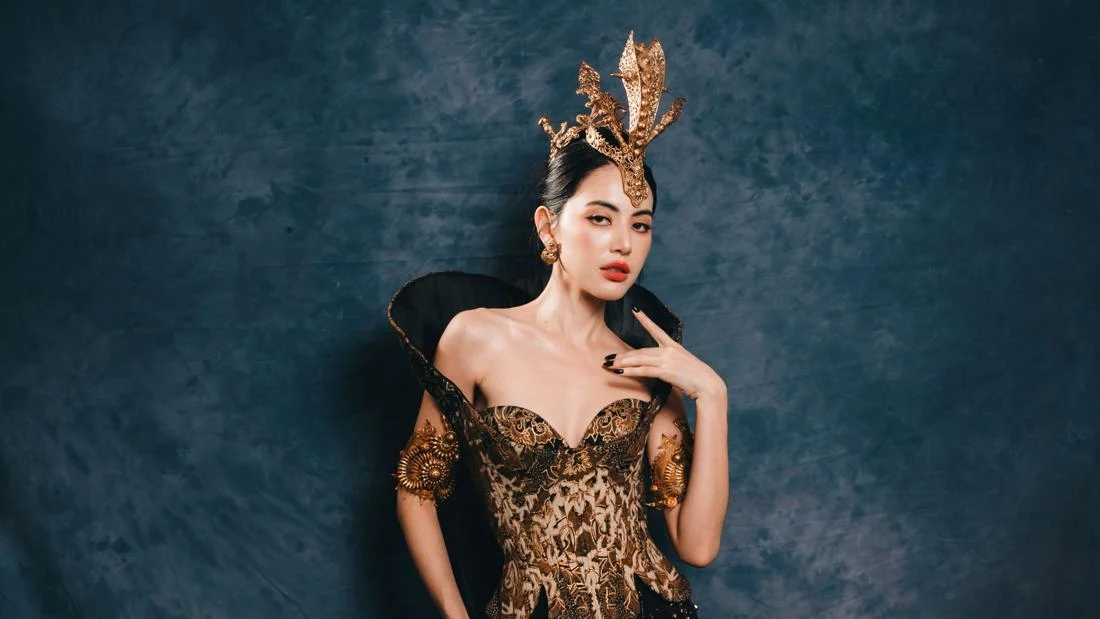
The global fashion landscape witnessed a significant intersection of Southeast Asian culture and high-end couture recently, as Thai superstar Davika Hoorne showcased an exquisite batik gown during her visit to Jakarta. The ensemble, which has garnered widespread international acclaim, served as a poignant reminder of the evolving prestige of Indonesian traditional textiles on the global stage. Hoorne, a renowned actress and fashion icon with a digital footprint reaching over 17.7 million followers, utilized her platform to highlight the artistry of Indonesian designers, effectively bridging the cultural gap between Thailand and Indonesia through the medium of sartorial elegance.
A Diplomatic Gesture of Cultural Appreciation
The sequence of events leading to this viral moment began during Hoorne’s recent professional engagement in Indonesia. The actress arrived in Jakarta to serve as a distinguished guest at the closing ceremony of the Jakarta World Cinema 2026, held at the prestigious Grand Indonesia complex. While her primary objective was to participate in the regional film festival, her decision to collaborate with local designers for her public appearances demonstrated a deliberate effort to engage with the host nation’s heritage.
On Sunday, November 9, 2026, Hoorne shared a series of high-fashion portraits on her Instagram account, which immediately catalyzed a wave of positive engagement from netizens across Southeast Asia. The imagery captured a sophisticated aesthetic that seamlessly blended traditional motifs with contemporary silhouettes, a hallmark of the collaborative effort between the actress and the Indonesian fashion house, AnSoe.
The Artisanship Behind the Masterpiece
The gown worn by Hoorne was the product of a meticulous design process led by duo Andika Pramudya and Satria Soewiryo, the creative forces behind the label AnSoe. Known for their ability to modernize traditional fabrics, the designers opted for a structure that emphasized both drama and cultural identity.
The gown featured a precision-tailored batik bustier that served as the centerpiece of the ensemble, accentuated by elaborate decorative elements on the shoulders. To evoke a sense of grandeur suitable for a red-carpet environment, the designers incorporated a sweeping, floor-length train. This architectural addition was finished with intricate gold embroidery, meticulously crafted to mirror the patterns found within the batik fabric itself. The result was a fusion of regal tradition and modern high fashion, demonstrating the versatility of batik beyond its conventional use as formal attire.
Accessorizing with Indonesian Craftsmanship
A defining characteristic of the ensemble was the inclusion of artisanal accessories designed by Rinaldy A. Yunardi, a name synonymous with avant-garde jewelry and headpieces in the Indonesian fashion industry. Yunardi’s contribution included ornate arm cuffs, statement earrings, and a striking headpiece that resembled the silhouette of horns.
In an interview with Wolipop on Monday, November 10, 2026, Yunardi confirmed the complexity of the project. "The pieces were constructed from metal and wire, all of which were processed manually through handmade techniques," Yunardi explained. The collaboration represents a deepening professional relationship between Hoorne and the Indonesian creative community; records indicate that this is not the actress’s first foray into wearing Yunardi’s designs, nor is it her first time wearing pieces from the AnSoe label, having previously showcased their work during a similar appearance two years prior.
The Jakarta World Cinema 2026 Context
Hoorne’s appearance was timed to coincide with the conclusion of the Jakarta World Cinema 2026, an event that has steadily gained prominence as a premier platform for regional filmmakers and actors. The presence of international figures like Hoorne is crucial for the festival’s goal of fostering cross-border collaboration within the ASEAN film and entertainment industry.
By choosing to wear a locally sourced and designed gown, Hoorne provided a significant boost to the visibility of Indonesian "wastra" (traditional cloth). For the organizers of the Jakarta World Cinema, such gestures are invaluable, as they integrate the worlds of high fashion and cinema, creating a more cohesive brand identity for the event on the international calendar.
Socio-Economic Implications for the Indonesian Fashion Industry
The decision by an internationally recognized celebrity like Davika Hoorne to wear batik is not merely a stylistic choice; it carries weight in the context of the Indonesian government’s long-term strategy to promote batik as a national cultural asset. Since the UNESCO recognition of batik in 2009, the Indonesian government has consistently encouraged designers to move away from the "uniform" perception of batik and toward a high-fashion interpretation.
Data from the Indonesian Ministry of Industry indicates that the fashion and textile sector remains a vital contributor to the national GDP. Collaborations such as this serve as soft-power diplomacy, raising the export potential of Indonesian design labels. When a figure with 17.7 million followers engages with domestic design, it creates a "halo effect," drawing the attention of global luxury buyers and international media to the craftsmanship of designers like AnSoe and Rinaldy A. Yunardi.
The Digital Reaction and Cultural Diplomacy
The reception of the photographs on social media was overwhelmingly positive. Hoorne’s caption, "Thank you Indonesia," addressed directly to her massive audience, effectively functioned as an endorsement of Indonesian creative talent. The comment section of her post saw an influx of praise from both Thai and Indonesian fans, reflecting a shared appreciation for the intersection of arts and culture.
From a communications perspective, the engagement rates seen on these posts suggest that there is a high market appetite for cultural exchange programs that utilize celebrities as conduits for traditional heritage. This trend is expected to continue as international festivals in Jakarta look to attract more regional talent who are willing to participate in local cultural narratives.
Chronological Summary of Events
- November 2024: Initial collaborative efforts between Hoorne and Indonesian designers are noted, establishing a foundation for future work.
- November 6-8, 2026: Davika Hoorne arrives in Jakarta for the Jakarta World Cinema 2026 festival.
- November 9, 2026: Hoorne shares photos of herself in the AnSoe gown on Instagram, tagging the designers and initiating a surge in social media engagement.
- November 10, 2026: Official statements from designer Rinaldy A. Yunardi regarding the creation of the accessories are released, providing technical context to the viral look.
Future Outlook for Cross-Cultural Fashion
As the Jakarta World Cinema 2026 closes, the legacy of Hoorne’s appearance serves as a case study for future international collaborations. The successful synthesis of batik, traditional metalwork, and modern couture highlights a path forward for Indonesian designers looking to reach an international audience.
Furthermore, the professional consistency displayed by Hoorne—who has now championed Indonesian designers on multiple occasions—suggests that these relationships are moving beyond transactional red-carpet appearances toward more sustainable, long-term partnerships. As the global fashion industry continues to pivot toward regional authenticity, the work produced by Indonesian labels like AnSoe and artisans like Rinaldy A. Yunardi is well-positioned to command a greater share of the global luxury market.
In conclusion, Davika Hoorne’s visit to Jakarta was marked not only by her contribution to the cinema industry but also by her role in elevating Indonesian heritage. Through her choice of attire, she provided a bridge between the vibrant history of batik and the modern, forward-thinking aspirations of the Indonesian fashion sector, leaving a lasting impression that transcends the boundaries of the cinema screen.
