
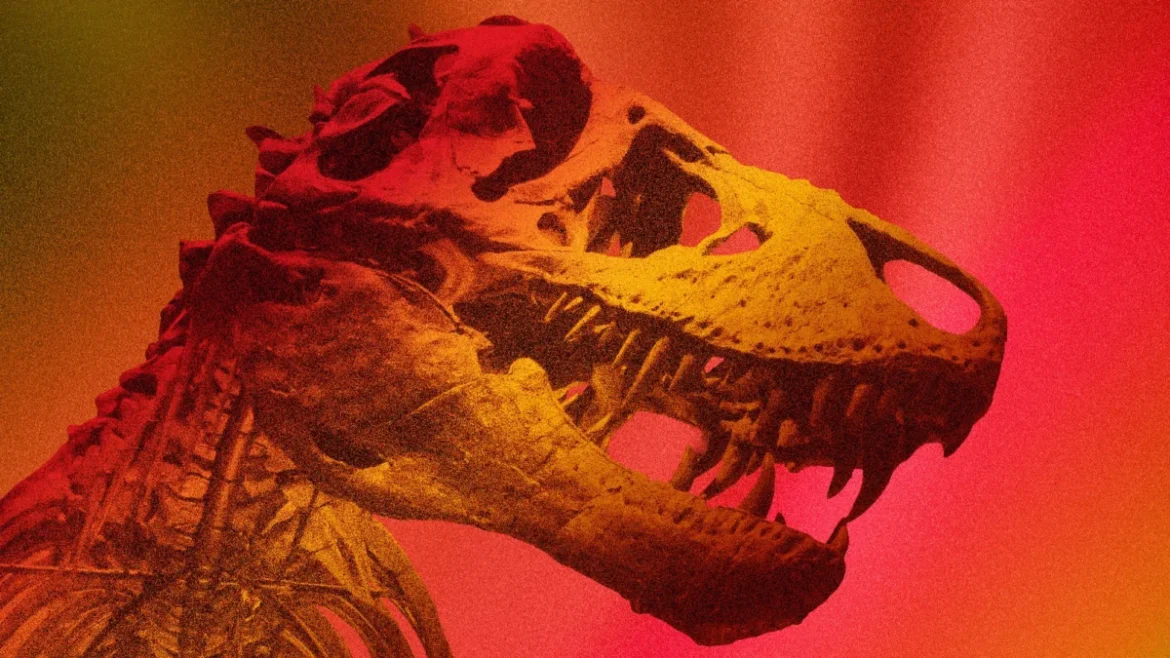
For generations, the image of the Tyrannosaurus rex in the popular consciousness was that of a lumbering, ectothermic beast, heavily reliant on the environmental warmth of its habitat to maintain enough energy for basic movement. This classic interpretation, rooted in 19th and early 20th-century assumptions, cast dinosaurs as giant, cold-blooded reptiles similar in physiological function to modern crocodiles or lizards. However, a landmark study published in the journal Science Advances has officially dismantled this long-standing scientific hypothesis, providing the first definitive chemical proof that the Tyrant King was, in fact, an endothermic creature with an internal body temperature hovering around 97 degrees Fahrenheit.
This discovery marks a pivotal moment in the field of paleontology, moving the debate from theoretical modeling to empirical evidence. By utilizing advanced geochemical analysis on fossilized tooth enamel, researchers at the University of California, Los Angeles (UCLA), have effectively settled a debate that has simmered for decades. The findings not only clarify the biological nature of the T. rex but also reshape our understanding of how these apex predators dominated the prehistoric landscape of the Cretaceous period.
A Chronology of the Debate
The evolution of the "warm-blooded" hypothesis has been a gradual shift in scientific consensus. In the mid-20th century, the prevailing dogma was that dinosaurs were sluggish, cold-blooded animals. This viewpoint was famously challenged during the "Dinosaur Renaissance" of the 1960s and 1970s, led by figures like John Ostrom and Robert Bakker. These researchers argued that the posture, activity levels, and growth rates of many dinosaurs suggested a metabolic rate much higher than that of modern reptiles.
Despite this conceptual shift, definitive proof remained elusive. For years, scientists relied on indirect proxies—such as bone histology, which reveals how fast an animal grows, or the presence of insulating structures like feathers—to argue for endothermy. However, critics remained skeptical, noting that "mesothermy" (a middle ground between cold and warm-blooded) could explain many of these features. The ability to measure internal body temperature directly remained the "holy grail" of physiological paleontology until the development of clumped isotope thermometry.
The Science of Clumped Isotopes
The breakthrough method used by the UCLA team involves the study of carbon-oxygen bonds in the mineral structure of tooth enamel. Within the crystalline lattice of a tooth, carbon and oxygen atoms occasionally form bonds between two rare heavy isotopes (Carbon-13 and Oxygen-18). The frequency of these "clumps" is strictly governed by the temperature at which the mineral formed within the living animal.
Because tooth enamel is one of the most durable substances in the vertebrate body—composed primarily of hydroxyapatite—it is uniquely resistant to the geochemical degradation that typically destroys biological evidence over millions of years. By analyzing these bonds, researchers can calculate the exact temperature at which the enamel calcified.

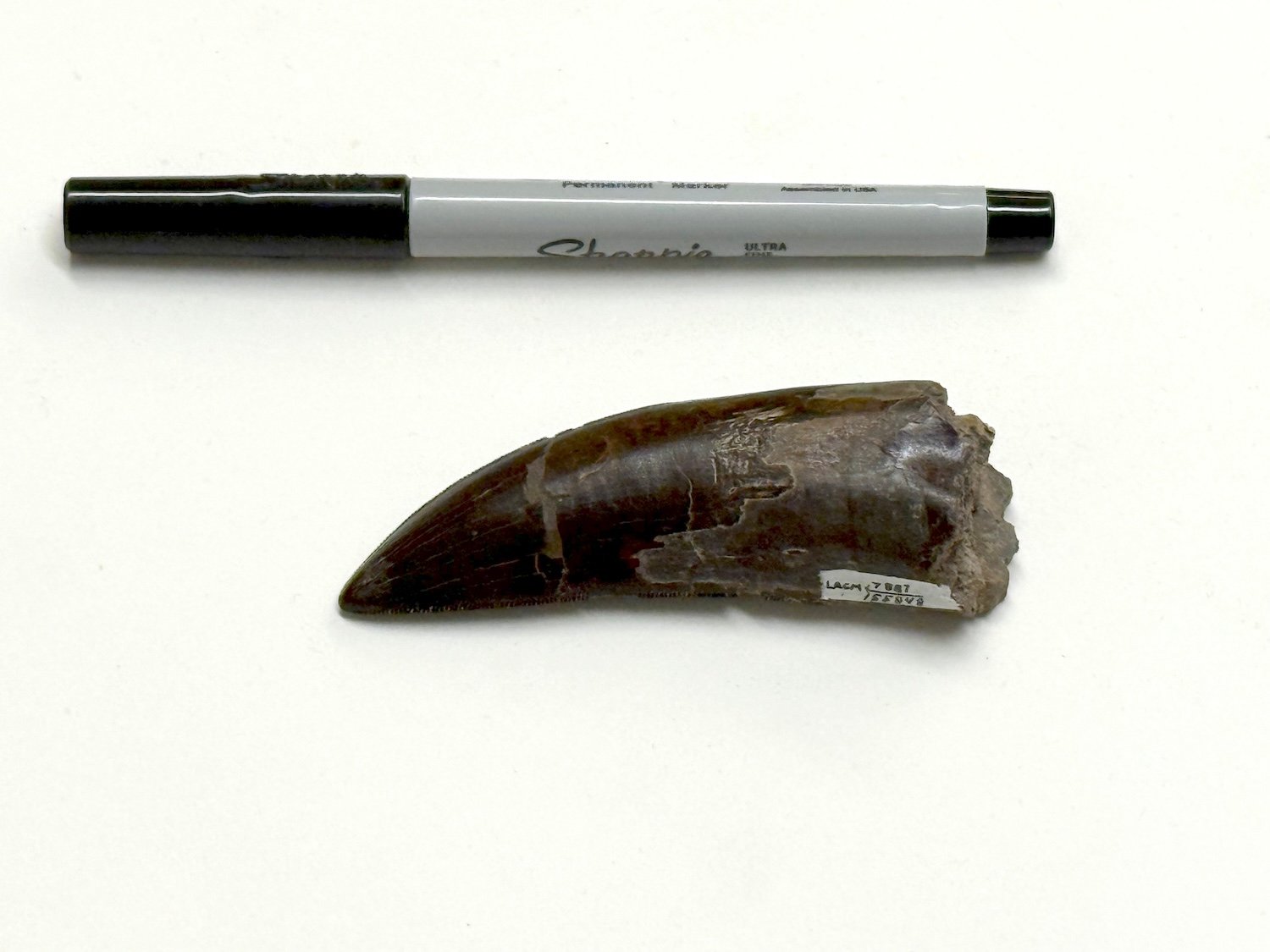
In the past, this technique was restricted to large, sacrificial samples that were often impractical for rare, museum-grade fossils. The recent refinement of this process, which requires 90 percent less material than earlier iterations, allowed researchers to extract mere milligrams of enamel from two teeth belonging to "Thomas," a well-preserved T. rex specimen housed at the Natural History Museum of Los Angeles County.
Supporting Data and Methodology
The analysis, spearheaded by geobiologist Robert Eagle and geochemist Aradhna Tripati, utilized a high-precision mass spectrometer to measure the isotopic ratios in the dissolved enamel. The resulting data provided a clear, consistent temperature reading of approximately 97 degrees Fahrenheit.
To put this into context, this temperature is significantly higher than that of an alligator, which typically reflects the ambient temperature of its environment. It is also lower than the average body temperature of modern birds—the direct descendants of dinosaurs—which generally range from 104 to 109 degrees Fahrenheit. The T. rex measurement sits in a distinct physiological space, suggesting an endothermic metabolism that provided the animal with the consistent energy required for the high-intensity hunting and territorial defense expected of an apex predator of its size.
Official Perspectives and Expert Reactions
The research team has emphasized the precision of these results. "No one has been able to make a temperature measurement like this before," stated Robert Eagle. He noted that while the result aligns with theoretical models, the significance lies in the transition from an educated guess to a verified physical property.
Aradhna Tripati, a co-author of the study, highlighted the importance of the technological advancement in sample management. "Nobody hands you a T. rex tooth unless you can show them you only need a few milligrams," she explained. By demonstrating that the method is minimally invasive, the team has opened the door for future studies on other theropods and extinct species, potentially allowing paleontologists to map the thermal history of dinosaur evolution with unprecedented accuracy.
Implications for Paleoecology
The confirmation of a warm-blooded T. rex has profound implications for how we view the Cretaceous ecosystem. If the T. rex were cold-blooded, its range would have been largely restricted to tropical and subtropical climates where it could rely on external heat to maintain its body functions. However, the presence of T. rex fossils in high-latitude regions, such as present-day Alaska, has long been a paradox for the cold-blooded theory.
With an internal heating mechanism, the T. rex would have been capable of maintaining an active lifestyle regardless of seasonal temperature fluctuations. This metabolic "buffer" allowed the species to occupy vast, diverse territories and remain active during colder months, giving it a distinct competitive advantage over ectothermic rivals. This capability for thermoregulation likely contributed to its status as a dominant apex predator capable of patrolling massive home ranges.
Broader Impact on Evolutionary Biology
The findings published in Science Advances provide more than just a data point for a single species; they validate the trajectory of modern paleontology. We are moving toward a more nuanced, "living" view of extinct creatures, where the physiological barriers between ancient reptiles and modern birds are increasingly blurred.
Furthermore, this research demonstrates the utility of applying advanced analytical chemistry to the fossil record. As researchers continue to refine these isotopic techniques, we may soon gain insight into the metabolic rates of other dinosaurs, such as the massive long-necked sauropods or the smaller, agile dromaeosaurids. This data will be essential for building accurate models of energy flow in ancient ecosystems, helping us understand how these massive organisms were able to survive in environments that are now vastly different from the ones they inhabited 66 million years ago.
The study also underscores the critical role of museum archives. The willingness of the Natural History Museum of Los Angeles County to provide samples from the "Thomas" specimen illustrates the symbiotic relationship between conservation and innovation. As analytical methods become more efficient, the vast collections held in museums worldwide become even more valuable, serving as libraries of data waiting to be unlocked by the next generation of geochemical tools.
Conclusion: A New Era of Paleontology
The revelation that T. rex possessed an internal temperature near that of a human provides a definitive answer to a question that has occupied the scientific community for over a century. It confirms that the "Tyrant King" was not merely a passive creature of the environment, but a biologically sophisticated animal with a metabolism capable of supporting a high-energy lifestyle.
As science continues to peel back the layers of time, the distinction between "reptilian" and "avian" biology continues to collapse, revealing a complex, vibrant history of life on Earth. The warm-blooded T. rex stands as a testament to the success of this metabolic evolution, a physiological triumph that cemented its place at the top of the food chain and ensures its continued fascination for future generations. By bridging the gap between chemical analysis and biological history, this research provides a vital foundation for all future studies into the physiology of the world’s most iconic extinct species.
