
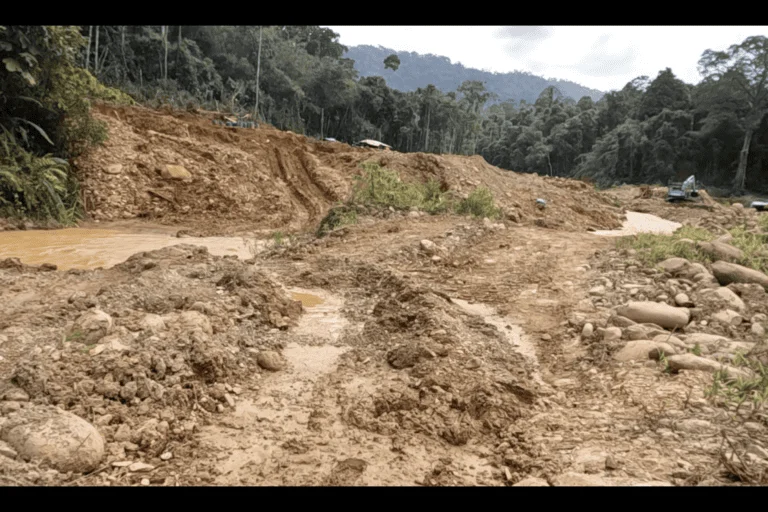
The Indonesian government is currently embroiled in a significant policy debate regarding the management of illegal artisanal and small-scale gold mining (ASGM) activities. Rilke Jeffri Huwae, Director General of Law Enforcement at the Ministry of Energy and Mineral Resources (KESDM), recently unveiled a proposal to transition illegal miners away from illicit extraction by incorporating them into the supply chain of the government’s flagship "Makan Bergizi Gratis" (MBG)—a national nutritious meal program. This initiative, while framed as a socioeconomic humanitarian effort, has drawn sharp criticism from environmental watchdogs and legal experts who fear it sets a dangerous precedent for the rule of law.
The Proposed Transition Strategy
Under the proposed pilot project, the KESDM aims to facilitate the transition of illegal miners in regions such as the Agincourt Resources Martabe Gold Mine area in North Sumatra into the agricultural and livestock sectors. The logic presented by the government is rooted in the "survivalist" narrative: that many participants in illegal mining are driven by economic necessity rather than criminal intent. By providing these individuals with land and resources to produce food commodities, the government hopes to create a viable alternative income stream.
For those miners physically or technically unable to shift to farming—particularly those suffering from heavy metal poisoning, such as mercury exposure—the government proposes an alternative: formalizing their activities under the supervision of companies holding valid Mining Business Licenses (IUP). The strategy involves allowing these individuals to work within designated zones under corporate environmental and legal oversight. The objective, according to Jeffri, is to establish a new cultural norm that replaces the cycle of illegal extraction with sustainable, legal employment.
Legal and Ethical Concerns
The civil society response has been swift and largely condemnatory. Critics argue that the government’s proposal risks creating a "moral hazard" by essentially rewarding criminal behavior with state-sponsored economic opportunities.
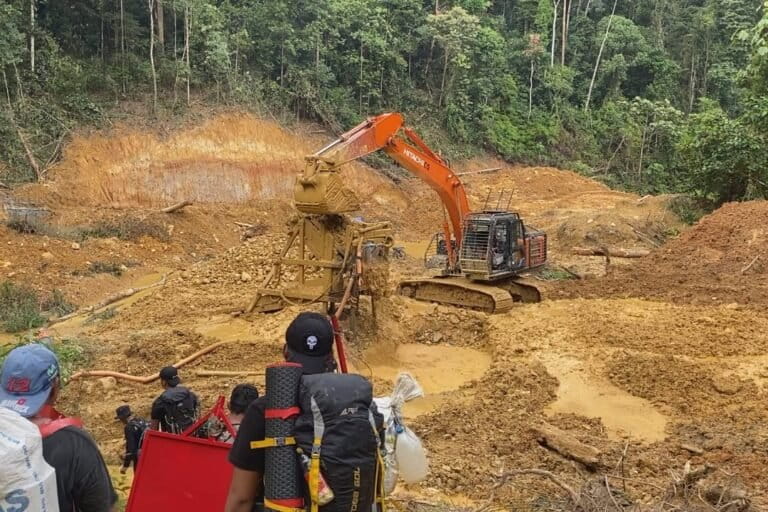
Muhammad Jamil, Head of the Legal and Advocacy Division at the Mining Advocacy Network (JATAM), emphasizes that illegal mining is not merely a labor issue but a serious criminal offense under Law No. 3 of 2020. Article 158 of the act mandates strict penalties, including imprisonment of up to five years and fines reaching Rp100 billion for unauthorized mining. Jamil warns that providing state-sanctioned employment to former illegal miners, without addressing the underlying criminal structures, undermines the judicial system.
"If the government only relocates the field workers while the economic chain remains intact, it is not ending the problem; it is simply outsourcing the labor," Jamil stated. He pointed out that illegal mining operations are typically sophisticated networks involving financiers, equipment suppliers, mineral aggregators, and black-market buyers. By focusing on the bottom of the pyramid, the government risks ignoring the "intellectual actors" who derive the most profit from environmental destruction.
Data and Environmental Impact
The scale of the problem is substantial. Government data indicates there are at least 1,063 identified locations of illegal mining within protected forest areas across Indonesia. The estimated potential economic loss to the state from these activities is approximately Rp300 trillion. Despite these figures, the transition from punitive measures to administrative and social solutions has been inconsistent.
In 2026, the Directorate General of Forestry Law Enforcement reported 101 administrative sanctions issued, compared to only 61 criminal cases that reached the P21 stage (the point where the police file is declared complete by the prosecutor). This reliance on administrative fines, rather than criminal prosecution, has been a point of contention. Critics, including former KPK Deputy Chair Laode M. Syarif, argue that fines are often viewed by illegal mining syndicates as a mere "cost of doing business." Given that the profit margins of illegal gold mining can reach billions of rupiah, administrative penalties fail to serve as a sufficient deterrent.
A History of Enforcement Challenges
The challenge of regulating small-scale mining in Indonesia is deeply historical. For decades, the government has struggled to balance the livelihoods of remote, often impoverished, communities with the need to protect forest ecosystems and public health. Mercury, a byproduct of traditional gold processing, remains a critical public health hazard, causing permanent neurological damage to local populations.

The current strategy of "multi-door" enforcement—a term used by Rizal Irawan, Deputy for Security and Law Enforcement at the Ministry of Environment—suggests a shift toward flexibility. This approach allows for a combination of administrative, civil, and criminal actions depending on the context of the violation. However, the efficacy of this "flexible" approach is heavily debated. Transparency International’s Corruption Perception Index (CPI) consistently ranks Indonesia in the mid-to-low range (stagnant at 34/100 between 2023 and 2025), which complicates the enforcement landscape. Observers note that environmental law enforcement is frequently susceptible to political intervention and bureaucratic inertia, which "hantunya banyak" (has many ghosts/hidden pressures), as described by Laode M. Syarif.
The Implications of "Policy Barter"
The central fear among environmental advocates is that the MBG program could inadvertently become a mechanism for "whitewashing" illegal mining. If illegal miners are given priority access to state supply chains, the government is effectively sending a message that illegal activity can eventually lead to state facilities.
"The goal of eradicating illegal mining should be measured by the number of illegal operations shuttered, the number of business networks dismantled, and the extent of environmental recovery achieved—not by how many miners have been successfully transitioned into farming," Jamil argued.
The environmental cost of current practices is not just economic; it includes the degradation of watersheds, the loss of biodiversity, and the long-term contamination of water sources by heavy metals. If the government’s pilot project succeeds in moving people out of mining but fails to remediate the land or stop the flow of capital to the illegal financiers, the net environmental gain remains questionable.
Future Outlook
As the KESDM prepares to launch its pilot project in North Sumatra, the eyes of the environmental community remain fixed on the implementation process. The ministry faces a delicate balancing act: addressing the socioeconomic realities of thousands of people whose livelihoods are tied to mining while upholding the integrity of national law.

For the policy to be successful, experts suggest that it must be decoupled from the idea of "rewarding" illegal actors. This would require:
- Targeting the Supply Chain: A simultaneous, aggressive crackdown on the financiers and illegal smelters who facilitate the trade.
- Environmental Liability: Ensuring that companies or individuals who profited from the illegal activity are held accountable for the costs of land reclamation.
- Transparent Criteria: Strict vetting processes for any program participants, ensuring that status as a "former miner" does not grant immunity from past environmental crimes.
The debate underscores a fundamental tension in Indonesian governance: the difficulty of implementing top-down legal mandates in regions where the informal economy is the primary source of survival. Whether the "Makan Bergizi Gratis" integration will be viewed as a progressive social policy or a dangerous policy failure remains to be seen. What is clear, however, is that the conflict between the necessity of economic survival and the necessity of environmental preservation is likely to persist, necessitating a more comprehensive approach that goes far beyond simple employment transition strategies. As it stands, the government must prove that its new initiative is a genuine step toward restoration rather than a convenient way to ignore the structural failures of law enforcement in the nation’s mining sector.
