
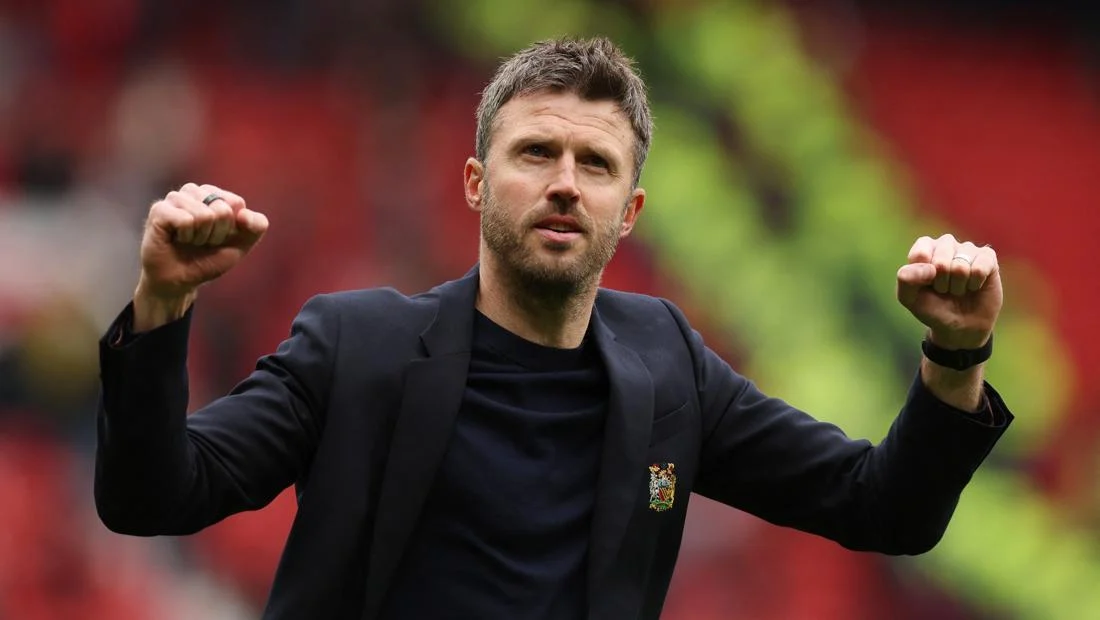
Manchester United manager Michael Carrick has been handed a temporary reprieve by the club hierarchy, retaining his position in the dugout ahead of a crucial Premier League fixture against Chelsea at Stamford Bridge. The decision comes following high-level crisis talks at the Carrington training ground on Monday, October 26, 2026, where the club’s executive leadership convened to evaluate the team’s alarming descent down the league table.
Despite mounting fan fury and relentless media speculation regarding his immediate dismissal, the 45-year-old manager will lead the Red Devils into this weekend’s high-profile encounter. However, sources close to Old Trafford indicate that this represents a final opportunity for Carrick to alter the current trajectory of the team, as Manchester United faces one of the most demanding fixture lists in recent club history.
The Crisis at Old Trafford: An Eight-Match Drought
The pressure on Carrick has intensified exponentially over the past two months, fueled by a disastrous run of form that has left the 20-time English champions languishing in an unprecedented position. Manchester United currently sits 16th in the Premier League table, having accumulated a meager 7 points from their opening matches of the 2026/2027 campaign. More alarmingly, the club finds itself just one single point above the relegation zone, a scenario that was previously unthinkable for a club of United’s stature and financial power.
The tipping point for the fanbase arrived over the weekend when Manchester United suffered a humiliating 3-0 defeat at the hands of Bournemouth. The performance was characterized by a lack of defensive cohesion, an impotent attacking display, and an alarming absence of tactical direction on the pitch. Boos echoed around the stadium at the final whistle, with significant sections of the traveling support openly calling for Carrick’s resignation.
This latest setback extended United’s winless streak across all competitions to eight consecutive matches. The team has struggled fundamentally to find the back of the net while conceding soft goals with alarming regularity. The defensive vulnerabilities that plagued the latter stages of the previous season have only amplified, leaving goalkeeper and backline exposed week after week. Key players, including club captain Bruno Fernandes, have struggled to impose themselves on matches, leading to a pervasive sense of low confidence within the squad.
The Carrington Summit: Berrada, Wilcox, and Carrick Meet
In response to the escalating crisis, Chief Executive Officer Omar Berrada and Director of Football Jason Wilcox held an emergency summit at the club’s Carrington training base on Monday. The meeting was designed to conduct a comprehensive post-mortem of the Bournemouth defeat and assess the broader sporting strategy under Carrick’s leadership. Crucially, Carrick himself was present at the discussions, providing his perspective on the dressing room atmosphere and outlining his plan to arrest the slide.
According to reports from Sky Sports, the executive board ultimately decided against an immediate termination of Carrick’s contract. Instead, the leadership opted for stability—at least in the short term—by granting the manager a final chance to demonstrate his capability to turn things around. The rationale behind the decision centers on the belief that a sudden managerial upheaval during a congested fixture period might cause further destabilization, provided there is an immediate and tangible response from the players.
Undeterred by the uncertainty surrounding his future, Carrick returned to the training pitches at Carrington just 24 hours after the summit. He actively led the preparation sessions ahead of the trip to west London, focusing heavily on defensive drills and structural discipline to counteract Chelsea’s potent attacking threats.
The Shadow of Potential Replacements
While Carrick remains in charge for the immediate future, the board’s decision to grant a final reprieve has not silenced the rumor mill. The club’s recruitment department has reportedly begun background checks and preliminary assessments on potential managerial successors should the upcoming fixtures yield further negative results.
Among the names most prominently linked with the Old Trafford hotseat are former Brighton and Chelsea manager Eddie Howe, whose tactical acumen and Premier League experience are highly regarded by the board. Additionally, Julian Nagelsmann remains on the radar of several European heavyweights, with United monitoring his long-term availability and contractual status. The inclusion of such high-profile names in daily reports underscores the precarious nature of Carrick’s current employment.
A Brutal Fixture List Awaits
The margin for error for Carrick and his squad is virtually nonexistent, given the unforgiving nature of the schedule awaiting Manchester United through the remainder of October and November 2026. The match against Chelsea is merely the opening salvo in a defining gauntlet of fixtures that could shape the entirety of their season.
Following the weekend clash at Stamford Bridge, Bruno Fernandes and his teammates will travel for a crucial UEFA Champions League fixture against Italian giants AS Roma. Upon returning to domestic action, United faces consecutive high-stakes Premier League matches against high-flying Aston Villa and traditional rivals Liverpool.
Given the current gap of just one point separating Manchester United from the relegation zone, failure to secure positive results in this upcoming sequence could plunge the club deeper into an existential crisis. The psychological burden on the players is immense, and the ability to handle the pressure in hostile away environments will dictate whether Carrick can survive the autumn.
Broader Implications for the Club’s Sporting Project
The current turmoil at Old Trafford raises significant questions regarding the long-term structural vision implemented by the INEOS-led management team. Since taking over sporting operations, the leadership has emphasized patience, data-driven recruitment, and alignment across all levels of the club. Backing Carrick through this turbulent period is a test of that philosophy, signaling a departure from the knee-jerk managerial sackings of the past decade.
However, the financial and reputational implications of a prolonged relegation battle cannot be understated. Missing out on European qualification—or worse, facing a genuine relegation scrap—would severely impact commercial revenues, sponsorship valuations, and the club’s ability to attract elite talent in upcoming transfer windows.
As the squad boards the flight to London, the spotlight rests squarely on Michael Carrick and his players. The coming days will reveal whether the emergency talks at Carrington provided the necessary wake-up call, or if Manchester United is careening toward an inevitable and historic change in the dugout.
