
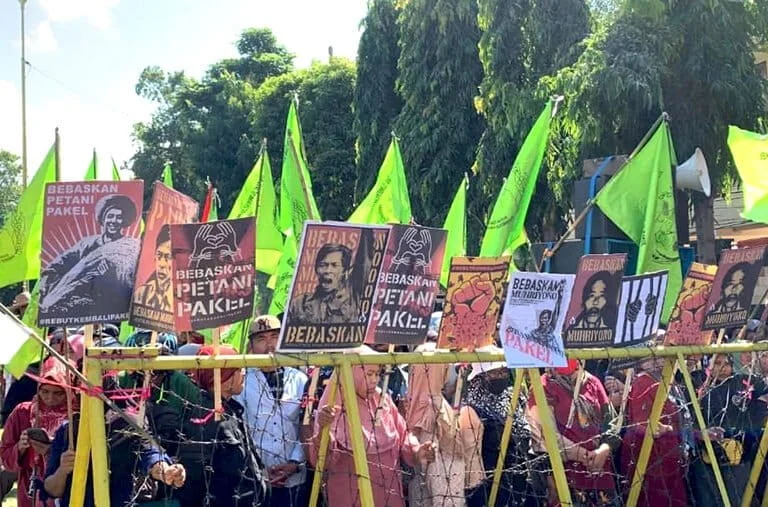
The legal battle concerning land rights in Pakel, Banyuwangi, reached a significant milestone on October 20, 2026, when the Banyuwangi District Court issued a decisive ruling. In a judgment regarding case number 305/Pdt.G/2025/PN Byw, the court declared that it could not accept the lawsuit filed by PT Bumisari Maju Sukses (BMS) against two members of the Rukun Tani Sumberejo Pakel (RTSP), Suwarno and Sagidin. This verdict effectively reinforces a similar ruling issued by the same court in June of the same year, which also rejected a civil lawsuit filed by the same company against another local farmer, Harun.
The legal victory provides a temporary reprieve for the farming community, which has been locked in a generational struggle for land tenure. However, the ruling also serves as a stark reminder of the underlying, unresolved agrarian crisis that has plagued the region for nearly a century. As legal experts and advocacy groups emphasize, while the rejection of these lawsuits is a victory for the farmers, the fundamental dispute over the legality of land concessions and the rights of indigenous communities remains a pressing issue for the Indonesian government.

A Century of Contention: The Historical Roots of the Pakel Conflict
The struggle for land in Pakel is not a modern phenomenon but an inherited conflict spanning nearly one hundred years. Historical records maintained by the local community indicate that their ancestors were granted authorization to open the land by the Dutch Colonial Government in 1925. This was solidified on January 11, 1929, through the issuance of the "Acta van Verwijzing," a document that allowed the community to clear and cultivate approximately 3,000 hectares of land.
For decades, the farmers of Pakel have relied on this document as the bedrock of their claim to the territory. However, the mid-20th century brought significant disruptions. During the post-independence era, the status of these lands became increasingly contested as the government expanded land concessions to private entities. The entry of PT Bumisari Maju Sukses (BMS) in the early 1980s marked a turning point in the conflict. According to local testimonies, such as those from long-time residents like Bagiman, who was born in 1947, the arrival of the company did not involve transparent land surveys or the consent of the local population. Instead, many residents claim that the political climate of the 1965 era was used as a pretext to intimidate and displace those who had farmed the land for generations.
Chronology of Recent Legal Escalation
The recent series of lawsuits initiated by PT BMS against the farmers—including Harun, Suwarno, and Sagidin—alleged that the farmers had trespassed on the company’s Right to Cultivate (HGU) area and intentionally destroyed coffee and clove crops belonging to the company. The company sought significant damages, with reports indicating claims reaching up to Rp1 billion, a figure described by the farmers as a crippling amount intended to suppress their movement.
The legal timeline is as follows:
- 1925-1929: Initial opening of Pakel land by local ancestors under Dutch colonial authorization.
- 1982: PT Bumi Sari (BMS) enters the region, beginning the period of overlapping claims.
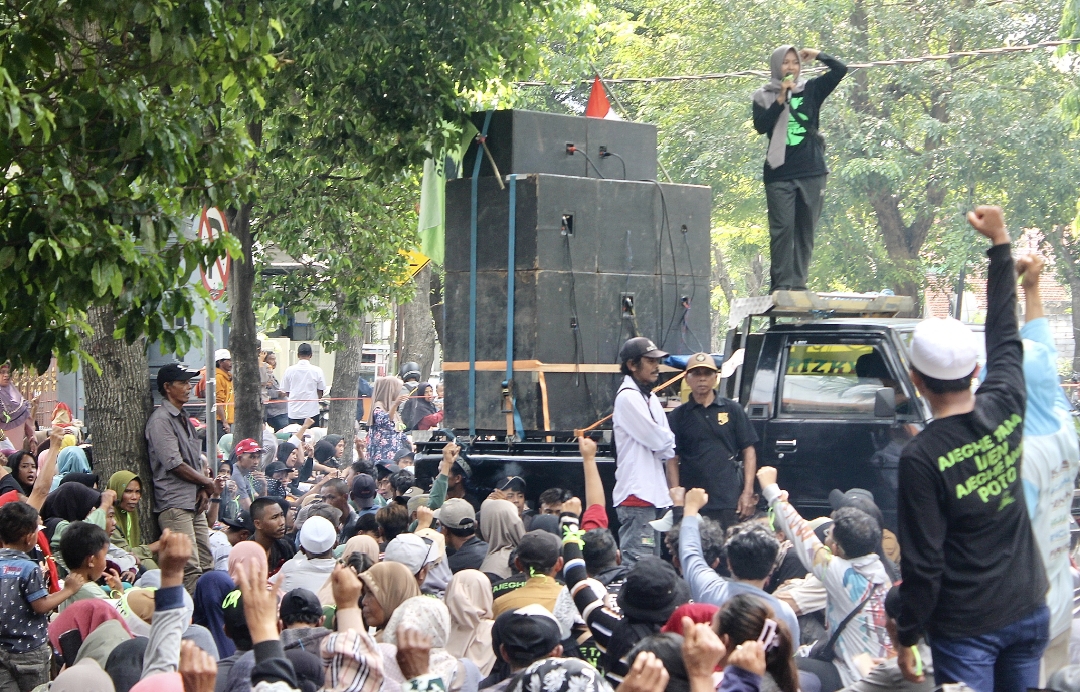
- 2023-2024: Heightened tensions lead to various protest actions by the Rukun Tani Sumberejo Pakel (RTSP), demanding the return of their ancestral lands.
- June 2026: The Banyuwangi District Court rejects an initial lawsuit filed by PT BMS against Harun, marking the first major legal success for the farmers.
- October 20, 2026: The court issues a second rejection regarding the case against Suwarno and Sagidin, cementing a pattern of judicial skepticism toward the company’s claims.
Strategic Lawsuits Against Public Participation (SLAPP)
Legal observers from the Advocacy Team for Agrarian Sovereignty (Tekad Garuda) have characterized these lawsuits as potential instances of SLAPP—Strategic Lawsuits Against Public Participation. By burying farmers under the weight of expensive legal proceedings, companies often aim to exhaust the resources, time, and psychological resolve of local communities, effectively silencing opposition to land expansion.
Pradipta Indra A, a representative of Tekad Garuda, noted that the recent court rulings are not merely victories for the individual farmers named in the suits, but a vindication of the farmers’ long-standing assertion that their occupancy is legitimate. "The court’s decision to reject the company’s lawsuit is a victory for the truth," Indra stated. "However, we must remain vigilant. A win in court is not an end to the broader, systemic inequality regarding land control that persists in Pakel."

Demands for State Intervention
The advocacy team has issued a comprehensive list of demands directed at the central and regional governments to resolve the conflict permanently. These include:
- Ministry of Agrarian Affairs and Spatial Planning/National Land Agency (ATR/BPN): A formal, transparent audit of the status of the land held by PT BMS, including an examination of the legal basis for the issuance of their HGU, the accuracy of their boundary demarcations, and the historical records of land occupancy.
- Ministry of Forestry: Clarification regarding the boundaries of state forest areas, as parts of the disputed land are reportedly situated within forest zones.
- Local Government (Banyuwangi Regency and East Java Province): Facilitation of cross-agency coordination to mediate the conflict and ensure that the voices of the Pakel farmers are included in any future decision-making processes.
- National Commission on Human Rights (Komnas HAM): An investigation into allegations of human rights violations, including intimidation, threats to the safety of residents, and the restriction of public participation in the region.
- Law Enforcement (Polda Jatim and Polresta Banyuwangi): A commitment to professional, objective, and non-discriminatory handling of agrarian conflicts, ensuring that farmers are not criminalized for exercising their right to defend their livelihoods.
Broader Implications and Socio-Economic Impact
The situation in Pakel serves as a microcosm of the wider agrarian challenges facing Indonesia. According to data from various agrarian watchdogs, land disputes frequently arise from the lack of precise land registration and the prioritisation of industrial concessions over community-managed land.
For the farmers of Pakel, the land is more than an economic asset; it is their primary source of sustenance and a repository of their heritage. Harun, as the leader of the RTSP, emphasized that while the court decision provides a moment of relief, the primary goal remains the return of the land to the community. The uncertainty caused by the dispute has forced many to live in a state of precariousness, where they are unable to invest fully in their farms for fear of further legal or physical encroachment.

"The struggle is for the future of our youth," Harun explained. "We want our children to be able to farm this land without the threat of being accused of trespassing on what has been our ancestral home for nearly a century."
Future Outlook
As the dust settles on the recent court rulings, the spotlight now turns to the Indonesian government. The judiciary has signaled that the current legal arguments presented by PT BMS are insufficient to justify their claims against the farmers. However, without proactive administrative intervention from the government to rectify historical land injustices and define clear boundaries, the underlying tension remains unresolved.
The case of Pakel is a testament to the resilience of local communities in the face of institutional pressure. It also highlights the urgent need for a shift in national agrarian policy—one that moves away from the reliance on punitive legal measures and toward a framework that prioritizes human rights, social justice, and the sustainable management of land by the people who have cultivated it for generations. Whether the government will take the necessary steps to conduct a thorough review and grant the requested legal certainty to the farmers of Pakel remains the critical unanswered question in this long-standing conflict.
