
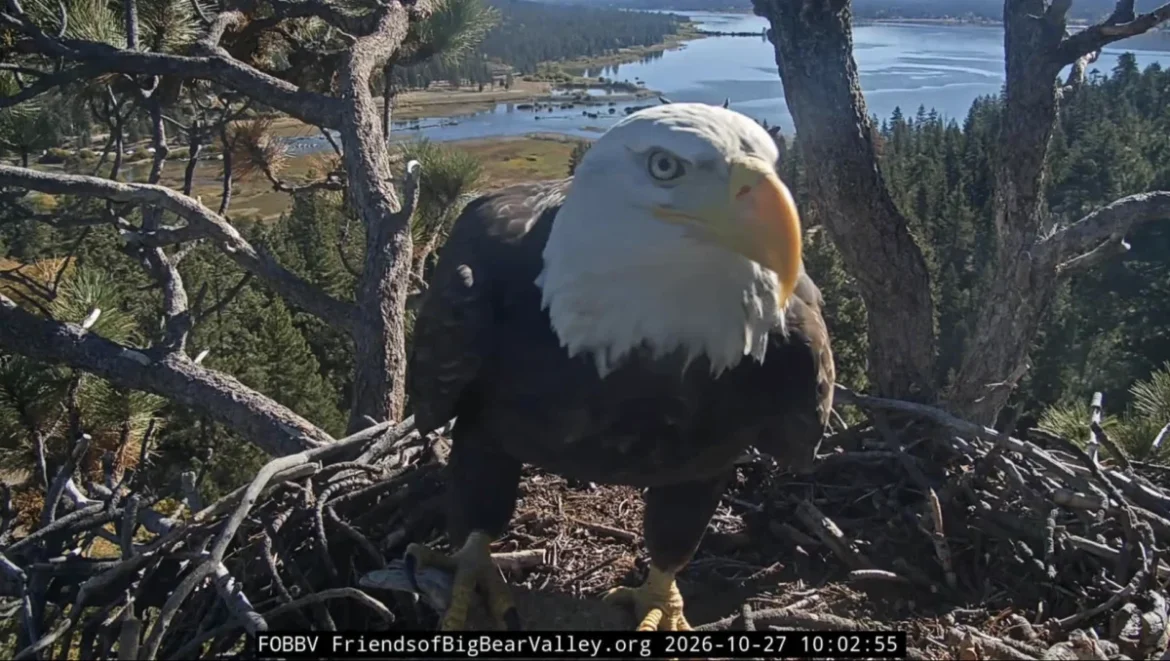
The quiet expanse of Big Bear Valley has once again become the focus of intense ornithological interest as an unidentified adult bald eagle was observed frequenting the iconic nest site that served as the home for the late, legendary matriarch Jackie and her longtime mate, Shadow. On Tuesday, high-definition nest cameras operated by the Friends of Big Bear Valley (FOBBV) captured the unknown raptor spending approximately 30 minutes at the site, engaging in domestic behaviors such as rearranging nesting material. This appearance marks a notable development in the transition period following a significant demographic shift within the local bald eagle population.
The arrival of this unidentified bird follows a period of reduced activity at the nest, a phenomenon common during the autumn months when bald eagles often disperse from their primary nesting territories. With the breeding season approaching in December, the presence of new individuals at the nest site suggests that the territory, historically considered one of the most productive in the region, remains highly desirable for local eagle populations seeking established infrastructure.
A Chronology of Transition in Big Bear Valley
To understand the significance of this recent visitor, one must examine the complex history of the nest itself. The site has been a cornerstone of local wildlife monitoring for over a decade. The structure currently monitored by the FOBBV was constructed following the loss of an earlier nest in a 2012 storm. That original nest was the site where Jackie, a bird who became a global symbol of the species’ recovery in Southern California, was raised by her parents, Lucy and Ricky.
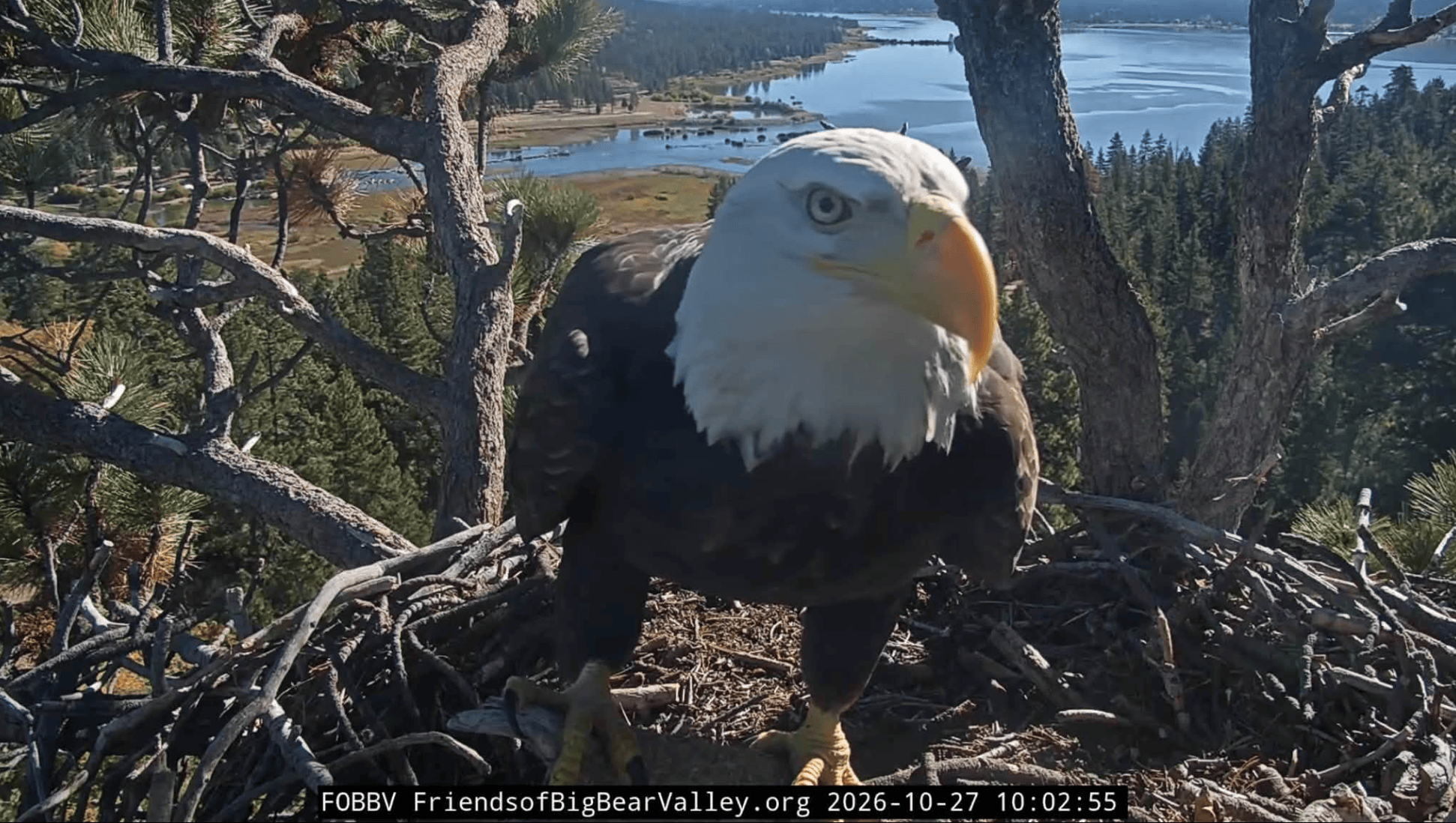
The lineage of the nest is characterized by adaptation and succession:
- 2012-2013: Following the destruction of the initial nest, Lucy and Ricky established a new site 50 feet away in a more robust tree.
- 2015-2016: Lucy and Ricky abandoned the secondary nest, eventually disappearing from the valley entirely in 2017.
- 2017-2024: A juvenile female—later identified as Jackie—claimed the territory. She successfully occupied this site for years, first with a partner named Mr. B, and subsequently with Shadow, with whom she raised multiple successful broods.
- August 10, 2026: The death of Jackie marked a profound turning point for the territory, ending a long-standing partnership with Shadow that had captivated millions of viewers worldwide.
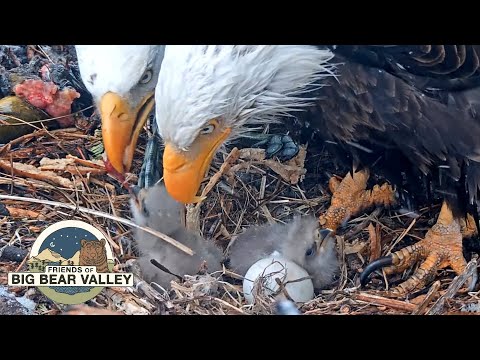
- October 2026: Shadow, having successfully fledged the pair’s latest offspring, Sandy and Luna, in July, began to share the nest space with a young female eagle named Kaydee. However, both Shadow and Kaydee have been absent from recent footage, creating a power vacuum that has attracted new, unidentified scouts.
The Dynamics of Autumnal Dispersal and Nest Defense
Ornithologists often refer to the autumn months as a period of "bald eagle vacation." During this time, the urgency of territorial defense and chick-rearing subsides, allowing birds to explore broader hunting grounds and sleep in more sheltered, wooded areas. This behavior accounts for the intermittent sightings of various eagles—including sub-adults and the recent mystery visitor—at the Big Bear nest.
While it is tempting to attribute human-like intent to these movements, the arrival of a new, unidentified bird is a standard display of territorial interest. Bald eagles are highly site-faithful, but the death of a resident breeder, such as Jackie, necessitates a period of adjustment for the remaining partner and, eventually, a potential restructuring of the pair bond. Whether the new visitor represents a challenger, a potential mate, or merely a transient bird evaluating the viability of the site remains a subject of ongoing observation by the FOBBV and the broader scientific community.
Ecological Implications and Population Health
The continued interest in the Big Bear nest provides researchers with valuable data regarding the repopulation of the species in Southern California. Once on the brink of regional extinction, the bald eagle population has shown resilience, with the Big Bear pair serving as a primary case study for successful nesting habits in the face of human encroachment and climate variability.
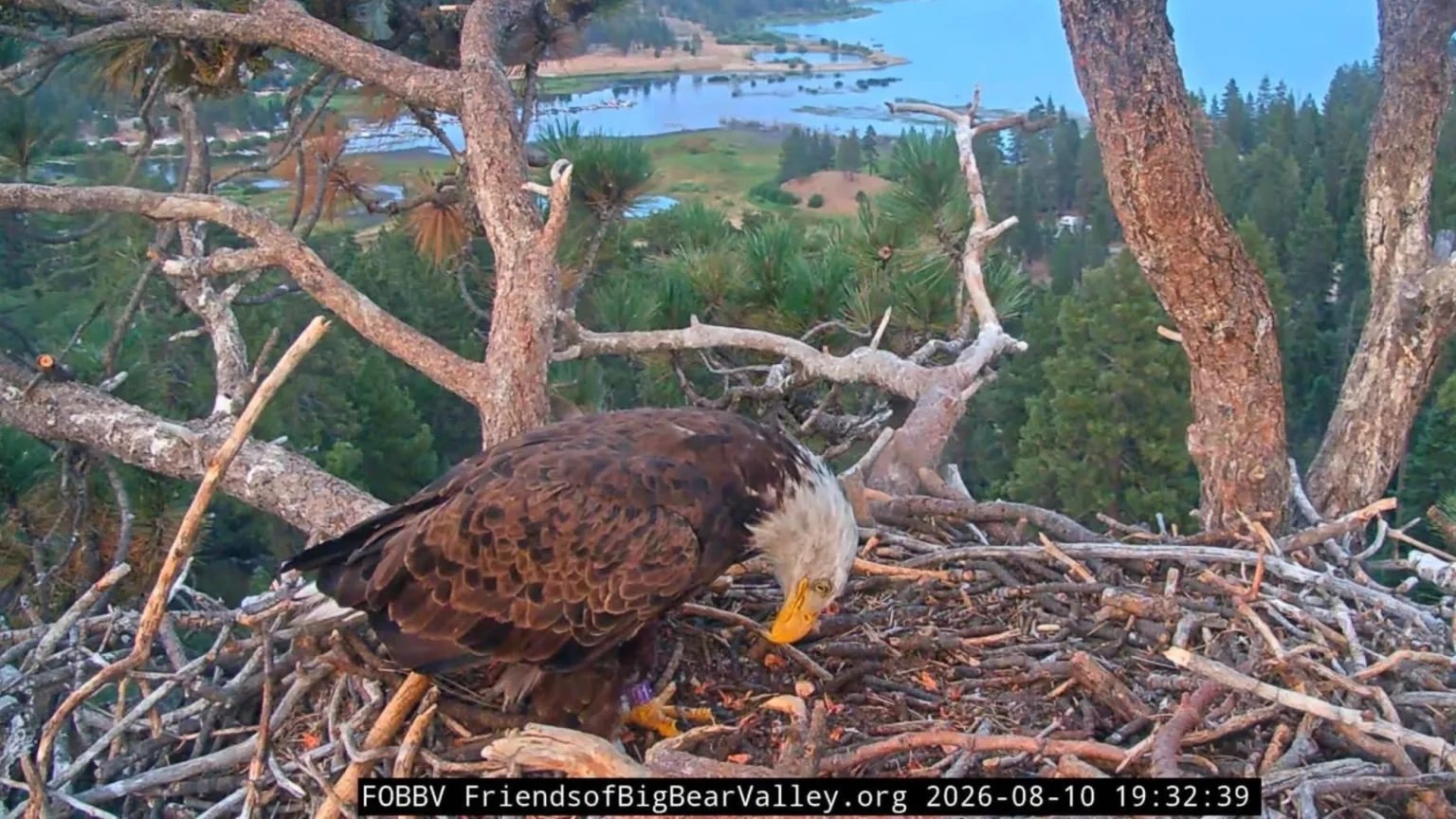
The FOBBV cameras serve as more than just a public engagement tool; they provide a continuous longitudinal study of nesting success, dietary patterns, and the socio-biological interactions of bald eagles. The recent arrival of an unknown adult, coupled with the previous sightings of Kaydee, highlights the competitive nature of high-quality nesting real estate. In biological terms, the "value" of a nest is measured by its location, proximity to food sources—specifically the fish-rich waters of Big Bear Lake—and the structural integrity of the tree. The fact that new birds are consistently attempting to occupy this specific site is an indicator that the ecological conditions of the valley remain favorable for the species.
Monitoring Protocols and Future Expectations
As the calendar approaches the critical December window—the typical onset of the mating season for Southern California bald eagles—the behavior of the remaining resident, Shadow, will be under intense scrutiny. The loss of a mate is a significant biological hurdle for any eagle. In many instances, the surviving partner will seek a new mate to maintain the territory. However, the success of this process depends on age, health, and the availability of unattached reproductive-aged birds in the vicinity.
The FOBBV has maintained a commitment to transparency, keeping the primary nest camera (Cam 1) operational on a 24/7 basis, while managing resources for the wide-angle camera (Cam 2) through energy-saving measures. This dual-camera approach allows for both detailed observations of individual behaviors and a broader context of the activity occurring in the surrounding trees, which is essential for identifying potential nesting rivals or partners.
Analysis: What the Data Suggests
From an analytical standpoint, the presence of an unidentified adult indicates that the territory is not yet claimed in a permanent capacity for the upcoming season. While the interactions between Shadow and Kaydee earlier in the autumn showed promise of a potential new pairing, the disappearance of both birds from the camera feed suggests that the pair-bonding process is either in its infancy or has been interrupted.
The influx of "floater" birds—non-breeding or transient adults—is a common phenomenon in dense raptor populations. These birds act as an indicator of the population’s overall density. If the Big Bear valley environment reaches its carrying capacity, competition for these established nests will intensify. Should Shadow fail to return or be unable to defend the nest, it is highly probable that the new visitor, or another competitor, will seize the territory.
As the situation evolves, the scientific community and the public will continue to rely on the FOBBV’s meticulous documentation. The narrative of the Big Bear eagles is a poignant reminder of the fragility and persistence of wildlife in a changing environment. Whether the next chapter involves the return of a familiar face or the rise of a new lineage, the story of this nest remains a vital record of avian behavior in the 21st century.
For now, the camera remains focused, waiting to see if the unidentified visitor or another avian contender will claim the mantle of the Big Bear Valley territory. Observers are advised that the lack of activity is not an indication of abandonment, but rather a reflection of the seasonal rhythms that govern the life cycles of these apex predators. Future updates from the FOBBV will be essential in determining the long-term future of the nest, ensuring that the legacy established by Jackie and her predecessors continues to be recorded with accuracy and care.
