
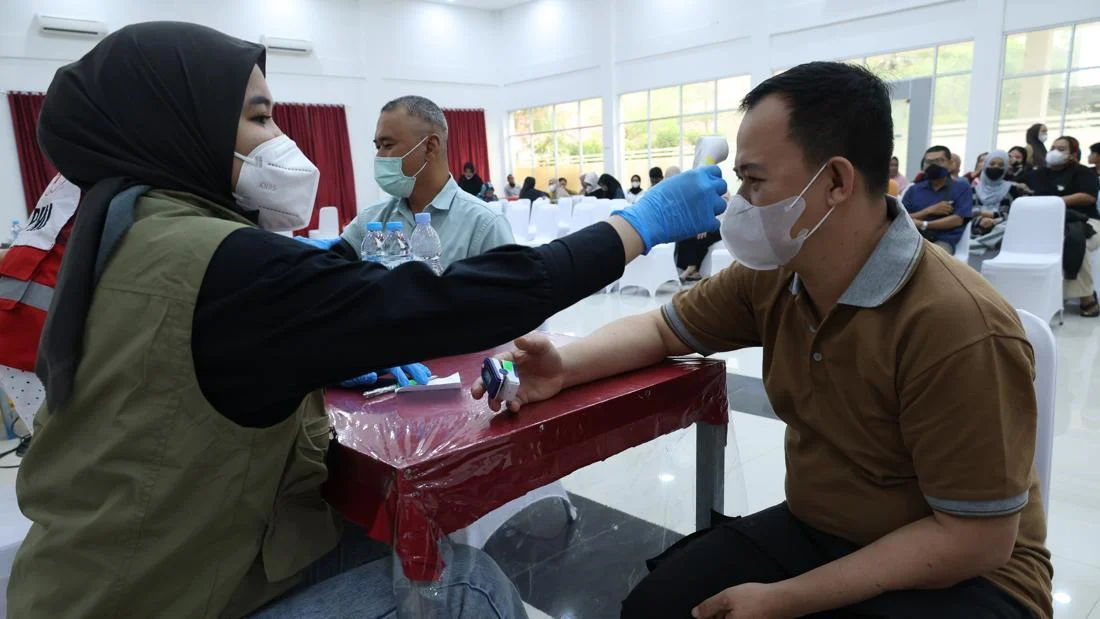
In response to the escalating public health crisis caused by persistent forest and land fires (karhutla) in West Kalimantan, medical teams have mobilized to provide free health services to residents in Pontianak. The initiative aims to mitigate the immediate physical toll of thick haze on the local population, offering a range of treatments from basic diagnostic screenings to specialized respiratory therapy for those suffering from acute conditions.
The city of Pontianak, which frequently serves as a focal point for regional environmental challenges, has seen a sharp increase in respiratory ailments as smoke from fires in surrounding peatland areas blankets the urban landscape. With air quality indices reaching hazardous levels, local health authorities and humanitarian partners have stepped in to alleviate the burden on the city’s public health infrastructure.
The Environmental Context of the Crisis
Forest and land fires in Indonesia are a cyclical phenomenon often exacerbated by the El Niño Southern Oscillation (ENSO), which results in drier-than-average conditions. In West Kalimantan, the geography is particularly vulnerable due to vast stretches of peatland. When these areas ignite, they produce a dense, acrid haze that is difficult to extinguish and carries significant health risks.
The particulate matter produced by these fires—specifically PM2.5—is small enough to penetrate deep into the lungs and enter the bloodstream. Long-term exposure to this particulate matter is linked to cardiovascular disease, chronic obstructive pulmonary disease (COPD), and diminished lung function in children. The current emergency in Pontianak is a reflection of the broader struggle to balance agricultural development with environmental preservation and public health safeguards.
Chronology of the Current Outbreak
The current escalation began in early August, as satellite imagery from the Meteorology, Climatology, and Geophysics Agency (BMKG) detected a significant rise in "hotspots" across the regencies surrounding Pontianak. By mid-August, wind patterns shifted, directing the smoke plumes toward the city center.
- Week 1: Initial reports of hazy conditions began surfacing, with the Air Quality Index (AQI) transitioning from "moderate" to "unhealthy."
- Week 2: Medical facilities in Pontianak reported a 30% increase in outpatient visits for respiratory-related issues, including asthma exacerbations and bronchitis.
- Week 3: Local government agencies, in collaboration with NGOs and private sector partners, officially launched the free mobile health clinics. These stations were strategically placed in residential neighborhoods most affected by the smoke density.
- Present Day: Mobile clinics continue to operate on a rotating schedule, providing daily check-ups and respiratory assistance to thousands of affected citizens.
Supporting Data and Health Implications
Public health data collected from local health centers (Puskesmas) indicates that children and the elderly are the most vulnerable demographics in this crisis. Statistics from the regional health office reveal that:
- Patient Demographics: Approximately 45% of those seeking care at the free clinics are children under the age of 12, whose respiratory systems are still developing.
- Clinical Symptoms: The most common complaints include dry cough, eye irritation, skin rashes, and difficulty breathing.
- Treatment Protocols: The medical teams are providing nebulizer treatments for patients with restricted airways, distributing N95-grade face masks, and offering basic medication to manage inflammation.
The economic impact of the haze is also significant. Beyond the immediate costs of healthcare, the haze has disrupted outdoor commerce, school activities, and transportation networks, creating a ripple effect that touches nearly every aspect of the city’s economy.
Official Responses and Mitigation Efforts
Government officials have acknowledged the severity of the situation. In a recent press briefing, the local disaster management agency (BPBD) confirmed that they are intensifying efforts to contain the fires on the ground. Water-bombing operations using helicopters are being coordinated in tandem with ground-level firefighting efforts conducted by the Manggala Agni brigades.
"The priority is the immediate well-being of the citizens," said a regional health representative. "While we fight the fires at their source, we cannot ignore the people who are suffering today. These health services are designed to prevent minor respiratory issues from becoming chronic, life-threatening conditions."
Furthermore, the government has advised residents to minimize outdoor activities, particularly between the hours of 10:00 AM and 4:00 PM, when ozone levels and particulate concentration typically peak. Public schools have been granted the authority to implement remote learning or shorten school hours to protect students from the worst of the smoke.
Broader Impact and Long-Term Implications
The recurrent nature of the haze in Pontianak raises fundamental questions about land management policy and climate resilience. The reliance on mobile health clinics, while vital, serves as a reactive measure rather than a long-term solution.
Experts in environmental policy argue that unless there is a fundamental shift in how peatlands are managed—moving away from drainage-based agriculture—the risk of fire will remain high. The economic burden of these recurring crises is substantial, encompassing lost productivity, increased healthcare spending, and the degradation of local biodiversity.
From a public health perspective, the long-term impact on the city’s healthcare system is equally concerning. Increased demand for respiratory care places a strain on medical supplies and personnel, diverting resources from other essential health services. The ongoing efforts to provide free healthcare in Pontianak are an essential lifeline, but they underscore the urgency of addressing the root causes of the environmental crisis.
Conclusion
As the medical teams continue their work on the ground in Pontianak, the resilience of the community is being tested once again. The provision of free health services serves as a crucial stopgap in a crisis that transcends borders and mandates a coordinated, multi-stakeholder response. While current interventions focus on symptom management and immediate relief, the future stability of the region will depend on a combination of more robust disaster mitigation strategies and a sustained commitment to protecting the environmental health of the Indonesian archipelago.
For the residents of Pontianak, the arrival of these health services is more than just a medical check-up; it is a sign of solidarity in the face of an invisible, suffocating threat. As authorities monitor the air quality index and weather patterns, the city remains on high alert, waiting for the winds to shift and for the fires to be brought fully under control. The integration of clinical care with disaster response remains the cornerstone of the city’s strategy to survive the haze, ensuring that the health of the community is not sidelined by the challenges of a changing climate.
