
Defense giant Lockheed Martin has officially lifted the veil on the AIM-260 Joint Advanced Tactical Missile (JATM), a next-generation air-to-air weapon developed under deep classification to counter rapidly advancing aerial threats from China. The public disclosure of the missile’s specifications and capabilities coincides with the finalization of a new framework agreement with the United States Department of Defense, commonly known as the Pentagon. This strategic accord is specifically designed to rapidly scale up production capacities as the U.S. military works urgently to replenish its critically depleted munitions stockpiles, a vulnerability exacerbated by recent military engagements involving Iran and ongoing global deterrence efforts.
For years, the JATM program existed as one of the Pentagon’s most closely guarded secrets, born out of an urgent operational requirement to maintain air superiority in the vast and contested theater of the Indo-Pacific. As Beijing continues to modernize its military hardware—most notably through the deployment of advanced stealth fighter jets such as the Chengdu J-20 and the integration of long-range air-to-air weaponry—the United States military faced a widening tactical gap. The AIM-260 has been engineered specifically to close and surpass that gap, offering significantly extended operational ranges, advanced electronic counter-countermeasures, and higher kinematic performance compared to legacy systems like the AIM-120 Advanced Medium-Range Air-to-Air Missile (AMRAAM).
Main Facts and Strategic Capabilities of the AIM-260
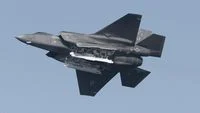
The newly detailed AIM-260 JATM is not merely an incremental upgrade to existing U.S. tactical inventories; it represents a generational leap in aerial combat technology. Designed to be integrated primarily into the internal weapons bays of America’s premier fifth-generation stealth fighters—the Lockheed Martin F-22 Raptor and the F-35 Lightning II—the missile allows these aircraft to engage hostile targets at distances previously unattainable by standard medium-range munitions.
While exact performance metrics such as precise range, speed, and guidance systems remain classified for national security reasons, defense analysts and industry insiders note that the JATM is tailored to outrange adversary weapons like China’s PL-15. The ability to strike high-value assets such as airborne warning and control system (AWACS) aircraft and aerial refuelers from safe standoff distances is a core design philosophy behind the JATM. This capability ensures that U.S. and allied tactical fighters can neutralize strategic force multipliers belonging to the People’s Liberation Army Air Force (PLAAF) before those assets can effectively direct operations.
The imperative to develop and field the JATM also stems from a sobering logistical reality facing the U.S. defense apparatus. Years of high-tempo global operations, combined with recent high-intensity expenditure of precision-guided munitions in the Middle East following conflicts involving Iran and regional proxies, have strained America’s military stockpiles. The Pentagon’s new procurement strategy reflects a decisive pivot away from low-rate initial production toward mass manufacturing, ensuring that the armed forces possess both the technological edge and the inventory depth required for a potential near-peer conflict.
Chronology and Development Timeline
The genesis of the JATM program dates back to 2017, when the U.S. Air Force initiated development in absolute secrecy, recognizing that the aging AIM-120 AMRAAM—first introduced in the early 1990s—would eventually be outmatched by foreign technological advancements. For the better part of a decade, the project operated under strict compartmentalization, with few details leaking to the public domain despite extensive flight testing over military ranges in the western United States.
A major milestone occurred in May, when the existence and external physical characteristics of the missile were publicly acknowledged for the first time during a defense industry showcase. This preliminary revelation paved the way for international interest, most notably from close U.S. allies in the Indo-Pacific. Australia, recognizing the vital importance of deterring regional hegemony, formalised a foreign military sales commitment to acquire JATM munitions valued at approximately $521 million (approx. 9.16 trillion Indonesian Rupiah). Although the exact quantity of missiles and unit costs remain classified under bilateral agreements, the acquisition underscores Canberra’s alignment with Washington’s strategic posture in the Pacific.
The timeline culminated in the newly announced multi-year procurement framework agreement between Lockheed Martin and the Pentagon. This framework establishes the legal and financial mechanisms necessary to transition the JATM program from a developmental curiosity into a high-rate production reality. Under the terms of the agreement, Lockheed Martin has committed to utilizing its own capital investments to expand manufacturing infrastructure, streamline supply chains, and accelerate delivery schedules to the armed forces.
Official Responses and Industry Perspectives
The formal public rollout of the JATM program has drawn significant commentary from corporate leadership at Lockheed Martin, emphasizing the cultural shift from a clandestine initiative to an open, production-focused enterprise. Tim Cahill, President of Missiles and Fire Control at Lockheed Martin, addressed the milestone with a mixture of professional pride and strategic acknowledgment.
"JATM is one of the most important air-dominance capabilities our nation possesses, but because of the classified nature of the program, this is also a story that we haven’t been able to tell," Cahill stated during a media briefing. He elaborated on the immense technical hurdles overcome by the engineering teams and expressed deep satisfaction in finally shedding light on the project. "We are proud to finally be able to talk about the extraordinary work behind this missile and how we are partnering with the U.S. government to rapidly scale up production."
From the perspective of Pentagon officials, the collaboration with Lockheed Martin represents a vital step toward reforming defense acquisition processes. For decades, critics have pointed out that traditional defense procurement cycles are too slow to keep pace with rapid technological advancements in nations like China. By implementing multi-year procurement authorities and leveraging private industry investment, the Department of Defense aims to eliminate bureaucratic bottlenecks and secure predictable manufacturing pipelines that can withstand geopolitical shocks.
Broader Impact and Geopolitical Implications
The public unveiling and accelerated production of the AIM-260 JATM carry profound implications for the global balance of military power, particularly in the Indo-Pacific region. As tensions in the Taiwan Strait and the South China Sea remain at an elevated level, the introduction of a longer-range, highly capable air-to-air missile directly alters the tactical calculus for regional planners.
For China, the operational fielding of the JATM by U.S. F-22 and F-35 fleets complicates the deployment of its own advanced air assets. It forces the People’s Liberation Army to reconsider the vulnerability of its critical support aircraft, which have historically operated under the assumption of sanctuary at extended distances. Furthermore, the inclusion of key allies like Australia in the JATM ecosystem signals a coordinated multilateral approach to regional deterrence, ensuring that partner nations can operate seamlessly within an integrated air defense architecture.
Economically and industrially, the agreement tests the resilience of the U.S. defense industrial base. Decades of post-Cold War consolidation left the defense sector with limited surge capacity, making it difficult to rapidly ramp up production during crises. By co-funding infrastructure expansions, Lockheed Martin and the Pentagon are attempting to rewrite the playbook for defense manufacturing, ensuring that peacetime production rates can be elevated to wartime requirements without catastrophic delays.
Ultimately, the emergence of the AIM-260 JATM from the shadows marks the beginning of a new chapter in modern aerial warfare. As the United States and its allies confront a more complex and competitive security environment, this weapon stands as a testament to the evolving nature of military technology—where maintaining technological supremacy and industrial depth are equally vital to preserving global stability.
