
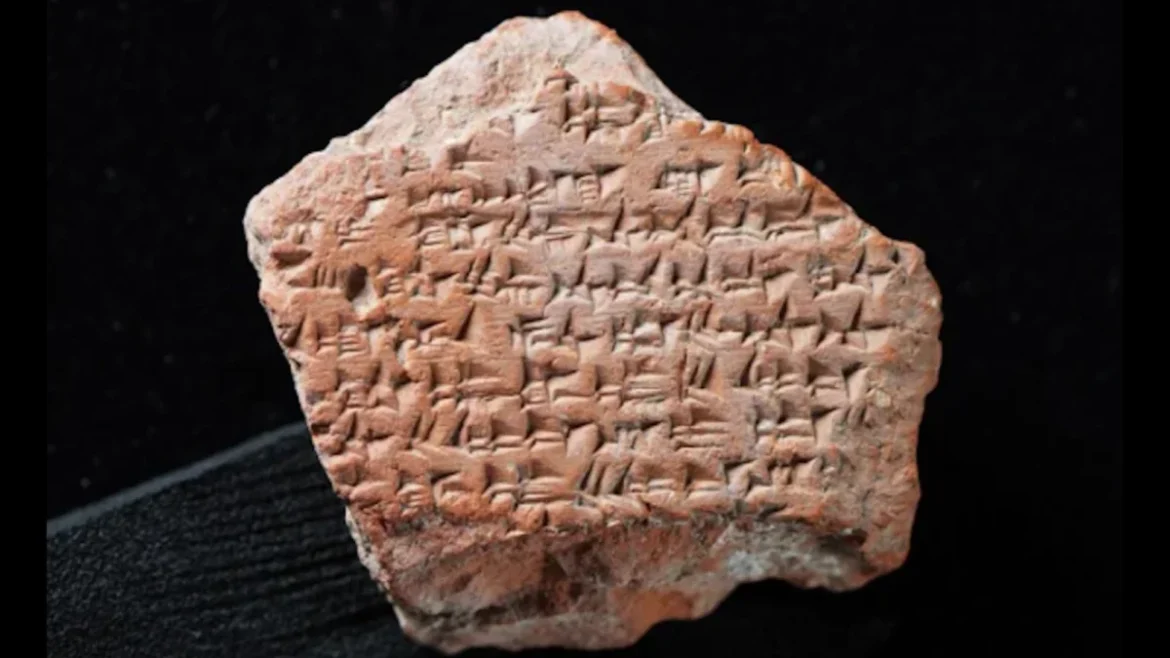
The annals of human diplomacy have been enriched by a significant archaeological discovery in central Turkey, where researchers have unearthed a new fragment of the Kadesh Peace Treaty. This document, which dates back to the 13th century BCE, serves as a profound testament to the ancient world’s attempts to codify international relations. Excavated at the Büyükkale royal palace site in Hattusha, the former capital of the Hittite Empire, this clay tablet provides previously unknown details regarding the repatriation and protection of refugees fleeing conflict between the Hittite Empire and the Egyptian New Kingdom.
The Historical Context of the Kadesh Treaty
To understand the weight of this discovery, one must look back to the geopolitical tensions that defined the Late Bronze Age. By the mid-13th century BCE, the Eastern Mediterranean was a volatile arena of competing interests. The two dominant superpowers of the age—the Hittites, centered in modern-day Anatolia, and the Egyptians, led by the prolific Pharaoh Ramesses II—had spent generations clashing over influence in the Levant, specifically the strategic city-state of Kadesh in modern-day Syria.
The culmination of these hostilities was the Battle of Kadesh in approximately 1274 BCE. While both sides claimed a decisive victory in their respective royal inscriptions, the reality was a tactical stalemate that exhausted the resources of both empires. The subsequent years saw a gradual shift toward diplomatic engagement, necessitated not only by mutual military exhaustion but also by the rise of a new threat in the East: the Middle Assyrian Empire. Recognizing that continued infighting left them vulnerable to external encroachment, Ramesses II and the Hittite King Hattusili III formalized their cessation of hostilities around 1259 BCE. This treaty is widely recognized by historians as the oldest known international peace agreement in human history to have both sides of the text preserved.
Chronology of the Diplomatic Process
The timeline of this historic reconciliation unfolded over several critical stages:
- c. 1274 BCE: The Battle of Kadesh takes place, resulting in significant casualties and an inconclusive military outcome.
- c. 1274–1259 BCE: A period of "cold war" and intermittent skirmishes follows, during which both empires realize the futility of continued direct conflict.
- c. 1259 BCE: The signing of the Treaty of Kadesh. The text is inscribed in Akkadian—the international diplomatic language of the era—on silver tablets (now lost) and replicated on clay tablets in Hattusha and hieroglyphics on temple walls in Egypt.
- 2001 CE: UNESCO formally recognizes the treaty as a milestone in human history, adding it to the Memory of the World Register.
- September 2026 CE: The Turkish Ministry of Culture and Tourism announces the identification of a new cuneiform fragment at the Hattusha site, corresponding to Articles 12 through 20 of the original agreement.
Analysis of the Newly Discovered Fragment
The newly identified section, recovered from the Büyükkale archives, shifts the scholarly focus from the mere cessation of warfare to the administrative logistics of peace. While the primary treaty documents are famous for their clauses on non-aggression and mutual defense, this fragment focuses on the humanitarian and legal obligations regarding displaced persons.
Preliminary analysis suggests that the fragment details the conditions under which refugees—those who fled the territory of one kingdom for the other—were to be handled. Rather than a modern concept of asylum, the text outlines a protocol for the safe return and protection of individuals, ensuring that their homes and properties were not subject to indiscriminate destruction or seizure. This indicates a high level of state-sponsored organization, suggesting that both Ramesses II and Hattusili III recognized that the stability of their borderlands depended on the orderly management of civilian populations.
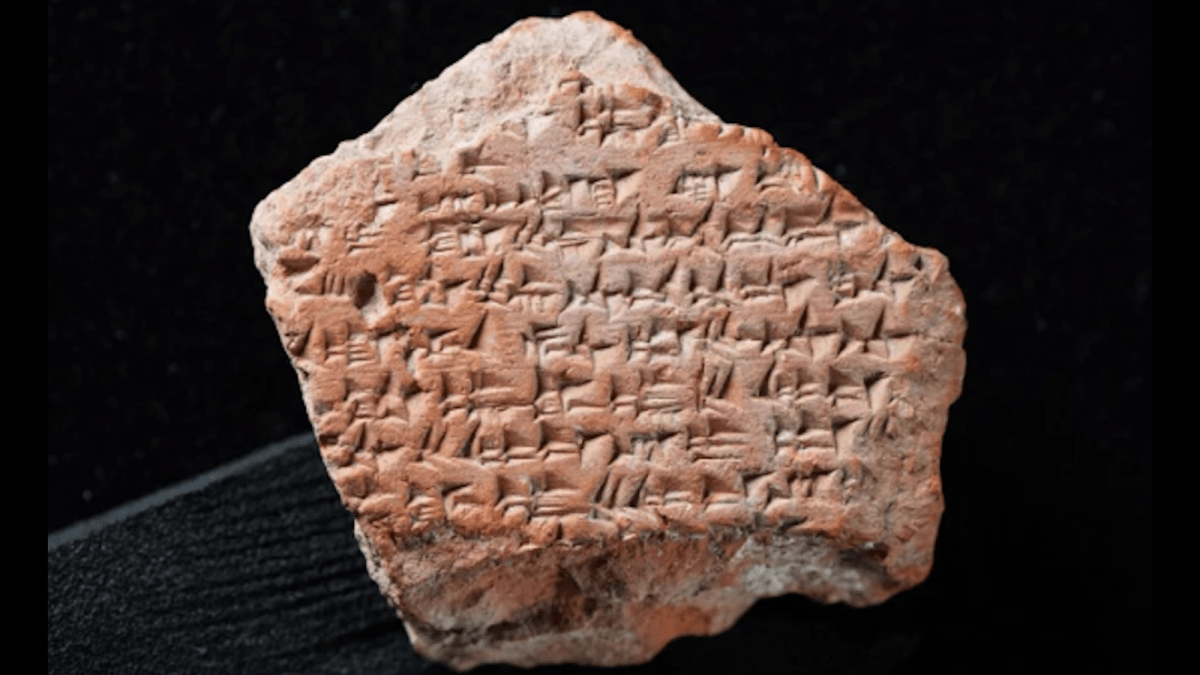
From a philological perspective, the tablet is a critical addition to the Hittite corpus. The Hittites were prolific archivists, and the Büyükkale palace has served as a repository for thousands of tablets that detail everything from tax codes to religious rituals. By filling in the gaps of Articles 12–20, historians can now construct a more comprehensive narrative of how the Hittite bureaucracy integrated international mandates into their domestic law.
Official Statements and Cultural Significance
The discovery was timed to coincide with the International Day of Peace, highlighting the enduring relevance of the document. Mehmet Nuri Ersoy, the Minister of Culture and Tourism for Turkey, emphasized the symbolic importance of the find. In a statement released following the identification, Ersoy remarked on the continuity of human history, noting that the principles of protecting human dignity—even in an ancient, autocratic context—remain a foundational aspiration for modern society.
"This legacy, which has survived from thousands of years ago to the present day, reminds us of our responsibility to protect human life and dignity," Ersoy stated. His commentary underscored the hope that the diplomatic spirit of the Kadesh Treaty might serve as an inspiration for contemporary global conflicts, particularly in the Middle East.
Broader Implications for Archaeology and Diplomacy
The study of the Kadesh Treaty remains one of the most active fields in Near Eastern archaeology. The fact that a fragment of such magnitude was discovered more than 3,000 years after its creation underscores the importance of ongoing excavations at Hattusha. As a UNESCO World Heritage site, Hattusha continues to offer insights into how the Bronze Age empires maintained order, handled migration, and projected power.
The implications of this discovery extend beyond the academic sphere. By demonstrating that ancient civilizations were capable of negotiating complex, multi-article treaties that addressed the human costs of war, the find challenges the perception of the ancient world as purely driven by conquest. It provides evidence of a sophisticated "international system" that valued stability over perpetual expansion.
Furthermore, the integration of digital epigraphy—the process of using high-resolution 3D imaging to read eroded cuneiform—has been vital in the identification of this fragment. As archaeologists continue to sift through the thousands of tablets stored in museum archives and those still buried at the Büyükkale site, it is highly probable that more sections of this historic document will come to light.
Conclusion
The recovery of this cuneiform fragment acts as a bridge between the distant past and the present. In an era where international relations are often defined by the fragility of treaties and the scale of refugee crises, the Kadesh Peace Treaty stands as a reminder that the challenges of maintaining peace are perennial. The Hittite and Egyptian rulers of the 13th century BCE understood that even in a world of absolute monarchs and divine right, the longevity of an empire was best served by diplomatic consensus and the humane treatment of those displaced by conflict. As scholars continue to transcribe and analyze the new text, the world is granted a clearer look at the earliest efforts to legislate peace, offering a timeless lesson in the mechanics of human cooperation.
