
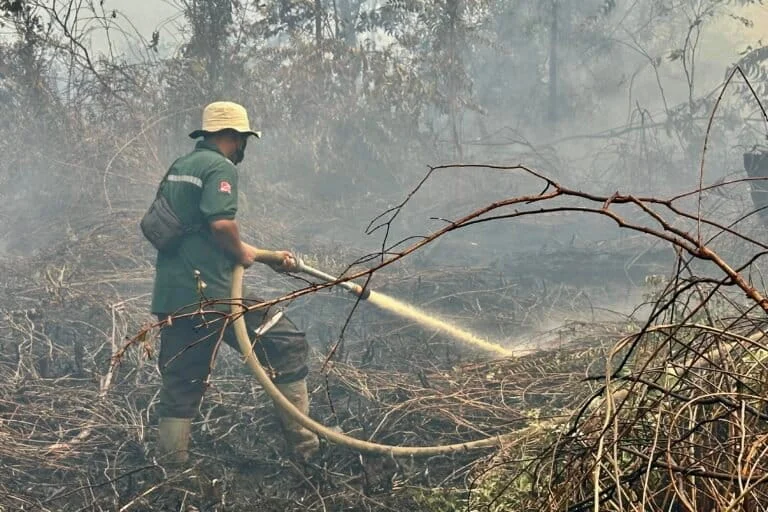
In a decisive move to address the escalating national crisis of forest and peatland fires, President Prabowo Subianto has implemented a major cabinet reshuffle, signaling a shift in the government’s approach to environmental management and disaster mitigation. The restructuring centers on the revival of a specialized agency for peatland and mangrove restoration and the leadership overhaul of the National Disaster Management Agency (BNPB), both of which are critical to curbing the wildfires that have ravaged millions of hectares across Indonesia.
The strategic appointments, finalized at the State Palace in Jakarta on October 15, include Satyawan Pudyatmoko and Major General TNI Sriyanto, who have been named as the Head and Deputy Head of the newly established National Peatland and Mangrove Management Agency (BPGMN). This entity replaces the previously dissolved Badan Restorasi Gambut dan Mangrove (BRGM), an institution that was trimmed during the early days of President Prabowo’s administration—a decision that critics argued left the nation vulnerable to the current surge in fire-related environmental damage.
Leadership Transition Amidst Crisis
Beyond the environmental sector, the reshuffle extends to the nation’s emergency response apparatus. Lieutenant General TNI Kristomei Sianturi has been appointed as the new Head of the BNPB, succeeding Lieutenant General (Ret.) Suharyanto. This transition comes at a precarious time for the disaster agency, which is currently reeling from a high-profile corruption scandal involving the misappropriation of "Ready-to-Use Funds" (DSP).
General Kristomei, a veteran with extensive experience in territorial operations and military communications, also assumes the dual role of Head of the National Border Management and Remote Areas Agency. His appointment is widely viewed as an effort to restore order and discipline within the BNPB. Furthermore, the President has appointed several key deputies, including Marshal TNI Yusuf Jauhari and General TNI Richard Taruli Horja Tampubolon as Deputy Ministers of Defense, Alim Setiawan Slamet as Deputy Minister of Agriculture, and M. Maulana Bungaran as Deputy Minister of Immigration and Corrections. General TNI Tandyo Budi Revita has been installed as the new Chief of Staff of the Indonesian Army (KSAD).
Chronology and Escalation of the Fire Crisis
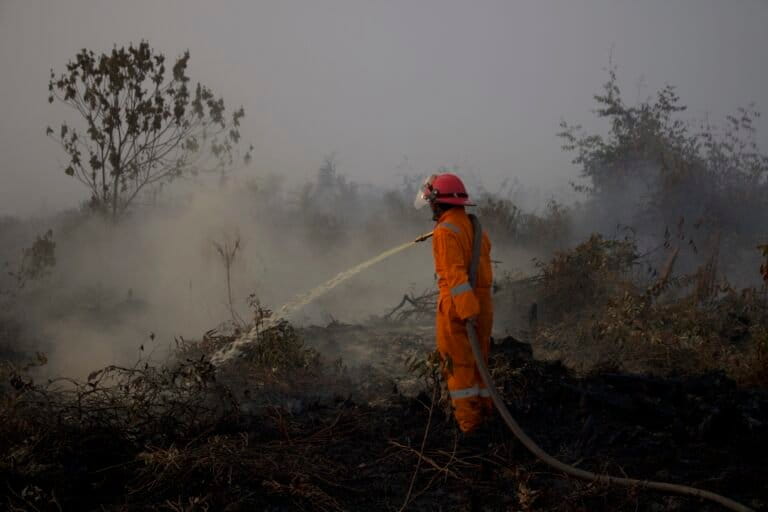
The urgency of these appointments is underscored by a harrowing environmental timeline. While official government data from July 2025 initially estimated the burnt area at approximately 202,010 hectares, independent monitoring platforms such as Nusantara Atlas provide a more alarming picture. By mid-October 2026, cumulative burnt areas had ballooned to over 1.9 million hectares, with more than 1.1 million hotspots recorded.
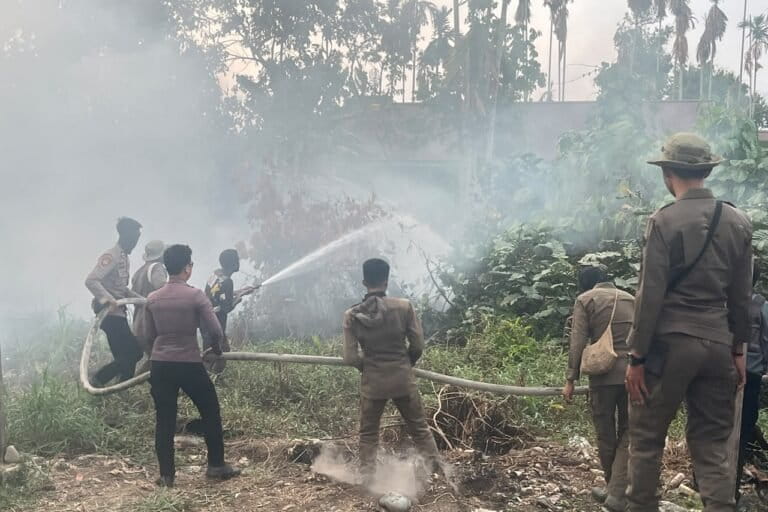
The environmental impact has been catastrophic. Data from the Ministry of Health indicates that as of September, 12.5 million Indonesians have been adversely affected by toxic haze, with several fatalities directly attributed to respiratory complications. The crisis has transcended national borders, affecting air quality in neighboring Singapore, Malaysia, Brunei Darussalam, and Timor Leste. NASA satellite imagery from mid-October further confirmed the presence of dangerous concentrations of carbon monoxide (CO) blanketing the Indonesian archipelago, with smoke plumes reaching as far as Jakarta, Banten, and West Java.
The Science of Peatland Degradation
Satyawan Pudyatmoko, an esteemed professor of forestry at Gadjah Mada University (UGM) and the newly appointed head of BPGMN, emphasizes that the fires are not mere accidents but the result of systemic hydrological disruption. Peatlands, which serve as natural water reservoirs or "water towers," have been extensively compromised by the creation of massive drainage canals.
"Peatlands are essentially fossilized vegetation that should remain saturated. When canals are dug through these ecosystems, the peat dries out, turning it into a highly flammable material that burns not just on the surface, but deep underground, making it notoriously difficult to extinguish," Pudyatmoko explained.
Current data from Pantau Gambut reveals a staggering 281,253 kilometers of canals cutting through peat ecosystems—a distance equivalent to circling the Trans-Java Toll Road over 120 times. A significant portion of these canals is located within industrial concessions, including palm oil plantations (HGU) and industrial forest plantations (HTI). Out of the 24.2 million hectares of Peat Hydrological Units (KHG) in Indonesia, 16.4 million hectares are classified as highly prone to fire.
Strategic Shift: Technology and Enforcement
Under the new leadership, BPGMN plans to pivot toward a data-driven restoration strategy. This includes the widespread installation of canal blocks to prevent further drainage and the implementation of real-time monitoring of groundwater levels. Pudyatmoko noted that the agency will prioritize the most critical hydrological units, utilizing advanced modeling to predict fire risks based on soil moisture and climate patterns.
Furthermore, the government has announced plans to scale up the number of forest rangers (polhut) from the current 21,000 to 70,000 personnel. These rangers are expected to shift from a purely patrol-based role to one focused on community education and environmental stewardship.
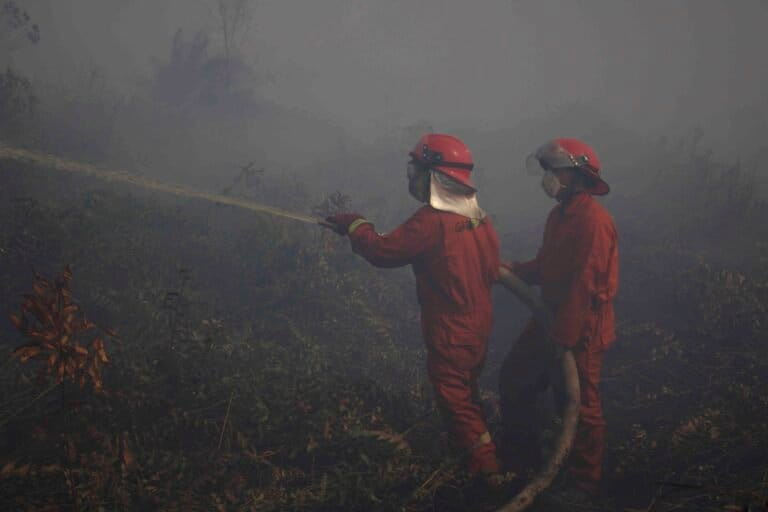
BNPB’s new leadership, led by General Kristomei, has pledged a "rope analogy" approach—a metaphor for total cross-sectoral synchronization. "All institutions, from the military and police to local governments and the public, must be unified like a single rope. Our priority is clear: zero casualties," Kristomei stated. Regarding the potential declaration of a national disaster status, the government has adopted a cautious stance, focusing on immediate operational agility rather than bureaucratic labeling.
The Shadow of Corruption and Future Implications
The success of these environmental interventions faces significant headwinds due to the recent corruption scandal within the BNPB. The Corruption Eradication Commission (KPK) recently conducted an sting operation, arresting five individuals—including senior staff and relatives of the former agency head—for allegedly embezzling 148 billion rupiah in disaster relief funds.
Seira Tamara, acting head of the advocacy division at Indonesia Corruption Watch (ICW), warned that the nature of "Ready-to-Use Funds" (DSP) makes them susceptible to abuse, particularly during emergency states where procurement procedures are expedited. "Corruption in disaster management is not just a financial crime; it directly undermines the safety of citizens during their most vulnerable moments," Tamara stated. ICW has called for a comprehensive audit of all disaster relief spending to ensure that the new leadership can operate with transparency and public trust.
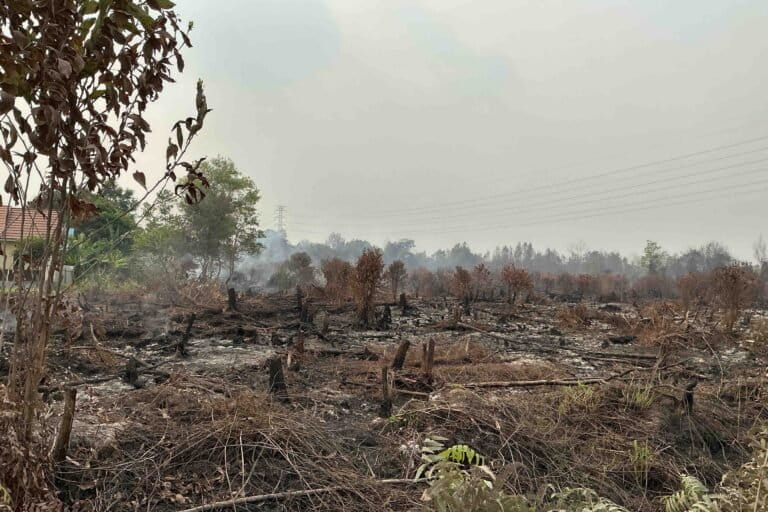
The road ahead for the BPGMN and the BNPB is fraught with complexity. As environmental groups like Pantau Gambut have noted, the fundamental issue of land-use policy and the legacy of corporate concessions remains unresolved. Unless the government strictly enforces environmental regulations regardless of ownership, and maintains high standards of data transparency, the cycles of burning and destruction are likely to repeat.
For President Prabowo, this cabinet reshuffle represents a critical test of his administration’s ability to reconcile industrial growth with the existential necessity of environmental preservation. With millions of lives and the nation’s ecological future hanging in the balance, the newly appointed officials are under immense pressure to transform these policy frameworks into tangible, long-term results. The coming months will be a decisive period for determining whether Indonesia can finally break the cycle of its annual environmental catastrophe.
