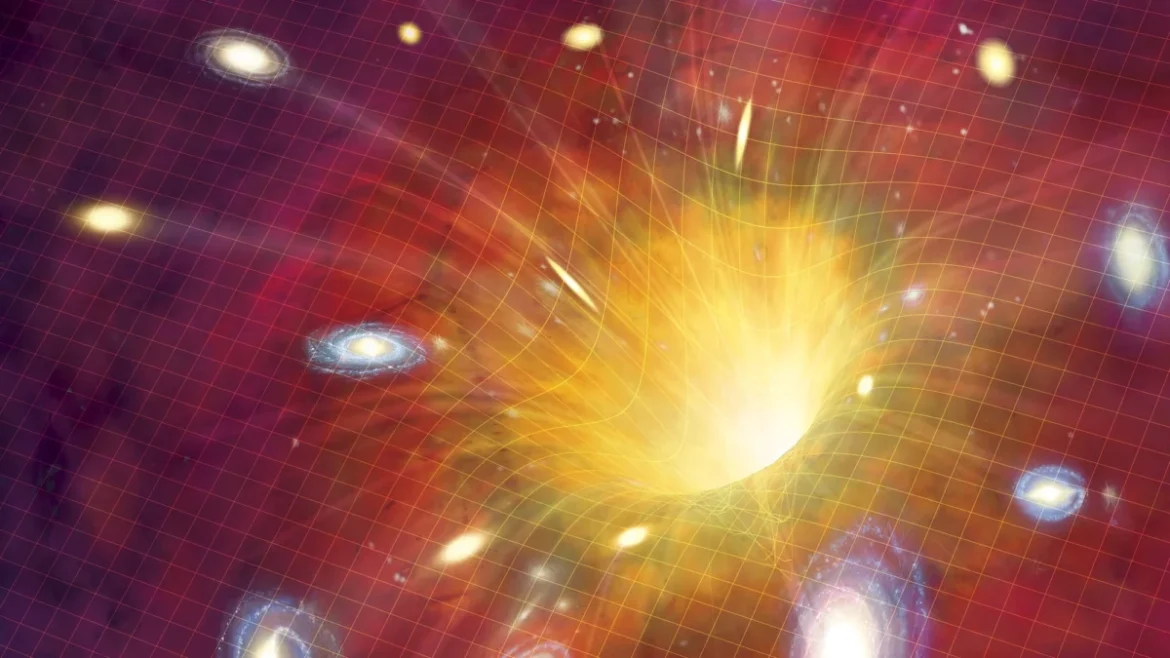
The quest to understand the fundamental nature of the universe has long been characterized by the pursuit of a unified theory, yet a groundbreaking report suggests that the global community of physicists is far from a consensus on even the most basic tenets of cosmology. In the largest survey of its kind, involving over 1,600 experts, researchers have uncovered a profound lack of agreement regarding the Big Bang, the nature of dark matter, and the integration of quantum mechanics with general relativity. These findings, published earlier this year in Physics Magazine, offer a rare glimpse into the internal debates currently shaping the frontiers of modern science.
The Methodology of the Big Mysteries in Physics Survey
Launched in 2025, the "Big Mysteries in Physics" project was designed as an international open call to capture the prevailing thoughts of the scientific community. While the digital questionnaire was accessible to the general public, the researchers implemented a rigorous filtering process to isolate the responses of self-identified physicists. The resulting dataset provides a statistically significant snapshot of current scientific discourse, moving beyond anecdotal debate into a quantitative analysis of where the field’s intellectual fault lines lie.
The project was led by a team of prominent researchers, including University of Waterloo physicist Niayesh Afshordi, who sought to determine whether the absence of consensus in physics acts as a signal for where the field must focus its future resources. By analyzing the responses of 1,600 professionals, the team mapped out a landscape where dogma is frequently challenged by empirical uncertainty and theoretical ambiguity.
Chronology of the Modern Cosmological Debate
To understand why this lack of consensus is significant, one must look at the history of the Lambda Cold Dark Matter (ΛCDM) model, the standard framework for the Big Bang. For decades, the public has been presented with a simplified narrative: a singular, explosive event that marked the inception of space and time. However, the survey reveals that 68 percent of participating physicists reject the notion that the Big Bang necessarily represents the beginning of time.
This departure from popular perception is rooted in a more nuanced understanding of the theory. In technical terms, the Big Bang describes the rapid expansion of the universe from an incredibly hot, dense state, but it does not inherently account for the pre-existence of time itself. This distinction suggests that the "beginning" of our universe may be merely one phase in a much longer, perhaps infinite, cosmological sequence.
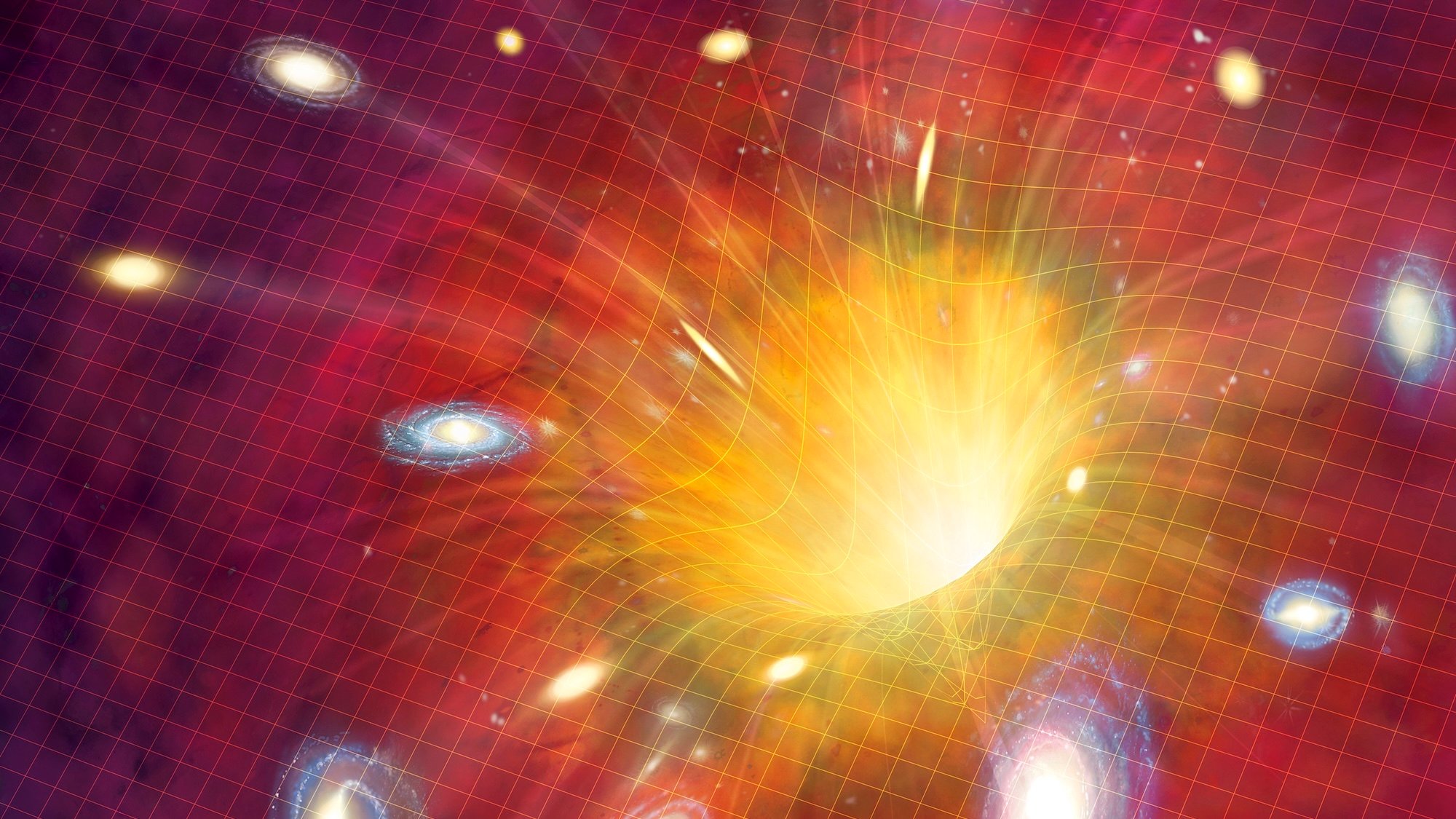
Following the initial expansion, the timeline becomes even more contested. Only 51 percent of respondents expressed confidence in the theory of cosmic inflation—a period of exponential expansion occurring fractions of a second after the Big Bang. This lack of a clear majority indicates that while inflation is a foundational element of many textbooks, it remains a subject of intense professional skepticism within the research community.
Supporting Data and Statistical Disarray
The survey results highlight a field currently grappling with several "missing" variables that define our understanding of the cosmos. When asked about the composition of dark matter—the invisible, mass-heavy substance that keeps galaxies from flying apart—the respondents were hopelessly divided:
- Undiscovered Particles: Approximately 17 percent of physicists believe that dark matter is composed of as-yet-undetected subatomic particles.
- Modified Gravity: Roughly 12 percent argue that the current understanding of gravity is fundamentally flawed and that "dark matter" is an illusion created by our incomplete theory of force and motion.
- The Hybrid Hypothesis: Only 21 percent of respondents believe that dark matter could be a complex combination of particles and gravitational phenomena.
The remaining respondents were distributed across various fringe or unconventional theories, underscoring the lack of a dominant, unifying hypothesis that can satisfy the current observational data.
The Crisis in Quantum Gravity
Perhaps the most significant source of friction in contemporary physics is the struggle to reconcile general relativity—which governs the macro-scale universe of stars and galaxies—with quantum mechanics, which governs the subatomic realm. This "Theory of Everything" remains elusive, and the survey illustrates the stark divide among researchers:
- String Theory: 19 percent of respondents view string theory as the most promising framework for integration.
- Loop Quantum Gravity: 12 percent support loop quantum gravity, an alternative approach that quantizes space-time itself.
- The Impossible Integration: 18 percent of physicists hold the controversial view that gravity cannot be reconciled with quantum mechanics at all, suggesting that these two pillars of physics may describe fundamentally incompatible realities.
Expert Perspectives and Official Reactions
In response to the survey, Dr. Niayesh Afshordi emphasized that the results should not be interpreted as a failure of the scientific method. On the contrary, he posits that the diversity of thought is a testament to the health of the field. "Consensus, or its absence, tells us where the evidence feels settled and where researchers still see room for radically different ideas," Afshordi stated.
He further noted that scientific truth is not a democratic process. "The interesting point is not that physicists are confused. It is that the frontier is genuinely alive." Unlike political polling, where a majority vote dictates policy, scientific reality is determined by the accumulation of empirical evidence. The current disagreement, according to the researchers, is a functional indicator of "intellectual space," identifying areas where better data and more rigorous theoretical development are required.

Broader Impact and Future Implications
The implications of this survey are far-reaching for the future of scientific funding and academic research. If a majority of the world’s leading minds cannot agree on the mechanism of cosmic inflation or the existence of dark matter, it suggests that the current trajectory of large-scale experimentation—such as the construction of next-generation particle colliders—may need to be re-evaluated.
Critics of the current academic environment might argue that the lack of consensus is a result of hyper-specialization, where individual researchers are so focused on narrow sub-fields that they lose sight of the broader cosmological picture. However, proponents of the current model argue that this specialization is necessary to handle the immense complexity of modern data.
The survey also sheds light on the importance of "negative results" in science. By documenting what physicists do not believe, the research team has effectively mapped the boundaries of current knowledge. This is critical for the next generation of graduate students and researchers, who must decide which theories are worth the investment of a career’s worth of work.
Conclusion: The Frontier Remains Open
The "Big Mysteries in Physics" survey serves as a vital reminder that our understanding of the universe is a work in progress. While humanity has achieved remarkable feats in mapping the stars and understanding the structure of atoms, we are clearly still in the early stages of deciphering the fundamental laws that govern our existence.
As the scientific community continues to digest these results, the focus will likely shift toward finding new methods to test these competing theories. Whether through improved gravitational wave detectors, more sensitive dark matter sensors, or entirely new mathematical frameworks, the path forward remains uncertain. What is certain, however, is that the disagreement among physicists is not a sign of stagnation. It is a sign of a vibrant, active, and relentless pursuit of truth that refuses to settle for partial explanations, even when the answers remain hidden in the dark corners of the cosmos.