
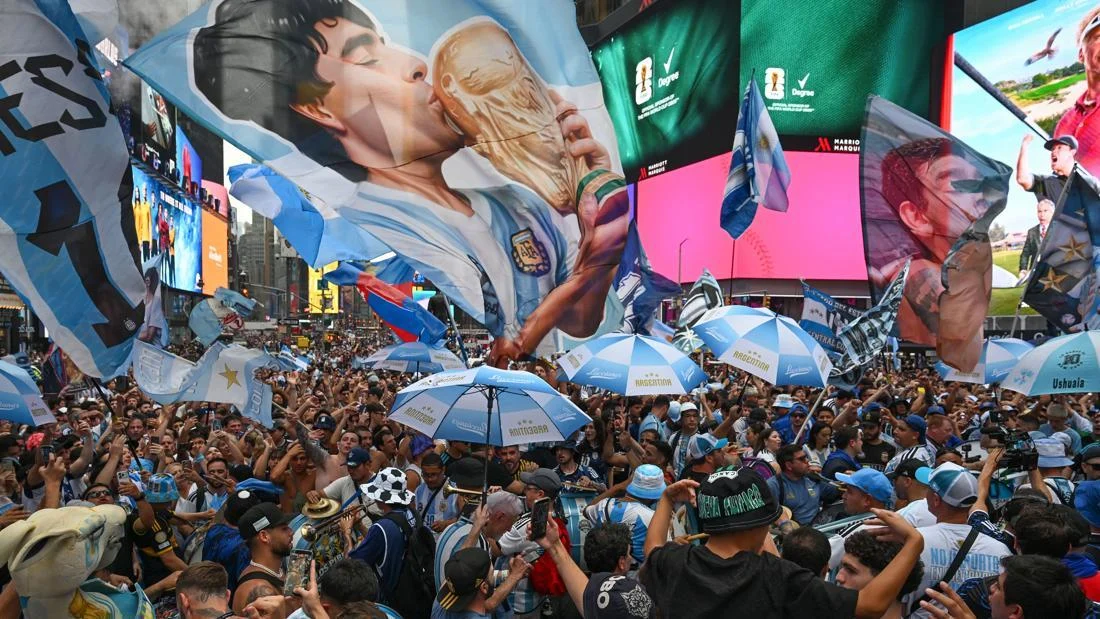
As the FIFA World Cup 2026 culminates tonight with a highly anticipated final clash between reigning champions Argentina and a formidable Spain, the month-long global football fiesta has not only delivered unparalleled sporting drama but also orchestrated a colossal financial spectacle. While billions of dollars have circulated through the global economy, igniting passionate debates on and off the pitch, a detailed financial assessment reveals a stark disparity: some entities have reaped unprecedented profits, while others, notably the very fans who fuel the event and many host cities, have found themselves bearing significant financial burdens. This tournament, unique in its expanded format of 48 teams across 16 cities in three North American nations—Canada, Mexico, and the United States—has redefined the economics of mega-sporting events, establishing clear winners and surprising underperformers in the intricate web of global commerce.
The Global Spectacle and its Economic Footprint
The FIFA World Cup 2026, marking the first time the tournament has featured 48 teams and been jointly hosted by three nations, commenced a month ago, captivating audiences across continents. From the opening whistle to tonight’s grand finale at MetLife Stadium in New Jersey, the tournament has been a magnet for viewership, tourism, and commercial activity. The decision to expand the tournament and distribute games across a vast geographic area was touted by FIFA as a move to foster greater global inclusion and economic impact. However, as the dust settles on the pitch and the financial ledgers are tallied, the distribution of this impact has proven anything but equitable. The scale of the event, encompassing hundreds of thousands of visitors and billions of television viewers, underscores the immense economic power concentrated in the hands of a few key players, while others navigate unexpected challenges.
FIFA: The Undisputed Financial Champion
Unsurprisingly, the Fédération Internationale de Football Association (FIFA) stands as the primary financial beneficiary of the 2026 World Cup. According to Marion Laboure, a senior strategist at Deutsche Bank Research, FIFA’s revenue over its current four-year cycle, encompassing this World Cup, is projected to approach a staggering US$13 billion (approximately Rp 232 trillion at an exchange rate of Rp 17,900). This figure represents a significant jump from the US$7.6 billion generated during the 2022 World Cup in Qatar, which took place amidst the lingering effects of the COVID-19 pandemic and featured a smaller 32-team format.
FIFA’s robust revenue streams are multifaceted, primarily stemming from media rights, which typically account for 50-60% of total income. Global broadcasters pay astronomical sums for the exclusive right to air the matches, recognizing the unparalleled reach of the tournament. Marketing rights, secured by official partners and sponsors, contribute another substantial portion, usually 25-30%. Furthermore, revenue is generated from licensing agreements for official merchandise, hospitality packages offering premium experiences, and direct ticket sales. FIFA also strategically capitalizes on the secondary market through its official resale platform, imposing a 15% fee on both buyers and sellers, effectively monetizing every transaction related to attendance. The expansion to 48 teams and the return to a post-pandemic, multi-country hosting model have collectively amplified FIFA’s earning potential, solidifying its position at the apex of the football economy.
Broadcasters and Sponsors: Capitalizing on Eyeballs
While the cost of acquiring broadcast rights is immense, media companies and their advertising partners are also positioned to reap substantial rewards from the World Cup’s massive viewership. The sheer number of eyeballs glued to screens worldwide translates into premium advertising rates, offering brands unparalleled exposure. For instance, Fox Sports in the United States, which paid US$485 million for the broadcast rights, reportedly commanded between US$200,000 and US$300,000 for a 30-second advertising slot during regular matches. This figure could surge to as much as US$750,000 during high-profile games involving the US national team in the latter stages of the tournament.
A notable commercial innovation introduced this year was the much-discussed "hydration break." While FIFA officially maintained that these three-minute pauses for players to rehydrate were purely for athletic reasons and did not directly generate additional revenue for the organization, they inadvertently created new commercial opportunities for broadcasters and sponsors. These breaks, often branded as "presented by" a specific company, effectively became additional advertising inventory. As Marion Laboure noted, "Hydration breaks are essentially advertising inventory. I would be very surprised if they were removed. The expanded tournament format will also remain because scale is now FIFA’s business model."
Official World Cup sponsors, including global giants like Adidas and Coca-Cola, invest colossal sums to associate their brands with the competition. Their logos are omnipresent, from pitch-side billboards and player uniforms to official merchandise and marketing campaigns. This pervasive visibility translates into significant brand equity, increased sales, and reinforced consumer loyalty, almost guaranteeing a substantial return on their considerable investment.
Merchandise Mania: A Boon for Retailers
The fervent enthusiasm of football fans translates directly into booming sales for merchandise retailers, particularly those selling national team jerseys. This World Cup has witnessed record-breaking demand for official team kits. Nike and Adidas, the two dominant sportswear giants, reported that their national team jersey sales for 2026 more than doubled compared to the 2022 tournament.
Nike saw England’s jersey emerge as its top seller globally, closely followed by France, Brazil, the Netherlands, and the United States. Meanwhile, Adidas reported that the Mexico national team jersey was its best-performing product. Major sports retailers like JD Sports also confirmed unprecedented demand, stating that they recorded record sales for the England jersey this year, while Scotland’s kit proved to be their best-selling overall. Significant spikes were also observed in the sales of jerseys for Germany, Brazil, and Argentina, reflecting the broad international appeal and competitive spirit of the tournament. This surge in merchandise sales underscores the powerful emotional connection fans have with their teams and the commercial value of that passion.
The Unsung Heroes Bear the Brunt: Football Fans
Paradoxically, the very lifeblood of the World Cup—the football fans—have often found themselves on the losing end financially. The soaring cost of attendance has become a major point of contention, overshadowing much of the celebratory atmosphere for many. FIFA’s implementation of dynamic pricing for tickets, where prices escalate with demand, has been particularly criticized. Official tickets for tonight’s final at MetLife Stadium were listed at an astounding US$32,970 (approximately Rp 590 million), with some tickets on the secondary resale market reportedly fetching over US$2 million (around Rp 35.8 billion). FIFA President Gianni Infantino defended these prices, arguing they were consistent with other major sporting events in the United States, a country known for its high-priced entertainment. However, for the average fan, these figures are simply unattainable.
Beyond tickets, fans faced exorbitant costs for travel, food, and accommodation. A glaring example surfaced with the New Jersey Transit train service, which saw its 30-minute fare to MetLife Stadium skyrocket to US$150 during the tournament, a staggering increase from its normal round-trip cost of US$12.90. While public outcry eventually led to a reduction, the revised fare remained significantly higher than the standard rate, indicative of the widespread price gouging experienced by visitors. Fan groups and consumer advocates across the host nations voiced strong opposition to these practices, highlighting the growing disconnect between the celebratory rhetoric of the tournament and the financial reality faced by ordinary supporters. Many fans reported having to make difficult choices, sacrificing other expenses or foregoing parts of their travel plans to afford the core experience of attending matches.
Host Cities: The Elusive Economic Windfall
The 16 host cities across the United States, Canada, and Mexico welcomed an influx of fans and tourists, leading to increased activity in hospitality, hotels, and local businesses. FIFA optimistically projected that the tournament would add approximately US$41 billion to the global economy, with US$17 billion specifically boosting the US economy and creating around 185,000 jobs. However, the long-term economic benefits for host cities often fall short of these grand promises.
Alexander Budzier, a research fellow in management practice at the University of Oxford, expressed skepticism, stating that the long-term economic benefits of hosting mega-sporting events like the World Cup rarely materialize as anticipated. He argued that host cities frequently experience a paradoxical decline in overall visitor numbers, as many choose to avoid the chaos and inflated prices associated with the tournament. While there might be a temporary surge in employment, these jobs are typically low-wage, temporary positions within the hospitality sector. "This event creates jobs, but it doesn’t create wealth," Budzier concluded, echoing a sentiment often heard in analyses of similar large-scale events.
Official data showed an increase in recruitment for pubs, bars, and restaurants in the US leading up to the tournament in May, but this spike was often brief and unsustainable. Crucially, a significant portion of the 2026 World Cup matches utilized existing stadiums, hotels, training complexes, and transportation infrastructure, particularly in the United States. While this reduced the risk of "white elephant" venues seen in previous World Cups that built new, unused facilities, it also meant that the host cities did not benefit from the substantial economic stimulus associated with large-scale construction projects. Instead, they largely incurred the operational costs and logistical challenges of hosting without the compensatory long-term capital investments.
Hotels and Accommodation: A Disappointing Outcome
Perhaps one of the most surprising financial underperformers was the hotel and accommodation sector. Anticipating a massive surge in demand, many hoteliers in the host cities projected record occupancy rates and revenue. However, for a significant portion of the industry in the United States, this enthusiasm failed to translate into the expected bookings.
The American Hotel and Lodging Association (AHLA) even accused FIFA of overbooking hotel rooms for its own needs, allegedly creating an artificial demand that distorted market expectations. FIFA, for its part, denied these allegations. Marion Laboure of Deutsche Bank Research pointed out that similar scenarios of unmet demand occurred during the 1998 World Cup in France. Reports from April 2026 indicated that 80% of US hotel operators were still reporting booking levels below their initial projections. Specifically, two-thirds of hotel managers in New York and nearly 80% in Seattle reported weaker-than-expected bookings. "Many among them [hotel entrepreneurs] described the tournament as an event with no impact," Laboure added, highlighting the profound disappointment within the hospitality industry. This unexpected downturn for hotels suggests that the distribution of economic benefits from mega-events is far more complex and less predictable than often assumed, with logistical challenges and potential market distortions impacting even seemingly obvious beneficiaries.
Broader Implications and the Future of Mega-Events
The FIFA World Cup 2026 serves as a powerful case study for the evolving economics of global mega-events. While FIFA and its commercial partners continue to demonstrate an extraordinary capacity to generate revenue, the distribution of this wealth remains highly concentrated. The tournament has underscored the growing financial chasm between the organizers and the grassroots supporters who are the very essence of the sport. The implementation of dynamic pricing, the escalating costs for travel and accommodation, and the often-elusive long-term economic benefits for host cities raise critical questions about the sustainability and equitable impact of such events.
The 48-team format, while boosting FIFA’s coffers, also presents increased logistical challenges and potential dilution of the fan experience for some. As FIFA continues to expand its global footprint, the imperative to balance commercial success with fan accessibility and genuine community benefit will become increasingly crucial. The financial narrative of the 2026 World Cup is one of unprecedented profit for the few, juxtaposed against significant financial strain and unfulfilled promises for many others, painting a complex picture of a global spectacle grappling with its own economic realities.

