
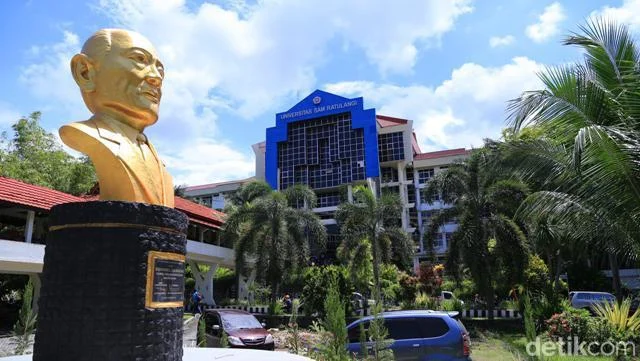
Universitas Sam Ratulangi (Unsrat) in Manado, North Sulawesi, has officially announced the opening of the second wave of its independent admission pathway, known as the Tumou Tou (T2) selection, for the 2026/2027 academic year. This announcement follows the completion of the first wave and aims to fill remaining seats across various undergraduate programs. Prospective students who were unable to secure a spot through the national selection processes—the National Selection Based on Merit (SNBP) and the National Selection Based on Tests (SNBT)—now have a final opportunity to join one of Eastern Indonesia’s most prestigious higher education institutions. The registration window for this second phase is currently active and is scheduled to remain open until July 24, 2026.
The T2 pathway is a localized entrance mechanism designed to provide equitable access to education while maintaining high academic standards. According to the official announcement issued by the Rector of Universitas Sam Ratulangi, documented under Number 6760/UNI2.I/PD/2026, the selection process for this wave will deviate from traditional computer-based testing. Instead, the university will employ a portfolio-based selection method, primarily evaluating the academic performance of applicants as reflected in their high school report cards and relevant achievements. This approach allows the admissions committee to assess the long-term academic consistency of candidates rather than relying solely on a single day of testing.
Eligibility Criteria and Basic Requirements
To maintain the quality of the incoming cohort, Unsrat has established specific eligibility criteria for the T2 Wave II selection. The pathway is open to graduates of Senior High Schools (SMA), Vocational High Schools (SMK), Madrasah Aliyah (MA), Madrasah Aliyah Kejuruan (MAK), and those holding a Package C (Paket C) equivalency certificate. Eligible applicants must have graduated in the years 2024, 2025, or 2026. This three-year window ensures that recent graduates and those who took a gap year have a fair chance at enrollment.
Furthermore, the university has set an age limit of 25 years for all applicants at the time of registration. This policy is standard across many Indonesian state universities to prioritize younger students entering higher education for the first time. In terms of administrative costs, each applicant is required to pay a non-refundable registration fee of Rp 400,000. This fee covers the administrative processing of the portfolio and the management of the selection system. Applicants are permitted to select a maximum of two study programs (prodi), which must be ranked in order of preference. It is highly recommended that students choose programs aligned with their high school background to maximize their portfolio score.
Understanding the Tumou Tou Philosophy
The name of the admission pathway, "Tumou Tou," is deeply rooted in the local culture of the Minahasa people of North Sulawesi. It is derived from the philosophical motto "Si Tou Timou Tumou Tou," popularized by the university’s namesake, Dr. Gerungan Saul Samuel Jacob Ratulangi (Sam Ratulangi). The phrase translates to "Man lives to bring life to others" or "Human beings live to humanize others."
By naming its independent selection process after this philosophy, Universitas Sam Ratulangi emphasizes its mission to produce graduates who are not only academically proficient but also socially responsible and dedicated to the development of their communities. The T2 pathway is seen as a commitment by the university to provide "life-giving" educational opportunities to the local population and students from across the Indonesian archipelago, ensuring that the flame of knowledge continues to spread.
Detailed Chronology and Selection Schedule
The 2026 T2 Wave II selection follows a strict timeline to ensure that the academic year can commence on schedule in August. Prospective students must adhere to the following dates:
- Registration Period: Open now through July 24, 2026. During this time, candidates must complete their online profiles and upload all necessary documentation.
- Payment Deadline: Generally coincides with the registration period. Payments must be made through designated partner banks such as BNI, BRI, BTN, or Bank Mandiri using a unique billing code generated by the registration portal.
- Portfolio Submission: Applicants must ensure that their digital portfolios, including scanned report cards from semesters one through five, are uploaded by the July 24 deadline.
- Verification and Selection: The university’s academic board will conduct a thorough review of the submitted portfolios between late July and early August.
- Result Announcement: The final list of successful candidates is expected to be published on the official Unsrat website in the first week of August 2026.
- Re-registration and Tuition Payment: Following the announcement, successful candidates will have a short window to complete their administrative re-registration and pay the required Institutional Development Contribution (SPI) and the Single Tuition Fee (UKT).
Distribution of Quotas Across Faculties
The Rector’s announcement has outlined the availability of seats across various faculties. While some programs, such as Medicine and Law, often reach capacity during the national selection phases or the first wave of T2, several strategic faculties are still looking for high-quality candidates in this second wave.
Fakultas Teknik (Faculty of Engineering):
The Faculty of Engineering remains a cornerstone of Unsrat, especially as North Sulawesi undergoes significant infrastructure development, including the expansion of the Likupang Special Economic Zone (SEZ). Programs such as Civil Engineering, Architecture, and Electrical Engineering are seeking students who demonstrate strong competencies in mathematics and physics.
Fakultas Pertanian (Faculty of Agriculture):
As a region rich in volcanic soil and coastal resources, North Sulawesi relies heavily on agricultural innovation. The Faculty of Agriculture offers spots in Agrotechnology, Agribusiness, and Forestry. These programs are vital for the national food security agenda and environmental conservation efforts.
Fakultas Ekonomi dan Bisnis (Faculty of Economics and Business):
This faculty continues to be one of the most popular choices. Wave II offers opportunities in Management, Accounting, and Development Economics. The university is looking for candidates who can contribute to the digital economy and regional trade hubs.
Fakultas Ilmu Sosial dan Ilmu Politik (Faculty of Social and Political Sciences):
Commonly known as FISIP, this faculty offers programs in Communication Studies, International Relations, and Public Administration. These programs are designed to produce the next generation of diplomats, journalists, and civil servants.
Fakultas Ilmu Budaya (Faculty of Humanities):
The Faculty of Humanities focuses on preserving the linguistic and cultural heritage of Indonesia. Programs in English Literature, Indonesian Literature, and History are available for those with a strong background in the arts and social sciences.
Fakultas Matematika dan Ilmu Pengetahuan Alam (Faculty of Mathematics and Natural Sciences):
FMIPA provides the fundamental scientific foundation for the university. Available slots in Biology, Chemistry, and Physics are crucial for students aiming for careers in research, pharmacy, or environmental science.
Financial Implications and Institutional Development Contribution (SPI)
One of the distinguishing features of the Independent (Mandiri) pathway in Indonesian state universities is the financial structure. Unlike the SNBP and SNBT pathways, where students only pay the UKT (Uang Kuliah Tunggal) based on their family’s economic capability, students admitted through the T2 pathway are generally required to pay an Institutional Development Contribution (SPI/Sumbangan Pengembangan Institusi).
The SPI is a one-time payment made at the beginning of the freshman year. This fund is utilized by the university to improve laboratory facilities, upgrade digital infrastructure, and maintain campus buildings. While the amount varies depending on the chosen study program and the applicant’s voluntary commitment, the university maintains that the selection remains merit-based. The portfolio score is the primary determinant of admission, ensuring that the quality of education is not compromised by financial factors.
Strategic Importance of Unsrat in Eastern Indonesia
Universitas Sam Ratulangi’s decision to open a second wave of independent admissions reflects its role as a regional educational anchor. As the largest university in North Sulawesi, Unsrat serves as a magnet for students from Gorontalo, Central Sulawesi, North Maluku, and Papua. By offering a portfolio-based selection in the second wave, the university provides a pragmatic solution for students who may have faced geographical or technical hurdles during the national exam periods.
Education analysts suggest that the T2 Wave II is particularly beneficial for vocational school (SMK) graduates. Since the portfolio selection looks at specific skill sets and practical grades, SMK students often find this pathway more accommodating than standardized national tests that are heavily weighted toward general high school (SMA) curricula.
Step-by-Step Registration Process
To ensure a smooth application process, the university has provided a clear protocol for prospective students:
- Account Creation: Visit the official admission portal at https://regmaba.unsrat.ac.id and register using a valid email address and National Identification Number (NIK).
- Bio-data Entry: Fill in personal details, family information, and educational history. Accuracy is critical, as discrepancies can lead to disqualification.
- Document Upload: Upload a formal photograph, a scan of the diploma (or a Graduation Certificate for 2026 graduates), and the report cards from the first five semesters.
- Program Selection: Choose up to two study programs. Applicants are advised to check the specific requirements for each prodi, such as color-blindness tests for certain science and engineering tracks.
- Payment: Generate the billing code and complete the Rp 400,000 payment. Once paid, the application status will be updated to "Completed."
- Card Printing: Print the T2 Wave II registration card, which serves as proof of application.
Broader Implications for Higher Education Access
The expansion of independent admission waves like the T2 at Unsrat is part of a broader trend in Indonesian higher education toward institutional autonomy. While the Ministry of Education, Culture, Research, and Technology (Kemendikbudristek) sets the overarching rules, universities are increasingly given the flexibility to manage their own intake to meet local demands.
Critics of the independent pathway often point to the higher costs associated with SPI. However, university officials argue that these funds are essential for maintaining the competitiveness of state universities in an era of diminishing direct government subsidies. Furthermore, Unsrat continues to provide scholarship opportunities, such as the KIP-Kuliah (Kartu Indonesia Pintar), to ensure that high-achieving students from underprivileged backgrounds are not excluded from the T2 pathway.
As the July 24 deadline approaches, the university administration has urged all prospective applicants to be wary of scams. "Admission is conducted strictly through the official online portal. No third parties or individuals are authorized to guarantee a seat in exchange for money," a university representative stated. Candidates are encouraged to monitor the official website, www.unsrat.ac.id, for any updates or schedule adjustments. With the 2026 academic year on the horizon, the T2 Wave II stands as a final gateway for thousands of aspiring professionals to secure their future at Universitas Sam Ratulangi.

