

In a high-stakes convergence of lifestyle audio and premium engineering, Park City-based Skullcandy has officially unveiled its latest flagship product, the Crusher 1080 ANC. The launch, held at the historic Capitale in New York City, marks a significant milestone in the company’s ongoing collaboration with Bose, the Framingham-headquartered pioneer of noise-cancellation technology. Priced at $279.99, the Crusher 1080 ANC is positioned as a premium "basshead" headphone that integrates Bose’s industry-leading audio processing with Skullcandy’s signature haptic bass technology.
The event, led by brand ambassador and legendary skateboarder Tony Hawk, served as a sequel to the "SoundHeist" campaign initiated in April 2025. That earlier collaboration saw the release of the Method 360 ANC earbuds, which first introduced Bose’s active noise cancellation (ANC) to Skullcandy’s more accessible product line. Now, 15 months later, the partnership has expanded into the over-ear category, aiming to redefine what high-performance audio looks like for a demographic that prioritizes both immersive physical sensation and acoustic clarity.
The Evolution of the SoundHeist: A Strategic Partnership
The collaboration between Skullcandy and Bose represents a strategic shift in the personal audio market. Historically, Bose has maintained a proprietary hold on its noise-cancellation and spatial audio technologies, reserving them for its own QuietComfort and Ultra lines. However, as the market for mid-to-high-range headphones has become increasingly crowded with competitors like Sony, Apple, and Sennheiser, Bose has begun licensing its intellectual property to select partners under the "Sound by Bose" banner.
Skullcandy, known for its deep roots in action sports and youth culture, provides Bose with access to a younger, lifestyle-oriented demographic. Conversely, Bose provides Skullcandy with the technical prestige required to compete in the $250+ price bracket. The Crusher 1080 ANC is the culmination of this synergy, featuring a suite of Bose-engineered technologies that have never before appeared in a non-Bose over-ear headphone.
The "SoundHeist" narrative, which suggests Skullcandy "stole" the secrets of silence from the Bose vault, has been a central pillar of the marketing strategy. By framing the partnership as a caper, the brands have successfully generated buzz among consumers who might typically view corporate licensing agreements as dry or purely transactional.
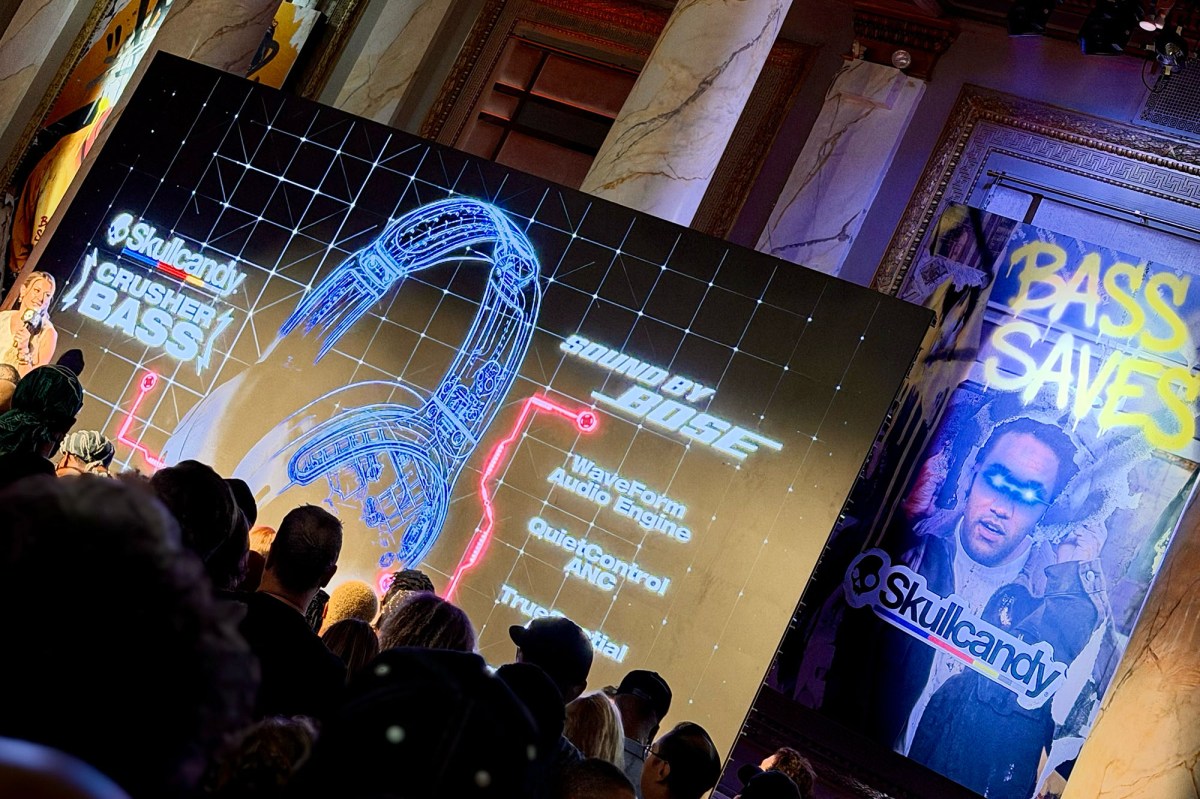
Engineering the Crusher 1080 ANC: Technical Specifications
The Crusher 1080 ANC is built upon a dual-driver architecture, a hallmark of the Crusher series. While one driver handles the traditional frequency range, the second is a dedicated haptic actuator responsible for "Sensory Bass"—a physical vibration that mimics the feeling of standing in front of a professional-grade subwoofer.
Bose QuietControl and TrueSpatial Audio
The integration of Bose technology is evident in three primary areas:
- QuietControl Adaptive ANC: Utilizing a six-microphone array, the system monitors the environment and the "fit-and-seal" of the earcups in real-time. This allows the headphones to adjust the level of noise cancellation dynamically, compensating for changes in head position or the presence of glasses.
- Bose TrueSpatial Spatial Audio: This feature includes integrated head-tracking sensors. By monitoring the user’s head movements, the headphones can pin the soundstage in virtual space, creating a more immersive, theater-like experience for movies and gaming.
- Bose WaveForm Audio Engine: This digital signal processing (DSP) layer ensures that the audio remains balanced across all volume levels. It specifically targets distortion, preventing the heavy bass output from muddying the mid-range and high-frequency details.
Hardware and Diaphragm Innovations
To address historical criticisms that heavy haptic bass often sacrificed audio fidelity, Skullcandy developed a new "live edge" diaphragm. Constructed from a stiffer, more resilient material than previous models, the diaphragm utilizes controlled pistonic motion to maintain clarity even when the haptic drivers are at maximum output. This hardware upgrade is designed to ensure that the Crusher 1080 ANC functions as a legitimate high-fidelity headphone when the bass haptics are dialed back.
Connectivity and Battery Performance
The device utilizes Bluetooth 5.3 and supports LE Audio, a next-generation standard that offers lower power consumption and higher data rates. It also features Auracast, allowing users to broadcast audio to multiple nearby devices or tune into public broadcasts in venues like airports or gyms.
- Battery Life: 60 hours with ANC disabled; 50 hours with ANC enabled.
- Charging: Rapid charge technology provides several hours of playback from a 10-minute USB-C charge.
- Controls: Unlike many modern competitors that rely on touch-sensitive panels, the Crusher 1080 ANC uses tactile physical buttons for volume, track navigation, and ANC toggling. A dedicated "Crusher Wheel" allows for analog-style adjustment of the haptic intensity.
The NYC Launch: A Showcase of Sensory Immersion
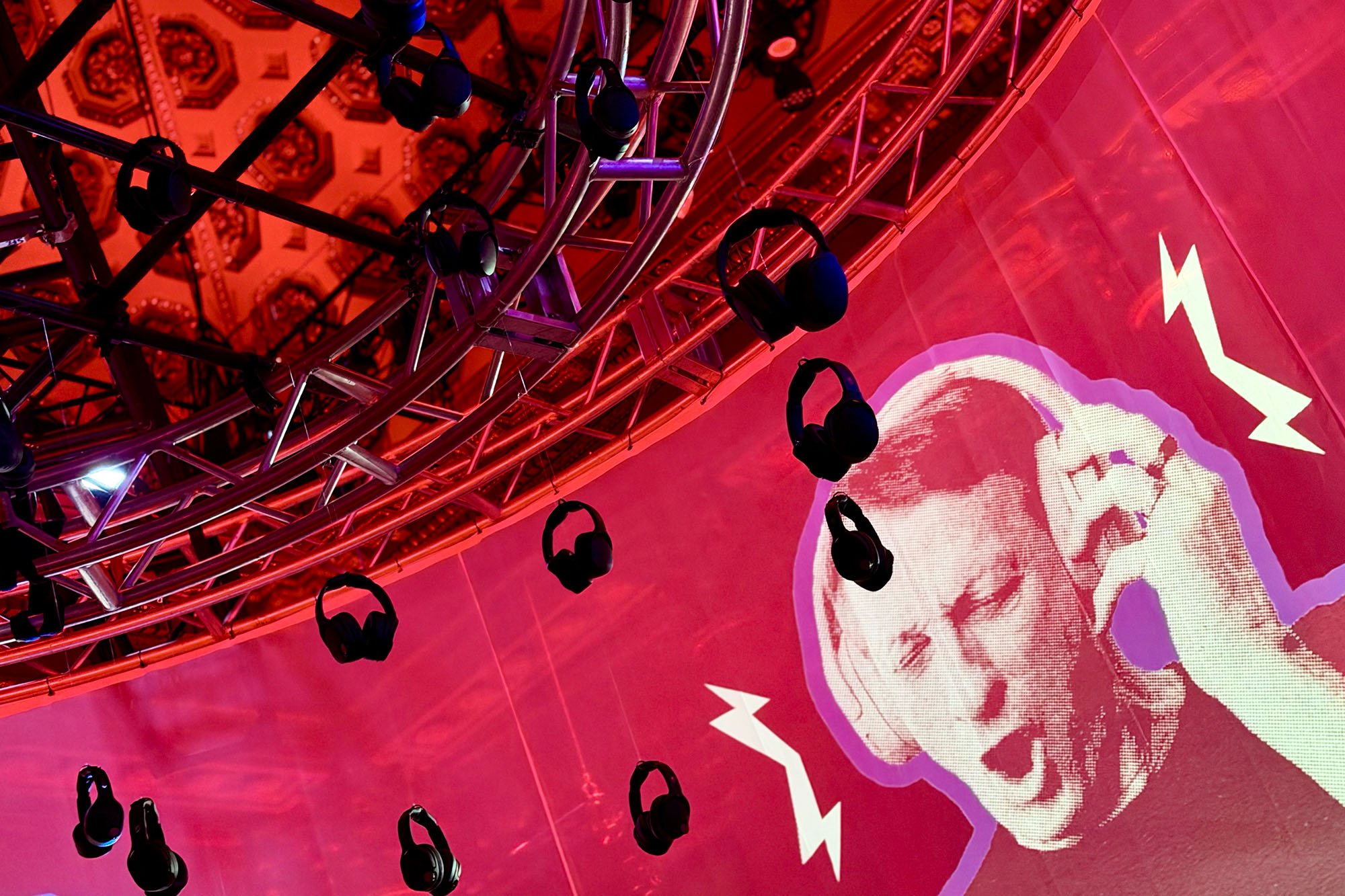
The launch event at Capitale, a former bank building on the Bowery characterized by its Beaux-Arts architecture and 65-foot coved ceilings, provided a dramatic backdrop for the product reveal. The venue was outfitted with projection-saturated scrims and dozens of Crusher headphones suspended from the rigging, allowing attendees to experience the product in a high-noise environment.
During the demonstration, a live DJ set featuring high-energy electronic dance music (EDM) was used to showcase the headphones’ ability to isolate the listener. Attendees were encouraged to use the "Crusher Wheel" to adjust the haptic feedback, demonstrating how the headphones can transition from a standard listening experience to one that is physically "kinetic."
Tony Hawk, who has served as a consultant for Skullcandy’s sound lab, noted during the event that the goal was to create a headphone that didn’t just play music but allowed the user to "feel" the energy of a live performance. This focus on "transcendence" through vibration has been a polarizing but successful niche for Skullcandy since the original Crusher model debuted over a decade ago.
Market Context and Competitive Analysis
The $279.99 price point places the Crusher 1080 ANC in direct competition with several heavyweights in the audio industry.
- Sony WH-1000XM5: While Sony is often cited as the gold standard for ANC and overall frequency response, it lacks the physical haptic feedback that defines the Crusher experience.
- Bose QuietComfort Headphones: At a similar price point, the standard Bose offering provides superior noise cancellation but a more "polite" sound signature that may not appeal to bass enthusiasts.
- Beats Studio Pro: Owned by Apple, Beats remains a primary competitor for lifestyle-oriented consumers. However, Skullcandy’s inclusion of Bose-licensed tech gives it a technical edge in noise cancellation and spatial audio that Beats has struggled to match independently.
Industry analysts suggest that by incorporating Bose technology, Skullcandy is successfully moving "up-market." Historically viewed as a budget-friendly brand for teenagers, Skullcandy is now courting "prosumers" and audiophiles who want the fun of the Crusher bass with the sophistication of professional-grade ANC.
Broader Impact and Implications
The release of the Crusher 1080 ANC signals a broader trend in the consumer electronics industry: the commoditization of high-end features through licensing. As R&D costs for advanced ANC and spatial audio continue to rise, smaller manufacturers are increasingly likely to partner with established giants rather than developing proprietary systems from scratch.
For Bose, this model provides a steady stream of licensing revenue and helps solidify its technologies as the industry standard. For Skullcandy, it provides a "best-of-both-worlds" product that maintains its brand identity while fixing its most significant historical weakness: noise isolation.
Furthermore, the inclusion of LE Audio and Auracast suggests that Skullcandy is looking toward the future of shared audio experiences. As public spaces begin to adopt Auracast transmitters, the Crusher 1080 ANC is positioned to be more than just a personal listening device, but a tool for interacting with the surrounding sonic environment.

Availability and Design
The Skullcandy Crusher 1080 ANC is available immediately through major retailers and Skullcandy’s official website. The headphones are offered in four distinct colorways:
- Black: A classic matte finish.
- Candy: A vibrant pink designed for high visibility.
- Primer: A tactical khaki/sand tone.
- Cement: A neutral, industrial grey.
The headphones feature a flat-folding and collapsible design, making them more portable than some competitors. Each unit comes with a lined rolltop carrying bag, a 3.5mm auxiliary cable for wired listening, and a USB-C charging cable.
As the personal audio market continues to evolve, the Crusher 1080 ANC stands as a testament to the power of strategic collaboration. By combining the "fun" of haptic bass with the "function" of Bose engineering, Skullcandy has created a product that occupies a unique and potentially lucrative space in the modern audio landscape.

