
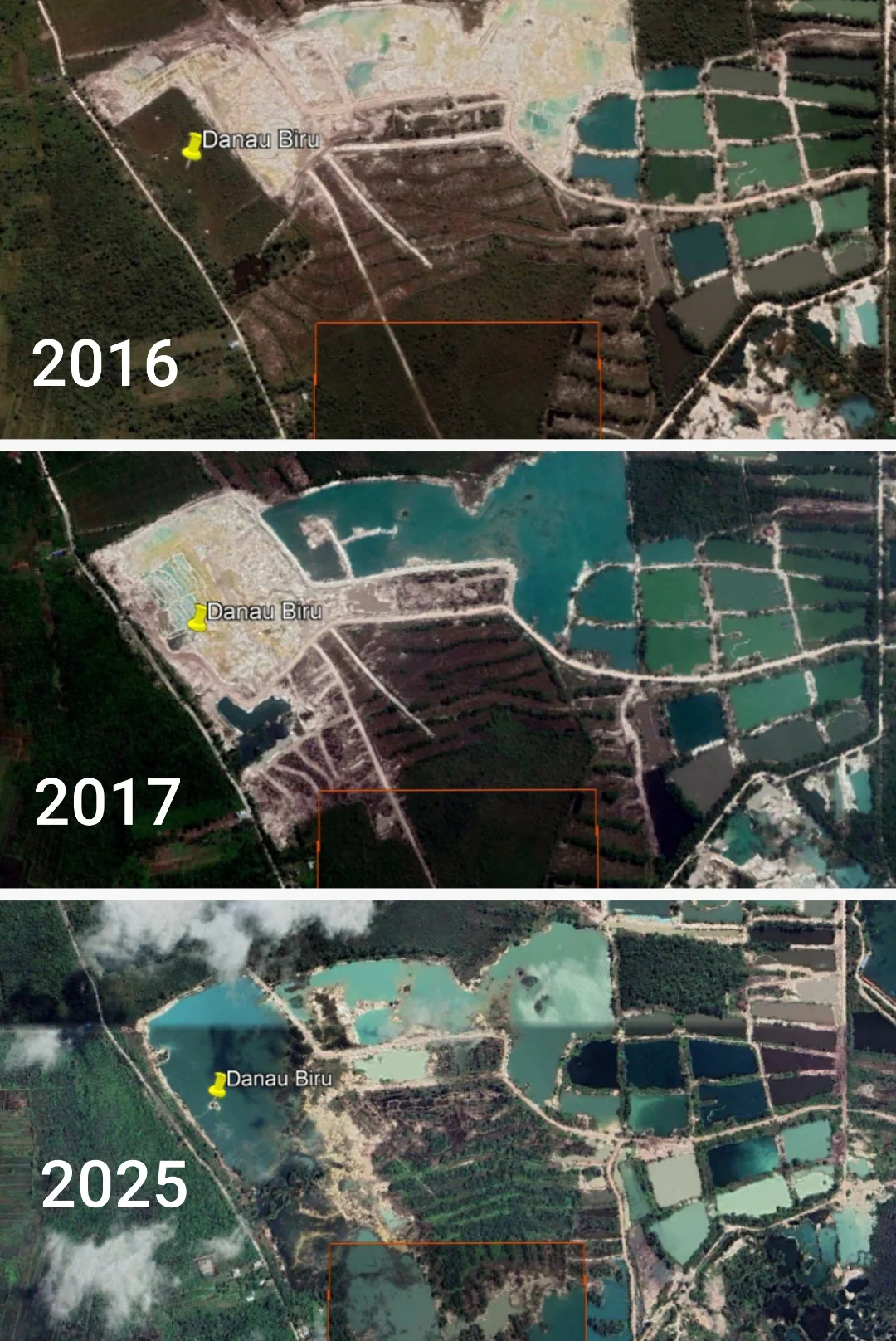
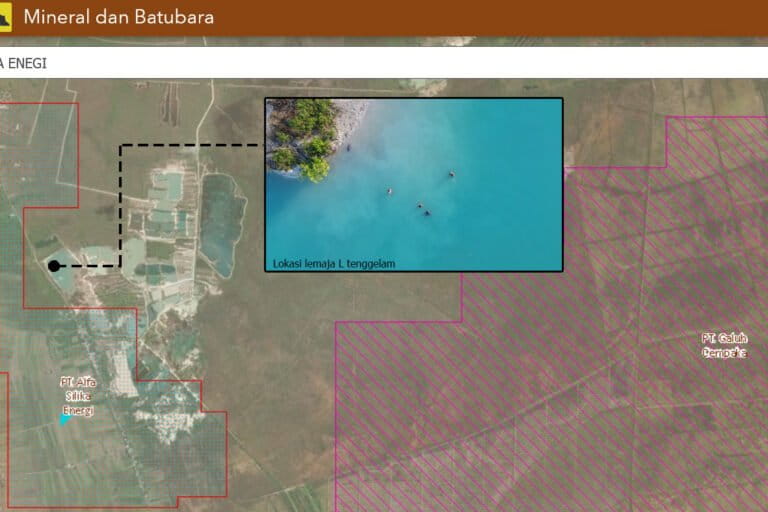
The shimmering turquoise waters and stark white sands of Danau Biru in Tambak Padi Village, Beruntung Baru District, Banjar Regency, present a deceptive paradise. Since gaining viral status on social media platforms, this site in South Kalimantan has seen a surge in visitors, with dozens of tourists from both within and outside the region flocking to its shores. However, beneath the aesthetic appeal lies a grim reality: the site is not a natural wonder but a series of abandoned "Galian C" (Type C) mining pits, long discarded by excavators and now serving as a recurring site for tragedy. The recent drowning of a local teenager has once again ignited a fierce debate over the lack of reclamation, the proliferation of illegal mining, and the dangerous intersection of social media trends and public safety.
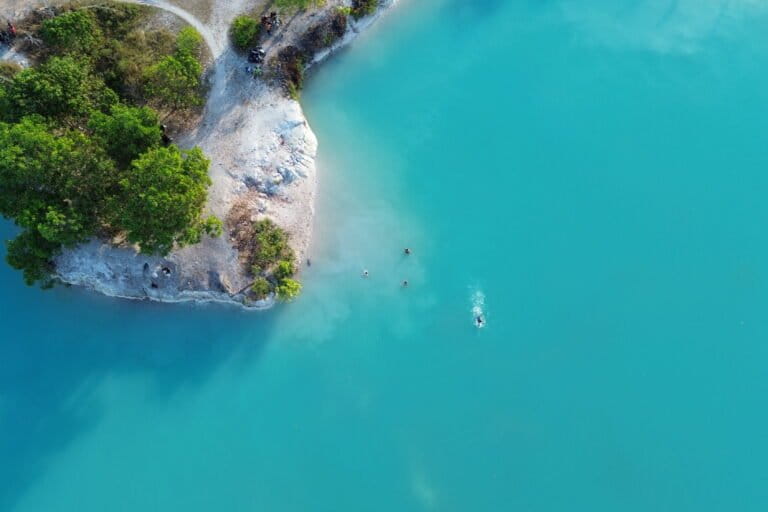
On a typical afternoon, the atmosphere at Danau Biru appears festive. Visitors lounge on the white sand—actually mining tailings—to watch the sunset, while others venture into the water. Recently, a group of nine people was observed being guided by a teenager across shallow sections toward a mound of earth resembling a small island, approximately 44 meters from the shore. The scene was one of leisure, yet it took place just three days after a teenager, identified by the initial L from Kertak Hanyar District, lost his life in those very same waters. The tragedy serves as a stark reminder that these pits are unregulated, unmonitored, and inherently unstable environments.
The Chronology of a Preventable Tragedy
The incident involving the teenager L began on June 22, 2026. According to Wasis Nugraha, the Chief Executive of the Banjar Regency Disaster Management Agency (BPBD), the official report reached his office at 3:55 PM WITA. However, witness accounts suggest the drowning occurred much earlier, around 12:00 PM WITA. By the time emergency responders arrived, the victim had been missing beneath the surface for nearly four hours. The delay in reporting highlights the remote nature of these sites and the lack of immediate safety infrastructure.
Arianto, the Operations Head of the Banjarmasin Search and Rescue Office (Basarnas), detailed the subsequent recovery mission. Following a 5:00 PM briefing, a joint search team conducted surface sweeps and diving operations at the point where L was last seen. Within 20 minutes, divers located the body approximately 10 meters from the shoreline. Despite the depth being a relatively shallow 2 to 3 meters, the search was hampered by nearly zero visibility. The bottom of the pit was described as a thick, silty mud that easily clouds the water at the slightest disturbance, a common characteristic of abandoned mining sites that can trap unsuspecting swimmers.
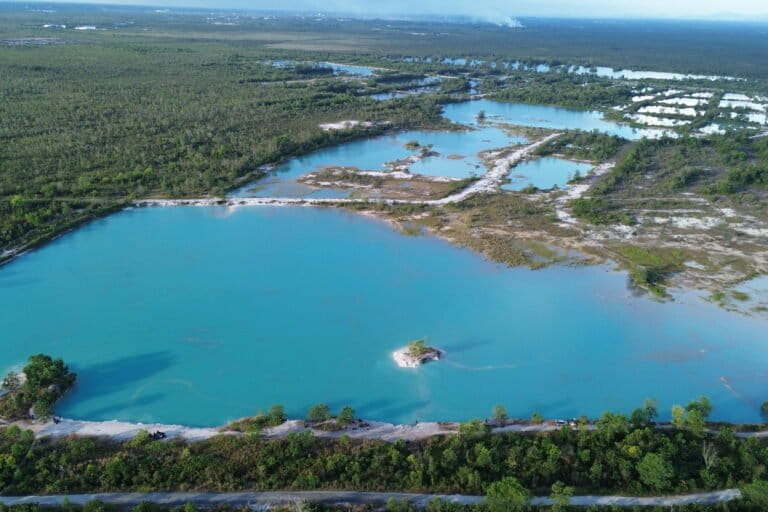
The frequency of these incidents has prompted Basarnas to issue stern warnings. Arianto noted that the area is a high-potential hazard zone for drowning, yet the lack of physical barriers or effective enforcement continues to allow public access. The allure of "Instagrammable" locations has, in this instance, proven fatal.
A Pattern of Fatalities: SAR Data and Regional Statistics
The death of L is not an isolated event but part of a disturbing multi-year trend in South Kalimantan. Data provided by the Banjarmasin Search and Rescue Office reveals a persistent pattern of fatalities in abandoned mining pits across the province between 2023 and 2025.
In July 2023, a person died after falling into a gold mining pit in the Gunung Lintang protected forest, Tanah Laut Regency. The year 2024 saw even higher casualty rates. In September 2024, two separate incidents occurred on the same day: one in Hulu Sungai Selatan Regency, where a resident was crushed by limestone, and another in Tanah Bumbu Regency, involving a drowning in a mining excavation. Earlier that year, in June, another life was claimed at the Danau Biru Baroh site in Banjarbaru. Perhaps most tragically, in July 2025, two children drowned after falling into a pit in Batu Ampar, Tanah Laut.
Raden Rafiq Sepdian Fadel Wibisono, the Executive Director of the Indonesian Forum for the Environment (Walhi) in South Kalimantan, stated that victim L represents the 23rd death recorded in the province’s mining pits since 2019. "This year alone, we have seen three drowning victims in mining holes, and all of them were children or teenagers," Rafiq noted. The demographic of the victims—primarily women, children, and youth—underscores the vulnerability of local populations who use these pits for recreation or daily needs due to a lack of better alternatives.
The scale of the problem is immense. By 2024, the estimated area of mining pits in South Kalimantan reached 53,590 hectares, with 814 documented holes spread across eight regencies. Banjar Regency, where Danau Biru is located, ranks third in the province with 117 pits. Critically, hundreds of these pits exist outside of official concession areas, indicating a massive footprint of illegal or "community-led" mining operations that operate without any obligation for environmental restoration.
The Science of Danger: Water Quality and Physical Hazards
To understand the hidden dangers of Danau Biru, environmental experts have conducted independent assessments of the water quality. Murjani, the Chairman of the Association of Indonesian Environmental Experts (Pertalindo) for South Kalimantan, analyzed five key parameters using a water quality tester. The results paint a picture of a chemically imbalanced environment.
The water’s pH level was recorded at 5.14, indicating significant acidity. According to Indonesian Government Regulation (PP) No. 22/2021, the standard pH for lakes and rivers should range between 6 and 9. While the acidity is not as extreme as some acid mine drainage sites—which can reach pH levels of 2 or 3—it is still unsuitable for direct consumption and can cause skin irritation or long-term health issues.
The electrical conductivity (EC) was measured at 38 µS/cm, and Total Dissolved Solids (TDS) at 20 ppm. While these low numbers suggest few dissolved minerals, Murjani warned that they do not account for heavy metal contamination. Abandoned pits often contain traces of iron (Fe), manganese (Mn), and lead (Pb), which require sophisticated laboratory analysis to detect. Furthermore, there is the risk of dissolved gases like carbon dioxide (CO₂) and hydrogen sulfide (H₂S), which can displace oxygen in the water, leading to rapid exhaustion or asphyxiation for swimmers.
Beyond chemistry, the physical structure of the pit is a primary killer. "The temperature at the surface was 31.3° Celcius, which feels warm," Murjani explained. "However, in deep mining pits, the temperature drops drastically as you go deeper. This sudden change can trigger muscle cramps or cold shock, rendering even a strong swimmer helpless." When combined with unstable, steep slopes and a muddy floor that acts like quicksand, the pits become "death traps" disguised as swimming holes.
The Shadow of Illegal Mining and Regulatory Failure
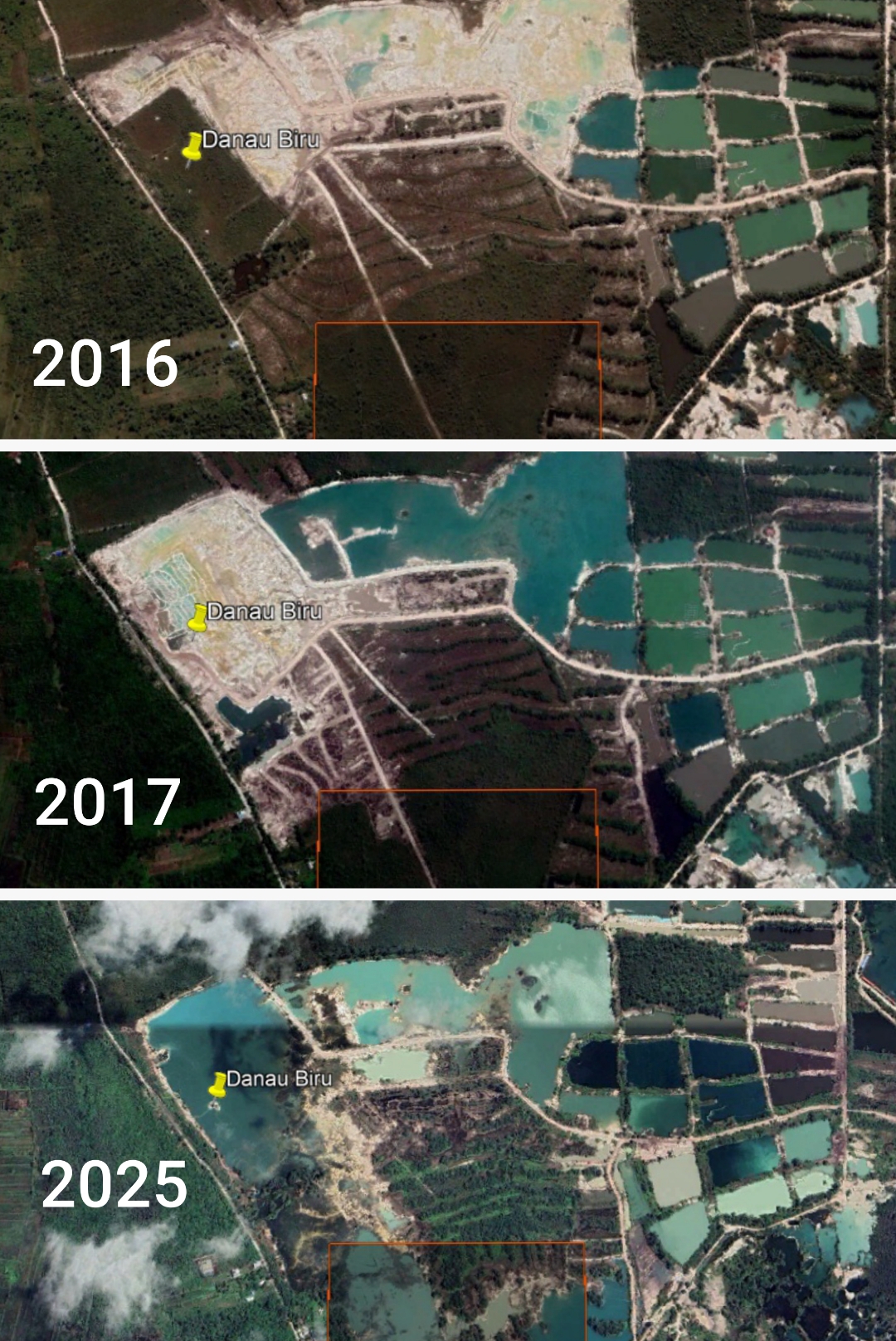
The existence of Danau Biru is a direct consequence of unregulated "Galian C" mining, specifically for sand, quartz, and stone (sirtu). Historical data from Google Earth Pro shows that the excavations in Tambak Padi Village began around 2017 and expanded aggressively through 2025. Despite the visibility of the operations—marked by long suction pipes crossing roads, heavy machinery, and constant truck traffic—much of the activity is suspected to be illegal.
Walhi South Kalimantan argues that the proliferation of these pits is a symptom of weak law enforcement and a lack of government oversight. "This is the result of lax enforcement against illegal mining. Must we always wait for a victim before taking action?" Rafiq questioned. The absence of reclamation bonds or post-mining plans for these sites means that once the material is exhausted, the miners simply move on, leaving the community to deal with the environmental and safety hazards.
The response from local law enforcement has been criticized as reactive rather than proactive. IPDA Deden Aprianto Lesmana, the Police Chief of Beruntung Baru, stated that a police line was briefly installed following L’s drowning but was later removed because the incident was deemed an accident rather than a criminal act. While the police claim to have installed warning banners, journalists on the ground found no such signs, with officials suggesting they may have been blown away by the wind.
Regarding the legality of the mines, the police stated that investigations into "Pertambangan Tanpa Izin" (Mining Without a Permit or PETI) fall under the jurisdiction of the Banjarbaru Police Resort (Polres). While some owners have been questioned, inspections conducted after the drowning reportedly found no active mining at the specific site of the accident. This "cat-and-mouse" game between miners and authorities often results in temporary pauses in activity following a tragedy, only for operations to resume once the public attention fades.
Implications and the Need for Systemic Change
The tragedy at Danau Biru is a microcosm of a larger crisis facing Indonesia’s mining regions. The transformation of hazardous industrial ruins into viral tourist attractions is a dangerous trend fueled by social media’s "aesthetic" culture, which often strips away the context of risk. When a site is presented as a "Blue Lake" rather than a "Toxic Abandoned Pit," the public’s perception of safety is dangerously skewed.
The implications of this neglect are three-fold:
- Public Safety: Without immediate fencing, clear signage, and permanent closure of hazardous pits, the death toll will continue to rise, particularly among the youth.
- Environmental Degradation: The failure to reclaim land leads to permanent loss of biodiversity, soil erosion, and the contamination of local water tables.
- Governance Crisis: The continued operation of illegal mines undermines the rule of law and deprives the state of revenue that could be used for regional development and environmental restoration.
To prevent further loss of life, a multi-stakeholder approach is required. The government must enforce the Mining Law (UU No. 3 of 2020), which mandates reclamation and post-mining activities. For illegal sites where no responsible party can be found, the state must step in to remediate the land using environmental disaster funds. Furthermore, local communities must be educated on the specific dangers of mining pits to counter the romanticized narratives found online.
Until Danau Biru is treated as a liability rather than a landmark, its turquoise waters will remain a beautiful facade for a recurring tragedy. The death of teenager L should be the final warning for authorities to close the gap between environmental policy and ground-level enforcement in South Kalimantan.

