
The Indonesian government, through the Meteorology, Climatology, and Geophysics Agency (BMKG), has issued an urgent directive to provincial governments and the general public to maximize water conservation efforts as the nation enters a critical seasonal transition. This warning comes at a time when several regions are already grappling with severe water shortages, highlighting a growing disparity between water demand and natural supply as the 2024 dry season approaches its peak. The call for action is particularly focused on the window between late May and early June, which meteorologists identify as the final opportunity to harvest rainwater before a projected period of extreme aridity sets in across the archipelago.
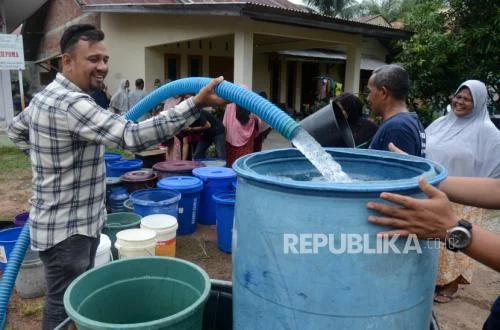
The urgency of this meteorological warning is underscored by the deteriorating conditions in various parts of the country, most notably in Aceh Besar. On Sunday, May 12, 2024, residents of Gampong Lamcok in the Lhoknga District were observed queuing for clean water supplied by mobile tank trucks. Local village officials reported that the crisis has extended to 23 villages across the Lhoknga District, where the cessation of distribution from the regional water utility (PDAM) and the drying up of residential wells have left thousands of citizens without adequate water for drinking, bathing, and sanitation. This localized crisis serves as a stark precursor to the broader challenges predicted by the BMKG for the coming months.
The Meteorological Forecast and the Rossby Wave Phenomenon
Guswanto, the Deputy of Meteorology at the BMKG, stated in Jakarta on Tuesday, May 28, 2024, that the transition from the rainy season to the dry season is expected to occur between May 29 and June 3, 2024. While this transition period is relatively brief, BMKG’s meteorological analysis indicates the presence of Equatorial Rossby waves. These are massive, slow-moving atmospheric waves that can trigger low to moderate intensity rainfall even as the overall climate shifts toward dryness.
The BMKG has identified specific regions that still possess the potential for rainfall during this short window. These include North Maluku, Maluku, South Kalimantan, South Sulawesi, Southeast Sulawesi, Central Sulawesi, and parts of Papua and Sumatra. Guswanto emphasized that this remaining time must be utilized optimally to fill reservoirs, dams, and household storage containers. Once this window closes, the nation is expected to enter a "dry" dry season, characterized by monthly rainfall totals dropping below 50 mm—a threshold that signifies a high risk for drought and agricultural failure. This period of significant rainfall deficit is projected to last from early June through at least September 2024.
Regional Vulnerabilities and Agricultural Risks
The BMKG has issued a specific alert for Indonesia’s primary agricultural hubs, including East Java, Bali, West Nusa Tenggara (NTB), and East Nusa Tenggara (NTT). These regions are of particular concern because they are already recording "Days Without Rain" (HTH) ranging from 21 to 30 days. Despite the lingering potential for sporadic rain, the underlying trend in these provinces points toward a rapid depletion of soil moisture.
The implications for national food security are profound. East Java and the Nusa Tenggara islands are critical producers of staples such as rice, corn, and cattle. Guswanto warned that if water resources are not managed with extreme precision during this transition, the impending drought will inevitably lead to a decline in agricultural productivity. Reduced crop yields could trigger price volatility in food markets, complicating the government’s efforts to maintain inflation stability and food sovereignty.
In the Nusa Tenggara regions, which are historically more prone to aridity, the 21-30 day HTH status is a signal for local authorities to activate drought mitigation protocols. This includes the monitoring of dam levels and the prioritization of water allocation for irrigation versus domestic use. The BMKG’s concern is that without proactive management, the "dry" dry season will exhaust existing water reserves long before the return of the monsoon rains later in the year.
The Crisis in Aceh Besar: A Case Study in Infrastructure Failure
The situation in Lhoknga, Aceh Besar, provides a sobering look at how seasonal shifts can expose weaknesses in local infrastructure. The failure of the PDAM distribution system in the district has forced the government to rely on expensive and logistically challenging water trucking operations. When residential wells—the primary source for many households—run dry, the burden on state resources increases exponentially.
The 23 villages affected in Lhoknga represent a cross-section of rural and semi-urban communities that are now entirely dependent on external aid for their basic survival. Local reports indicate that the drought in Aceh began to intensify in early May, leading to the current state of emergency. The dry wells in Gampong Lamcok are not merely a result of low rainfall but also reflect the lowering of the water table, a phenomenon that is becoming more common across Indonesia due to a combination of climate change and land-use shifts.
The chronology of the crisis in Aceh Besar highlights the gap between meteorological warnings and local readiness. While the BMKG provides the data, the ability of local governments to maintain utility services like PDAM during periods of environmental stress remains a significant hurdle. The Lhoknga crisis demonstrates that for many Indonesians, the "impact" of the dry season begins long before the official meteorological start date.
Strategic Recommendations and Government Response
In response to these findings, the BMKG and related agencies are advocating for a multi-tiered approach to drought mitigation. For the government, this involves:
- Weather Modification Technology (TMC): Exploring the use of cloud seeding to maximize rainfall during the remaining days of the transition period, particularly over catchment areas and reservoirs.
- Infrastructure Maintenance: Ensuring that irrigation canals and water distribution networks are free of leaks to prevent the waste of precious water resources.
- Emergency Logistics: Preparing a fleet of water tanks and portable pumps to be deployed to regions like Aceh Besar that are already in a state of crisis.
For the public and the agricultural sector, the advice is centered on "water harvesting." This includes the traditional practice of using large vats or "embung" (small farm ponds) to collect whatever rain falls during the Rossby wave activity. Farmers are also being encouraged to adjust their planting schedules and switch to more drought-resistant crop varieties where possible.
Broader Implications and Climate Analysis
The current climate outlook for Indonesia is shaped by a complex interplay of global and regional factors. While the intense El Niño of previous years has weakened, the transition to a neutral phase—and potentially a La Niña later in the year—creates a period of unpredictability. However, the immediate forecast for June to September remains dominated by the seasonal migration of the Intertropical Convergence Zone (ITCZ), which moves away from the equator, leaving much of Indonesia under the influence of dry Australian air masses.
The socio-economic impact of a "dry" dry season extends beyond agriculture. Water scarcity often leads to an increase in water-borne diseases as people turn to less-than-ideal water sources when wells dry up. Furthermore, the risk of forest and land fires (karhutla) increases significantly in provinces with extensive peatlands, such as those in Sumatra and Kalimantan, if the water table drops too low.
The BMKG’s proactive communication is an attempt to shift the national strategy from reactive disaster management to proactive risk reduction. By identifying the May 29 to June 3 window as a "last call" for water collection, the agency is providing a clear, actionable timeline for stakeholders.
Conclusion
As the sun sets on the 2024 rainy season, the images of residents in Aceh Besar carrying buckets to water trucks serve as a poignant reminder of the fragility of water security in the face of climate variability. The BMKG’s data-driven warnings provide the necessary roadmap for the months ahead, but the success of Indonesia’s response will depend on the coordination between central authorities, local governments, and the resilience of the citizens themselves. With the "dry" dry season looming, every drop of water harvested during the current transition period is a critical investment in the nation’s stability and food security for the remainder of the year. The transition period is not just a change in the weather; it is a final call for preparation in an increasingly thirsty landscape.

