
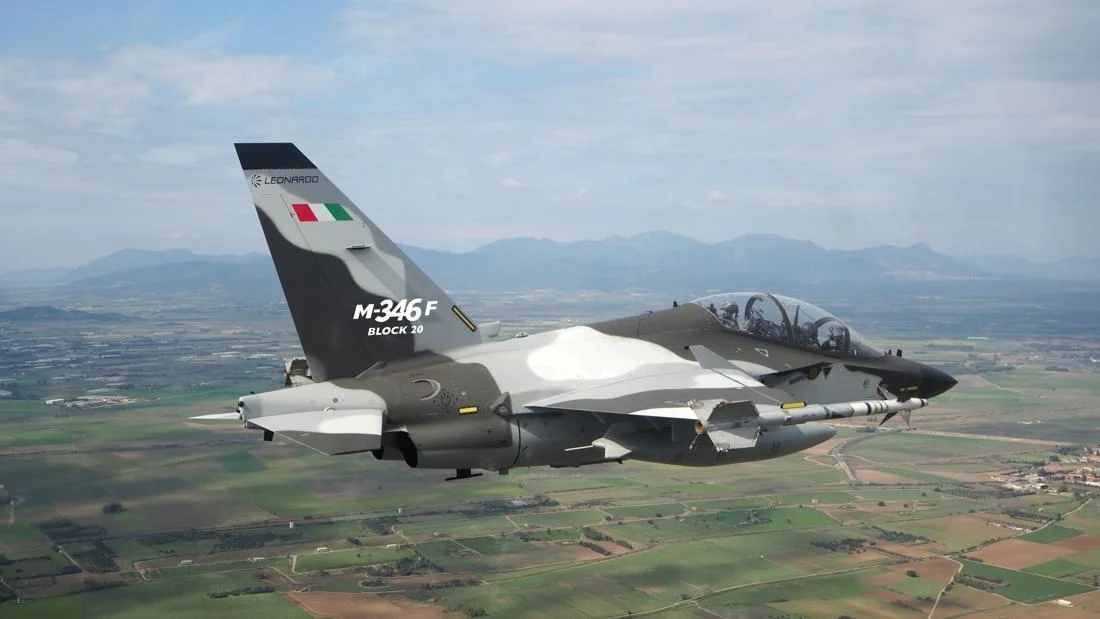
The Indonesian Ministry of Defense has officially finalized a strategic procurement agreement for 12 units of the M-346 F Block 20 light fighter aircraft, manufactured by the Italian aerospace and defense conglomerate Leonardo. This landmark deal, facilitated through a partnership with PT ESystem Solutions Indonesia, marks a significant milestone in the ongoing modernization of the Indonesian National Armed Forces-Air Force (TNI AU). The acquisition is designed to bridge the technological gap between advanced trainer aircraft and front-line multirole combat aircraft, ensuring that Indonesian pilots are prepared for the complexities of modern aerial warfare. Beyond the delivery of the airframes, the contract encompasses a comprehensive support package, including localization of maintenance, repair, and overhaul (MRO) capabilities, as well as extensive human resource development programs within Indonesia.
Strategic Procurement and Partnership Framework
The agreement between the Ministry of Defense and Leonardo underscores Indonesia’s commitment to diversifying its defense suppliers while fostering domestic industrial growth. By involving PT ESystem Solutions Indonesia, the government ensures that a portion of the technical expertise and economic benefits associated with the M-346 fleet remains within the country. This approach aligns with Indonesia’s broader defense policy of "offset" and "transfer of technology," which seeks to reduce reliance on foreign entities for long-term fleet sustainment.
Under the terms of the contract, the first units are scheduled for delivery beginning in 2030. This timeline allows the TNI AU to prepare its infrastructure and personnel for the integration of a new platform. The M-346 F Block 20 is not merely a trainer; it is a dual-role platform capable of conducting light attack missions and air-to-air engagements. This versatility provides the Indonesian government with a cost-effective solution for maritime patrol, border security, and air intercept missions that do not necessarily require the deployment of high-end, high-operating-cost fighters like the F-16 or the recently ordered Dassault Rafale.
With this purchase, Indonesia joins an elite group of nations operating the M-346, becoming the 23rd operator of the platform globally. This international community includes Italy, Israel, Singapore, Poland, Qatar, and Greece, providing Indonesia with a wide network of shared operational data and maintenance best practices.
Technical Specifications: The Block 20 Evolution
The "Block 20" designation represents the most advanced iteration of the M-346 family. While the original M-346 was primarily designed as a Lead-In Fighter Trainer (LIFT), the Block 20 variant integrates state-of-the-art combat systems that elevate its status to a legitimate light fighter.
One of the most critical upgrades in the Block 20 variant is the integration of an Active Electronically Scanned Array (AESA) radar. Unlike traditional mechanically scanned radars, AESA technology allows the aircraft to track multiple targets simultaneously with high precision while remaining more resistant to electronic jamming. This capability is essential for modern combat environments where situational awareness is the deciding factor in engagement outcomes.
Complementing the radar is the Large Area Display (LAD) in the cockpit. This single-screen interface replaces multiple smaller dials and monitors, providing the pilot with a fused tactical picture. This "glass cockpit" design is specifically intended to mirror the environments found in fifth-generation fighters, such as the F-35 or advanced 4.5-generation jets like the Rafale and F-15EX, making the transition for student pilots much more intuitive.
Furthermore, the M-346 F Block 20 is equipped with the Link 16 tactical data link. This system allows the aircraft to exchange real-time data with other assets, including ground stations, naval vessels, and other aircraft. In a joint-force operation, an M-346 can receive targeting data from a more powerful radar source and engage a target without ever turning on its own sensors, thereby maintaining a degree of stealth.
To ensure survivability, the aircraft features a robust Electronic Countermeasures (ECM) suite. This system identifies and neutralizes incoming electronic threats, such as radar-guided missiles or enemy tracking systems. Additionally, the Block 20 is designed with aerial refueling capabilities, significantly extending its loitering time and operational radius—a vital feature for an archipelagic nation like Indonesia with vast maritime territories to monitor.
The Dual Role: Training and Combat Readiness
The TNI AU has a long-standing requirement for a platform that can serve as both a high-performance trainer and a tactical asset. The M-346 F Block 20 fulfills this by offering a "Live, Virtual, and Constructive" (LVC) training environment. Through the Ground Based Training System (GBTS), pilots can participate in simulated missions where virtual enemies appear on their actual cockpit displays while they are flying in real airspace. This allows for complex combat training without the need for a large fleet of "aggressor" aircraft, significantly reducing training costs.
Brigadier General Rico Ricardo Sirait, Head of the Defense Information Bureau at the Ministry of Defense, emphasized that the selection of the M-346 was driven by the need to prepare TNI AU pilots for the next generation of fighter technology. "One of the considerations is to meet the training needs of TNI AU pilots while simultaneously supporting operational readiness," Sirait stated.
Currently, the TNI AU relies heavily on the T-50i Golden Eagle, a South Korean-built supersonic trainer. While the T-50i has served excellently in training pilots for the F-16 Fighting Falcon, the addition of the M-346 provides a different set of capabilities. The M-346 is a twin-engine aircraft, which offers an added layer of safety during over-water missions—a frequent occurrence in Indonesian operations. Its flight characteristics are specifically tuned to mimic the high-alpha (angle of attack) maneuvers of modern delta-wing and unstable airframe fighters.
Global Context and Comparative Analysis
The M-346 has established itself as a global standard for advanced pilot training. In Italy, it serves as the backbone of the International Flight Training School (IFTS), a joint venture between the Italian Air Force and Leonardo that trains pilots from across the NATO alliance. The platform has even been selected by the Italian national aerobatic team, the Frecce Tricolori, to replace their aging MB-339 fleet, a testament to the aircraft’s agility and performance.
Globally, the M-346 fleet has surpassed 170,000 flight hours. Its performance metrics are impressive for its class; it can reach speeds of nearly Mach 0.95 and possesses a high thrust-to-weight ratio. While it is not a supersonic interceptor like the T-50i, its avionics suite and weapon-carrying capacity make it a more sophisticated platform for multi-role mission profiles. The Block 20 variant can be armed with a variety of air-to-air and air-to-surface munitions, allowing it to perform "police" duties or counter-insurgency operations, freeing up heavy fighters for more strategic roles.
In the Southeast Asian region, Singapore was an early adopter of the M-346, using it to train its pilots at Cazaux Air Base in France. Indonesia’s decision to acquire the same platform enhances regional interoperability, potentially allowing for joint training exercises and shared logistics in the future.
Implications for Indonesia’s Defense Posture
The acquisition of the M-346 F Block 20 is a clear indicator of Indonesia’s intent to maintain a credible deterrent in a rapidly changing geopolitical landscape. As tensions in the South China Sea persist and regional neighbors upgrade their own air forces, the TNI AU must ensure its pilots are the most highly trained in the region.
The "2030 delivery" timeline suggests that these aircraft will reach full operational capability just as Indonesia’s other major acquisitions, such as the Rafale and potentially the F-15IDN, are fully integrated into the force. This creates a seamless pipeline for pilot development: moving from basic trainers to the M-346 LIFT, and finally to the front-line 4.5-generation fighters.
Furthermore, the emphasis on domestic maintenance and human resource development is a strategic move. By building a local ecosystem for the M-346, Indonesia reduces the "down-time" for its aircraft and ensures that its technicians are skilled in maintaining modern AESA radars and digital avionics. This domestic capability is a form of "defense resilience," ensuring that the fleet remains operational even during times of international supply chain disruptions.
Conclusion
The purchase of 12 Leonardo M-346 F Block 20 units is a sophisticated move by the Indonesian Ministry of Defense. It addresses the immediate need for a modernized training fleet while adding a flexible, light-combat capability to the national inventory. By choosing a platform with a proven global track record and equipping it with the latest "Block 20" technology, Indonesia is positioning its Air Force to be one of the most technologically advanced in the Indo-Pacific.
As the TNI AU moves toward its goal of becoming a "Force of the Future," the M-346 will play a pivotal role. It represents a transition from legacy systems to a digital, networked, and highly capable aerial force. For the Indonesian taxpayer, the dual-use nature of the aircraft—as both a high-end trainer and a capable light fighter—offers a balanced investment in both national security and the professional development of the nation’s defenders. With the contract now signed, the focus shifts to the 2030 arrival and the transformative impact these Italian-made jets will have on the skies of the archipelago.

