
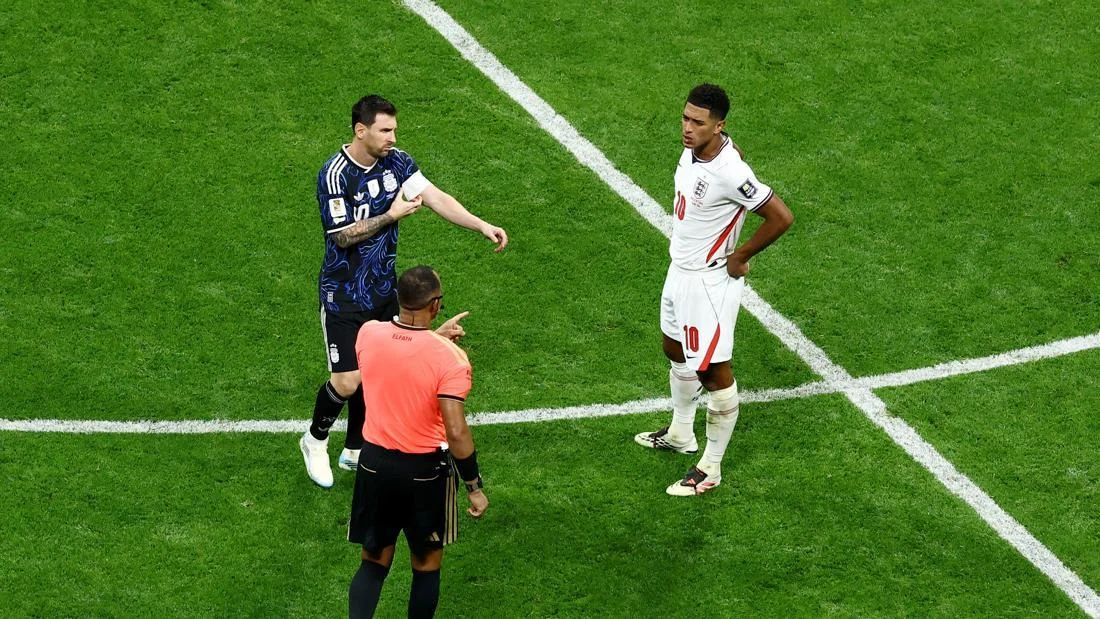
The aftermath of a heart-wrenching defeat in the semifinals of the FIFA World Cup 2026 saw England midfielder Jude Bellingham publicly express his profound disappointment with the officiating during their crucial encounter against Argentina. Despite the stinging 1-2 loss, which saw the Three Lions concede two late goals after an initial lead, Bellingham demonstrated remarkable sportsmanship by respectfully conveying his sentiments to the match referee, Ismail Elfath.
The high-stakes semifinal, held on Thursday, July 16th, proved to be a tempestuous affair, characterized by a physical battle between two footballing giants. Argentina committed 15 fouls throughout the match, while England registered 11. The disciplinary record saw Argentina receive three yellow cards, with England accumulating one. The task of managing this intense contest fell to Moroccan referee Ismail Elfath, whose decisions would later become a focal point of discussion and, for Bellingham, a source of frustration.
England had taken an early lead through a goal by Gordon, seemingly setting the stage for a triumphant march into the final. However, the momentum dramatically shifted in the closing five minutes of the game. A resilient Argentina mounted a late surge, netting two crucial goals through Enzo Fernandez and Lautaro Martinez, ultimately condemning England to a semifinal exit and extinguishing their World Cup dreams. The crushing nature of the defeat, particularly the late collapse, undoubtedly amplified the emotional toll on the English squad.
Following the final whistle, in a moment captured by cameras, Bellingham was seen approaching Ismail Elfath. The interaction, though brief, revealed the young midfielder’s visible disappointment. Yet, his approach was marked by composure and respect. "Some decisions were surprising, but all the best," Bellingham reportedly stated to the referee. This measured response, acknowledging the unexpected nature of certain calls while offering a polite closing, earned him commendation from many football observers who appreciated his measured demeanor in the face of significant adversity. Elfath, in response, offered a simple nod, without further verbal engagement.
This incident highlights the immense pressure and scrutiny faced by referees in global tournaments, especially in matches of such magnitude. Ismail Elfath, a seasoned official with a history of refereeing in Major League Soccer (MLS) since 2012, was officiating his fourth match of the 2026 World Cup. His performance in this particular semifinal, however, would be etched in the memories of fans and players alike.
The Context of the Semifinal Clash
The FIFA World Cup 2026 semifinals are always a crucible of national aspiration, and the England vs. Argentina fixture is steeped in a rich and often tempestuous rivalry. This particular encounter, held at a neutral venue, carried the weight of history, with both nations boasting proud footballing legacies and a shared desire to lift the coveted trophy. England, having navigated a challenging path through the tournament, arrived with a squad brimming with youthful talent and experienced campaigners, aiming to end a long wait for World Cup glory. Argentina, led by their talismanic figures, were equally determined to add another chapter to their storied World Cup narrative.
The match itself was anticipated to be a tactical battle, a chess match played out on the grandest stage. The early stages saw England assert their dominance, with Gordon’s goal providing a significant boost. This goal, likely the result of a well-rehearsed team move or a moment of individual brilliance, set a positive tone for the Three Lions. However, football, as it so often does, proved to be a game of fine margins and unpredictable twists.
A Tale of Two Halves: The Chronology of the Match
The first half of the semifinal likely unfolded with a tense, cagey atmosphere, typical of such high-stakes encounters. Both teams would have been focused on minimizing errors and probing for weaknesses. England’s opening goal would have injected a surge of confidence into their ranks, potentially forcing Argentina to adjust their strategy.
The second half would have seen Argentina pressing for an equalizer, perhaps increasing their attacking intent. England, in response, would have been focused on defending their lead, potentially looking for opportunities to counter-attack. The increasing foul count on both sides, as noted by the data, suggests a growing intensity and physicality as the match wore on. The yellow cards issued would have served as a warning to players to temper their aggression, though the sheer number of fouls indicates a constant struggle for control in midfield and defensive areas.
The critical turning point, however, arrived in the dying moments. With England on the cusp of victory, Argentina’s late surge, culminating in goals from Fernandez and Martinez, represented a devastating shift in fortune. This period, characterized by rapid attacking play and potentially defensive lapses from England, would have been agonizing for the Three Lions’ players and supporters. The quick succession of these goals would have left England reeling, unable to muster a response in the limited time remaining.
Supporting Data and Refereeing Statistics
The official statistics from the match provide further context to the physical nature of the game. Argentina’s 15 fouls compared to England’s 11 indicate a slightly more aggressive approach from the South American side. The disparity in yellow cards (3 for Argentina, 1 for England) suggests that while both teams were engaged in robust challenges, Argentina’s infringements were deemed more significant by the referee on three occasions.
Ismail Elfath’s appointment to this crucial match underscores his standing within the international refereeing community. His experience in MLS, a league known for its fast-paced and often physical style of play, would have prepared him for the demands of a World Cup semifinal. His record of officiating four matches in the 2026 tournament prior to this encounter suggests he was a trusted and competent official entrusted with significant responsibilities. However, even experienced referees can find themselves at the center of controversy in matches of this caliber, where every decision is magnified.
Reactions and Broader Implications
While Bellingham’s reaction was the most prominent public display of disappointment from the English camp, it is reasonable to infer that other players and coaching staff shared his sentiments. The nature of the loss, especially the late collapse, would have left them questioning various aspects of the game, including refereeing decisions that may have influenced the momentum or outcome.
The broader implications of such close and contentious matches extend beyond the immediate disappointment. For Jude Bellingham, this experience, though painful, serves as a significant learning opportunity. His ability to articulate his frustration respectfully, even in defeat, showcases a maturity that belies his years. This incident could shape his approach to future high-pressure situations, reinforcing the importance of maintaining composure.
From a refereeing perspective, Elfath’s performance will undoubtedly be subject to review and analysis by FIFA’s refereeing committee. While the intention is always to officiate impartially, the subjective nature of many football decisions means that differing interpretations are inevitable. The scrutiny on referees intensifies with every major tournament, and decisions made in semifinals and finals often come under the harshest spotlight.
The incident also serves as a reminder of the emotional rollercoaster that is the World Cup. The elation of a lead can quickly turn into the despair of defeat, and the officiating, whether perceived as fair or unfair, becomes an integral part of the narrative. For fans, these controversies fuel debates and discussions, becoming part of the folklore of the tournament.
The FIFA World Cup 2026 continues its journey, with the final now set to pit Argentina against another formidable opponent. England, meanwhile, will embark on a period of reflection, regrouping, and planning for future tournaments. The memory of this semifinal loss, and the debated decisions within it, will undoubtedly linger, a testament to the enduring passion and drama that defines the world’s most prestigious football competition. Jude Bellingham’s dignified response, however, offers a glimmer of hope that sportsmanship can, and will, prevail even in the face of profound disappointment.

