
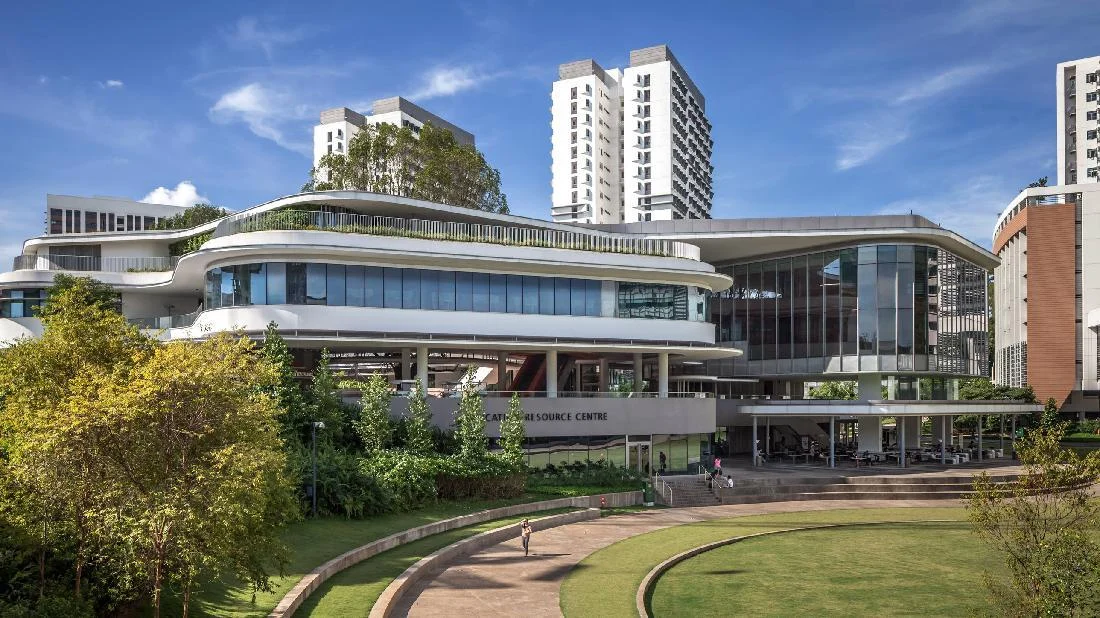
The higher education landscape in Southeast Asia has reached a significant milestone following the official release of the Times Higher Education (THE) World University Rankings 2027 on Wednesday, September 30, 2026. Dominating the regional academic sphere, the National University of Singapore (NUS) secured a prestigious position inside the global top 15, climbing two spots from its previous placement to land at number 15 worldwide. This achievement marks NUS as the sole representative from Southeast Asia to break into the top tier of global higher education institutions for this ranking cycle, underlining Singapore’s sustained investment in research excellence, academic infrastructure, and internationalization.
The newly published THE World University Rankings 2027 encompass an exhaustive evaluation of 2,297 higher education institutions spread across 118 countries and territories. This year’s dataset reflects the growing competitiveness of universities globally, with institutions being scrutinized through a rigorous methodological framework designed to measure performance across core academic missions. As tertiary education becomes increasingly globalized, the performance of Southeast Asian universities offers critical insights into the region’s economic ambitions, innovation capacities, and the broader push toward a knowledge-based economy.
Methodological Rigor and Evaluation Criteria
The construction of the Times Higher Education World University Rankings 2027 relies upon a sophisticated and comprehensive methodology. The evaluation process is anchored by 17 carefully calibrated performance indicators, which are grouped into five distinct overarching criteria. Each pillar carries a specific weight that reflects its importance in defining a world-class university.
The five core criteria include the teaching environment, which accounts for 29.5 percent of the overall score, measuring the reputation for teaching excellence alongside staff-to-student ratios, doctorate-to-bachelor’s ratios, and institutional income. The research environment constitutes 29 percent of the evaluation, capturing research reputation, research income, and research productivity. The quality of research commands the highest individual weight at 30 percent, assessing citation impact, research strength, research excellence, and research influence. International outlook accounts for 7.5 percent, evaluating the proportion of international staff, international students, and international co-authorship. Finally, industry contribution accounts for 4 percent, measuring knowledge transfer, industry income, and patents.
Data collection for this massive global undertaking is multi-faceted. According to the methodology documentation provided by Times Higher Education, the data inputs comprise institutional data submitted directly by universities through the dedicated THE portal, comprehensive bibliometric data derived from Elsevier’s Scopus database, the global Academic Reputation Survey conducted by THE between November 2025 and February 2026, and supplementary verified reference metrics.
Regional Performance and Southeast Asian Representation
While the National University of Singapore stands at the vanguard of regional performance at 15th place globally, it is closely followed by its domestic peer, Nanyang Technological University (NTU). NTU secured the 28th position worldwide, cementing Singapore’s status as an educational powerhouse in Asia. Together, NUS and NTU remain the only Southeast Asian universities to secure coveted spots within the global top 100.
Beyond Singapore, the landscape of higher education across the Association of Southeast Asian Nations (ASEAN) shows a diverse distribution of academic strength. The THE World University Rankings 2027 feature institutions from eight nations within the regional bloc: Brunei Darussalam, Indonesia, Malaysia, Singapore, Thailand, the Philippines, Vietnam, and Cambodia. Conversely, universities from Myanmar, Laos, and Timor Leste did not meet the stringent criteria for inclusion in this year’s rankings cycle.
A closer look at the broader regional dataset reveals that a total of 29 higher education institutions from Southeast Asia successfully placed within the top 1,000 universities worldwide. This indicates a steady upward trajectory in academic quality, particularly in nations like Malaysia and Indonesia, which have actively pursued international accreditation, expanded research output, and fostered strategic partnerships with Western and East Asian institutions. Thailand and the Philippines also maintain a stable presence, with several comprehensive universities reinforcing their research footprints despite budgetary and structural constraints.
Context and Chronological Background of the Rankings
The release of the 2027 rankings follows a multi-month period of intensive data auditing, verification, and peer assessment. The timeline for the THE World University Rankings 2027 began in late 2025 with the distribution of data collection templates to participating universities worldwide. Between November 2025 and February 2026, academics across the globe participated in the annual Academic Reputation Survey, providing subjective yet invaluable assessments of institutional excellence in teaching and research within their specific fields of expertise.
Concurrently, bibliometric analyses of millions of research papers and tens of millions of citations were processed through Elsevier to map research quality and influence over a five-year window. Institutional data submissions were subjected to rigorous validation processes by the THE data science team to ensure accuracy, comparability, and adherence to global accounting standards for higher education metrics. The final phase, culminating in the public release on September 30, 2026, involved compiling the weighted scores across the 17 performance indicators to determine the final hierarchy of the world’s leading universities.
Implications for Regional Higher Education and Policy
The continued ascent of top-tier Southeast Asian universities carries profound implications for regional geopolitics, economic development, and talent retention. As global industries pivot toward advanced technologies, artificial intelligence, green energy, and biotechnology, regional governments increasingly view top-ranked universities as critical engines of innovation and national competitiveness.
For Singapore, the strong performance of NUS and NTU validates decades of sustained public funding, strategic recruitment of global academic talent, and rigorous institutional autonomy. These universities function not merely as centers of learning, but as magnets for foreign direct investment, drawing multinational corporations to establish research and development hubs in the city-state.
However, the disparity in rankings across the broader ASEAN region highlights persistent structural challenges. While leading institutions in Singapore, Malaysia, and selected universities in Indonesia and Thailand continue to narrow the gap with Western counterparts, many institutions across Southeast Asia struggle with systemic issues. These include lower research funding allocations relative to GDP, heavier teaching loads that impede intensive research output, and challenges in attracting top-tier global faculty due to compensation constraints.
Academic Leaders and Policy Responses
In the wake of the 2027 rankings announcement, academic administrators and ministry officials across Southeast Asia have begun evaluating their institutional strategies. Representatives from leading Malaysian and Indonesian universities have emphasized the necessity of enhancing research quality—specifically focusing on citation impact and international collaboration—rather than solely pursuing quantitative output in publications.
Higher education analysts suggest that regional cooperation through networks such as the ASEAN University Network (AUN) will play a pivotal role in elevating the collective academic standing of the region. By fostering student mobility, joint degree programs, and cross-border research consortia, universities in emerging ASEAN economies can leverage the expertise and infrastructure of regional flagships like NUS and NTU.
Furthermore, governments are increasingly tying institutional funding to performance metrics aligned with global ranking criteria, such as industry income generation and internationalization indices. While this approach has incentivized greater administrative efficiency and research productivity, it has also sparked ongoing debates within academic circles regarding the potential commercialization of higher education and the risk of sidelining local community-centric research in favor of globally cited topics.
Looking Ahead to Future Rankings Cycles
As universities prepare for the subsequent evaluation cycles, the pressure to maintain or improve performance metrics remains intense. The continuous tightening of criteria by ranking agencies, particularly concerning sustainability metrics, research integrity, and digital adaptation in teaching, means that institutions cannot rely on past reputations alone.
For Southeast Asia, the success of NUS and NTU demonstrates that world-class academic excellence is attainable within the region. The central challenge moving forward will be ensuring that this excellence is disseminated more broadly, elevating the wider ecosystem of higher education to support sustainable, equitable development across all ASEAN member states.

