
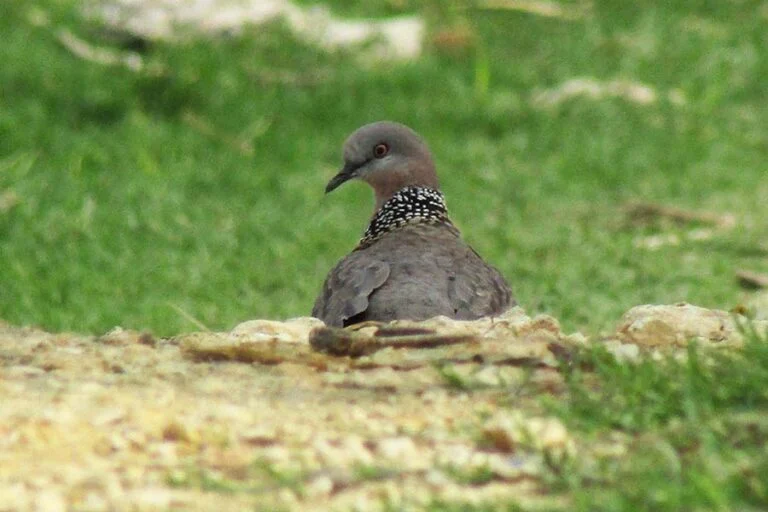
The Spotted Dove (Spilopelia chinensis), colloquially known in Indonesia as the ‘drekuku,’ stands as a testament to biological adaptability in an increasingly urbanized world. Characterized by its soft, brownish-grey plumage and a distinctive black-and-white checkered patch on the hindneck that resembles a necklace, this species has successfully bridged the gap between wild habitats and human civilization. While many avian species have retreated in the face of rapid urbanization and habitat fragmentation, the Spotted Dove has demonstrated an uncanny ability to thrive in parks, agricultural lands, and even the bustling centers of major metropolitan hubs like Jakarta and Yogyakarta.
Evolutionary Background and Geographical Distribution
The Spotted Dove is a member of the Columbidae family, which includes pigeons and doves. Its natural range is extensive, spanning across the vast landscapes of Eastern and Southeastern Asia, and extending into parts of Australia. Throughout its evolutionary history, the species has occupied diverse ecological niches, ranging from dense forests to open grasslands and savannahs. However, its most notable contemporary characteristic is its synanthropy—the tendency of a species to live near and benefit from human environments.
Biologists note that the species’ success in urban areas is largely attributed to its generalist diet and relatively low flight-initiation distance. Unlike more elusive forest-dwelling birds, the Spotted Dove displays a degree of fearlessness toward humans, a trait that has allowed it to exploit food sources provided by human activity, such as grain spills in agricultural areas or intentional feeding in residential gardens.
The Urban Adaptation Phenomenon
The migration of the Spotted Dove into urban centers is not merely a matter of convenience; it is a strategic survival mechanism. Observational data from citizen scientists and ornithologists suggest that the encroachment of urban areas into the periphery of forests has created a "safe haven" effect. In many regions, the outskirts of forests are subject to high levels of hunting pressure and habitat degradation. By contrast, urban environments, despite their concrete surfaces, often provide protection from traditional predators and a more stable, albeit artificial, food supply.
In the vicinity of iconic landmarks like Tugu Jogja, observers have documented not only the presence of the Spotted Dove but also the concurrent activity of the Zebra Dove (Geopelia striata) and various species of green pigeons (Treron). These urban-dwelling birds have become a focal point for birdwatchers and local residents alike. For many city dwellers, the presence of these birds serves as a critical link to nature, offering mental health benefits and a sense of tranquility amidst the high-stress environment of modern urban life.
Scientific Perspectives on Population Dynamics
While the Spotted Dove appears ubiquitous, researchers are beginning to look beyond its surface-level success to understand the complexities of its life cycle. Andini Maya Sari, a forestry student at the University of Muhammadiyah Malang and a dedicated citizen science participant, has conducted extensive field observations comparing wild populations with those held in captivity. Her findings reveal a notable disparity: individuals living in the wild often possess more robust physical characteristics and larger body sizes compared to their caged counterparts.
This observation has sparked a broader debate regarding the ethics and long-term sustainability of keeping Spotted Doves as pets. There is a legitimate concern that the high demand in the bird trade could drive unsustainable harvesting of wild populations, potentially depleting the gene pool of natural habitats. However, Jihad, a Senior Biodiversity Officer at Burung Indonesia, provides a stabilizing perspective. According to his analysis, the majority of Spotted Doves found in the Indonesian trade originate from established captive breeding programs rather than direct poaching. While localized hunting for consumption remains a persistent threat in some rural areas, the national population of the Spotted Dove remains classified as stable.
The Global Impact of Human-Mediated Introduction
The adaptability of the Spotted Dove is perhaps best exemplified by its success outside its native range. In Hawaii, for instance, the species was introduced to the islands and, rather than struggling to adapt, it thrived. By filling ecological niches that were either vacant or underutilized, the population expanded rapidly. This pattern mirrors the historical success of the rock dove (pigeon) in global cities. The Hawaii case study is frequently cited by conservationists to illustrate that the Spotted Dove possesses the biological "plasticity" required to colonize new environments, provided it can secure basic resources like water and shelter.

Research Potential and Future Studies
Despite its familiarity, the Spotted Dove remains a largely understudied subject in formal scientific literature. Much of the existing knowledge is anecdotal or restricted to basic population counts. From a biological standpoint, the species presents a significant opportunity for research in several disciplines:
- Molecular Biology: Mapping the genetic diversity of urban versus rural populations could yield insights into how rapid environmental change influences the genome of avian species.
- Physiology and Pathology: As birds that interact closely with human environments, they serve as excellent bio-indicators for urban air quality and potential zoonotic disease transmission.
- Behavioral Ecology: The social structure of these doves, particularly their elaborate courtship displays and territorial defense mechanisms, offers a rich field for ethological study.
Jihad emphasizes that the species’ relative lack of sensitivity to human proximity makes it an ideal subject for academic research. Students and early-career ornithologists can utilize the Spotted Dove as a gateway species to understand complex ecological interactions without the need for sophisticated equipment or invasive methodologies.
Socio-Cultural Significance in Indonesia
Beyond the biological data, the Spotted Dove holds a distinct place in the cultural fabric of Indonesia. Known as ‘drekuku,’ the bird is woven into the daily lives of many, particularly in Java, where the sound of their cooing is often synonymous with a peaceful, rural morning. The act of providing seeds or water for these birds in home gardens is a long-standing tradition that fosters a symbiotic relationship between humans and local wildlife.
This inter-species interaction is not merely a hobby; it is a form of conservation participation. When citizens engage in backyard birdwatching, they contribute to a massive, informal data network that tracks migration patterns, breeding success, and population health. This "science of the people" is becoming increasingly vital as climate change and urban sprawl continue to reshape the natural world.
Policy Implications and Conservation Outlook
The stability of the Spotted Dove population in Indonesia does not grant room for complacency. While the species is not currently classified as endangered, the pressure of habitat loss is a constant threat. For urban planners, the presence of these birds serves as a metric for the health of city parks and green spaces. Protecting the corridors that allow these birds to traverse the city is essential for maintaining urban biodiversity.
Furthermore, as the bird trade continues to evolve, regulators must ensure that the distinction between legal, captive-bred specimens and wild-caught individuals remains clear. Monitoring the trade flow is essential to prevent a "hidden" drain on the wild population. Furthermore, encouraging responsible bird keeping—whereby enthusiasts prioritize the welfare and biological needs of the birds—could help mitigate the stress placed on wild populations.
Conclusion: A Bird of Both Worlds
The Spotted Dove serves as a living bridge between the wild wilderness and the modern metropolis. Its ability to navigate the challenges of urban life—noise, traffic, and concrete—while maintaining its natural behaviors is a biological marvel. By fostering an environment where these birds can coexist with humans, society not only protects a valuable component of the ecosystem but also preserves a cultural tradition that enriches the human experience.
As we look toward the future of urban development, the Spotted Dove stands as a reminder that nature does not necessarily end where the city begins. With continued focus on ethical research, sustainable trade practices, and the protection of urban green spaces, the ‘drekuku’ will likely remain a constant, cooing presence in the gardens and parks of Indonesia for generations to come. The challenge now lies in ensuring that our urban landscapes remain hospitable enough to sustain these resilient neighbors as the pace of development continues to accelerate.

