
The burgeoning electric vehicle (EV) market in Indonesia, currently dominated by a rapid influx of Chinese manufacturers, is facing a significant moment of scrutiny following a series of high-profile mechanical failures. Within a single week in November 2024, two separate incidents involving Chinese-manufactured EVs—a BYD Atto 1 and a Jaecoo J5—resulted in broken or detached axles, sparking widespread public concern regarding the structural integrity and long-term reliability of these new-energy vehicles. As consumers and industry analysts question the safety standards of budget-friendly EVs, GAC AION has stepped forward to distinguish its brand strategy from the recent controversies, emphasizing a commitment to build quality over aggressive market penetration.
A Concerning Week for EV Reliability
The sequence of events began on Monday, November 2, when a BYD Atto 1 was captured in an incident on the Ring Road Raya near the Kapuk toll exit in Cengkareng, West Jakarta. According to the vehicle’s driver, identified as Endang, the car had initially struck a road divider. Despite the impact, the vehicle continued to operate for approximately one to two kilometers before the front axle failed entirely, rendering the vehicle immobile. Images of the stranded car quickly circulated on social media, drawing attention from local transportation authorities and the public.
Barely forty-eight hours later, a second incident involving a Jaecoo J5 emerged. Viral footage depicted a black SUV in a compromised state, tilted sharply to one side with the front right wheel completely detached from the axle assembly. The scene also showed damage to nearby road infrastructure, specifically a bent guardrail, suggesting a high-energy impact. These back-to-back incidents have cast a shadow over the "EV boom" currently supported by government subsidies and tax incentives aimed at accelerating the adoption of green technology in Indonesia.
The Stance of GAC AION: Quality Over Price
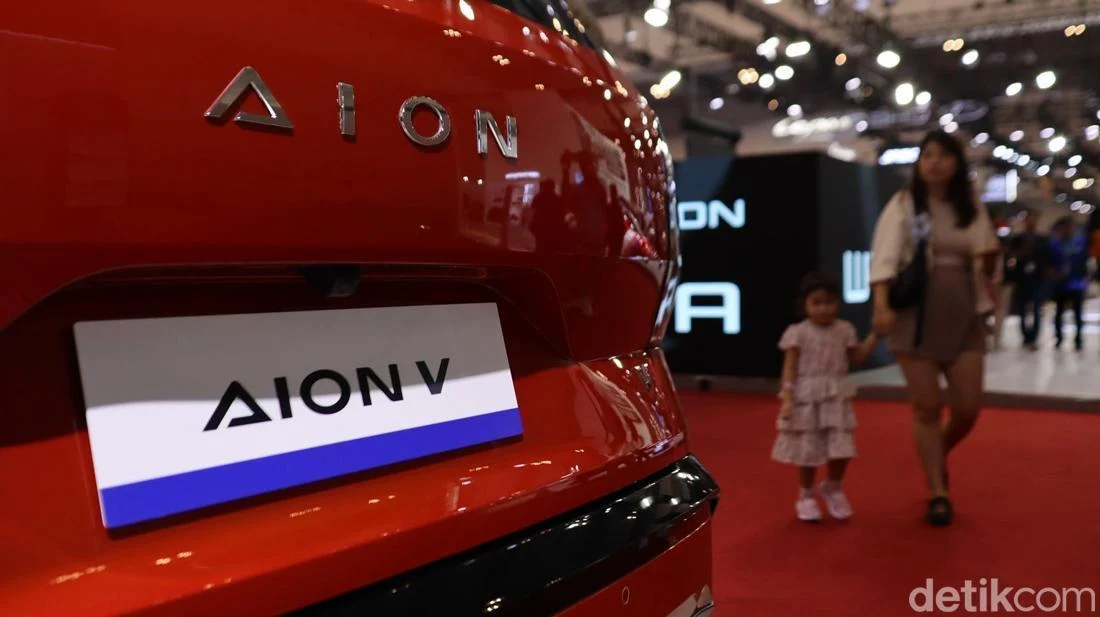
In response to the growing apprehension among prospective buyers, Andry Ciu, CEO of GAC Indonesia, addressed the issue during a public appearance in Senayan, Jakarta. He explicitly distanced GAC AION from the structural failures seen in its competitors, asserting that the company’s internal protocols prioritize mechanical longevity and consumer peace of mind over the "price wars" that have characterized the entry of several Chinese automakers into the Indonesian market.
"From a product quality standpoint, we are extremely confident," Ciu stated. "We have a shared vision with GAC International and the Indomobil Group: quality, quality, and quality. We are not focused on price, price, and price." Ciu argued that while market competition is healthy, the ultimate objective of an automotive manufacturer should be to build long-term relationships with customers. By avoiding the race to the bottom in terms of pricing, Ciu believes GAC AION can ensure that its vehicles are engineered to withstand the unique road conditions often found in Indonesia, thereby avoiding the catastrophic component failures recently witnessed.
Chronology and Technical Investigations
The rapid succession of these events prompted immediate responses from the manufacturers involved. In the case of the BYD Atto 1, PT BYD Motor Indonesia confirmed that its after-sales division had initiated a formal investigation. Luther Panjaitan, Head of Public and Government Relations at PT BYD Motor Indonesia, noted that the company is working closely with the vehicle owner to conduct a comprehensive technical analysis to determine whether the axle failure was a result of the initial collision with the road divider or a pre-existing structural weakness.
The Jaecoo J5 incident, meanwhile, saw a more definitive preliminary explanation from the manufacturer. Following an assessment by their technical team, Jaecoo Indonesia stated that the detachment of the wheel was a direct consequence of the vehicle striking a concrete curb and a steel guardrail at significant force. The company maintains that the damage was the result of an accident rather than a manufacturing defect. Currently, the vehicle is undergoing repairs, with Jaecoo prioritizing the supply of parts to expedite the restoration of the customer’s vehicle.
The Broader Implications for the Indonesian EV Market
The Indonesian government has set ambitious targets to become a regional hub for EV production and consumption. However, these recent incidents highlight the critical importance of robust quality control and the necessity of well-established after-sales networks. As more brands enter the market, the variance in engineering standards becomes a point of contention. Industry observers note that while Chinese EVs offer competitive features and innovative technology, the rapid scaling of production must not come at the expense of vehicle safety.
The economic impact of these failures goes beyond individual repair costs. For the broader EV industry in Indonesia, there is a looming risk of "reputation contagion," where the failure of one brand leads to a decline in public trust for all Chinese-made electric vehicles. According to market data from the Association of Indonesia Automotive Industries (GAIKINDO), EVs have seen a steady growth in market share, but consumer sentiment remains highly sensitive to reports of mechanical instability.

Structural Integrity and Road Conditions
Technical analysts suggest that the rigid suspension systems and high torque profiles of electric vehicles require specific considerations for road conditions in Southeast Asia. While EVs are heavier due to their battery packs, the infrastructure, including uneven road surfaces and high curbs, poses a challenge to components like suspension arms and axles.
When a vehicle experiences an impact, the forces involved are often transferred to the chassis. If the structural design is not optimized for such stresses, failures can occur. For manufacturers like GAC AION, the strategy of focusing on "long-term relationships" implies a commitment to durability testing that exceeds local regulatory minimums. As Ciu emphasized, "We don’t just want to deliver a vehicle; we want to deliver peace of mind."
The Road Ahead: Transparency and After-Sales
The path forward for the EV industry in Indonesia likely involves increased transparency. Experts suggest that manufacturers should be more proactive in releasing findings from technical investigations to prevent the spread of misinformation and to reassure consumers. The availability of spare parts, as highlighted by Jaecoo’s commitment to prioritizing repair components, is also becoming a key metric by which consumers judge the reliability of new automotive brands.
As the Indonesian market continues to mature, the competition will shift from being purely price-driven to being defined by safety, reliability, and service quality. For GAC AION, the current environment presents an opportunity to solidify its position as a "premium-quality" alternative within the Chinese-made segment. For BYD and Jaecoo, the coming weeks will be critical in demonstrating their commitment to their customers and proving that these incidents are isolated cases rather than systemic issues.
Ultimately, the stability of the Indonesian EV transition depends on the ability of these global manufacturers to adapt to the local environment and ensure that the rapid shift toward green energy does not compromise the safety of the motorists on the road. The incidents involving the Atto 1 and the J5 serve as a reminder that in the automotive world, the promise of innovation must be anchored by the fundamental principles of engineering excellence and rigorous quality assurance. As the government continues to promote EV adoption, the focus will likely turn toward more stringent safety standards and the development of a more robust after-sales infrastructure, ensuring that the dream of an electrified future remains both sustainable and safe.

