
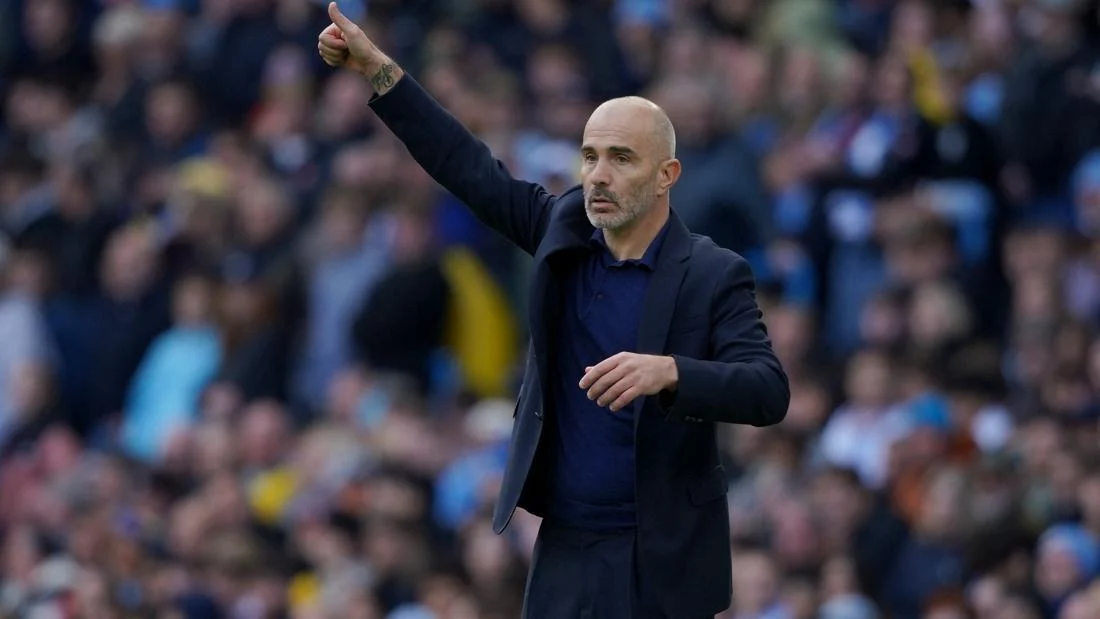
The managerial hot seat at Manchester City has long been regarded as one of the most demanding positions in elite European football, particularly following the unprecedented era of success engineered by Pep Guardiola. As Enzo Maresca navigates his inaugural campaign at the helm of the Premier League powerhouse, the completion of his first ten league fixtures offers a natural juncture for historical reflection. Analyzing how Maresca’s opening ten-match sequence compares to those of his predecessors under the Abu Dhabi United Group ownership provides essential context regarding the expectations, pressures, and developmental trajectories that define modern management at the Etihad Stadium.
When evaluating a managerial tenure at a club with ambitions as vast as Manchester City, the initial ten matches in the Premier League serve as an early indicator of tactical alignment, squad adaptation, and resilience. Maresca’s start has been characterized by a compelling dichotomy: an explosive opening sequence featuring seven consecutive victories, immediately followed by a sobering stumble resulting in defeats across his last three outings. Amassing 21 points from the available 30, Manchester City currently occupies the third position in the domestic standings. While a tally of 21 points from ten matches represents a respectable return by general Premier League standards, the unique ecosystem of a title-chasing club places microscopic scrutiny on every fluctuation in form.
To fully comprehend the magnitude of Maresca’s current standing, it is imperative to examine the historical precedents set by previous managers who assumed control of the club during the transformative era ushered in by the Abu Dhabi United Group. Each predecessor inherited a distinct set of circumstances, squad configurations, and institutional pressures, yet their opening ten fixtures in the Premier League establish a quantifiable baseline for managerial evaluation.
The Pep Guardiola Benchmark and the Burden of Legacy
Unavoidably, any analysis of a current Manchester City manager operates in the shadow of Pep Guardiola’s monumental tenure. When Guardiola arrived in English football ahead of the 2016-17 season, anticipation reached a fever pitch. The Catalan coach commenced his Premier League journey with a stellar sequence comprising seven victories, two draws, and a solitary defeat, accumulating 23 points. This formidable start propelled Manchester City to the summit of the league table at that early juncture.
However, Guardiola’s opening season also serves as a historical reminder that early dominance does not unilaterally guarantee a seamless coronation. Despite leading the standings after ten matches, Guardiola’s side ultimately concluded that transitionary campaign in third place, ceding the title to Antonio Conte’s Chelsea as the squad underwent a rigorous tactical and structural overhaul to meet the manager’s exacting demands. Over subsequent seasons, Guardiola redefined the parameters of English football, accumulating a staggering 20 major trophies and establishing an enduring dynasty. For Maresca, succeeding a figure of such transcendent influence creates an unprecedented psychological and structural hurdle. The pressure to maintain elite-level standards while implementing a distinct tactical vision is a challenge that few managers in football history have faced.
The Manuel Pellegrini Blueprint: Slow Starts and Ultimate Glory
Looking further back into the archives of the Abu Dhabi ownership era reveals that an explosive start is not an absolute prerequisite for domestic championship success. When Manuel Pellegrini took charge of Manchester City ahead of the 2013-14 Premier League campaign, his opening ten matches yielded a comparatively modest 19 points. The Chilean tactician oversaw a mixed bag of results that initially raised questions regarding the team’s defensive stability and consistency away from home.
Nevertheless, Pellegrini’s steady stewardship, balanced man-management, and potent attacking philosophy ultimately steered The Citizens through a fiercely contested title race. By the culmination of the 2013-14 season, Manchester City climbed to the summit, securing the Premier League trophy in dramatic fashion. Pellegrini’s trajectory offers a vital lesson in patience and long-term strategic execution, proving that a measured start under 20 points after ten games can still culminate in ultimate domestic glory. For Maresca, Pellegrini’s campaign serves as an encouraging precedent, demonstrating that recovery from a brief slump—such as the three consecutive defeats recently suffered—remains entirely feasible within the grueling landscape of an English football season.
Roberto Mancini and the Mid-Season Transition
A distinctly different contextual framework applies to Roberto Mancini, who stands as the only manager among the four major appointments of the Abu Dhabi era to take charge midway through a campaign rather than during the pre-season preparatory period. In December 2009, Mancini replaced Mark Hughes with the objective of revitalizing a squad that possessed immense financial backing but lacked tactical cohesion and consistency.
During his opening ten Premier League matches at the helm, the Italian manager accumulated 20 points, steadily instilling defensive rigor and tactical discipline. Mancini’s stabilization of the team halted erratic performances and laid the structural foundations for future triumphs, including the historic 2011-12 Premier League title win. Under his guidance, Manchester City finished the 2009-10 campaign in fifth place, climbing three positions from the exact spot where he found them upon his arrival. Mancini’s tenure highlights the challenges of mid-season integration and the value of incremental improvement, contrasting sharply with Maresca’s experience of building and launching a squad from the opening whistle of a new campaign.
Statistical Summary of Opening Ten Premier League Matches Under Abu Dhabi Ownership
A direct comparative overview of the four managers highlights the statistical nuances of their respective introductions to the Premier League:
- Pep Guardiola (2016-17): 7 wins, 2 draws, 1 loss | 23 points | 1st position after 10 matches (Finished 3rd)
- Enzo Maresca (Current Season): 7 wins, 0 draws, 3 losses | 21 points | 3rd position after 10 matches (Ongoing)
- Roberto Mancini (2009-10): Mid-season appointment, first 10 matches yielded 20 points | Finished 5th
- Manuel Pellegrini (2013-14): Opening 10 matches yielded 19 points | Finished 1st (Champions)
This data underscores that Maresca’s raw points accumulation of 21 places him in elite company, closely tracking Guardiola’s initial output and outperforming both Mancini and Pellegrini at the identical milestone. However, the qualitative nature of his start—marked by a stark polarization between seven consecutive triumphs and a subsequent three-match losing streak—introduces questions regarding squad depth, tactical adaptability during periods of fatigue, and the management of opponent counter-strategies.
Tactical Evolution and the Demands of the Modern Squad
Enzo Maresca’s tactical philosophy heavily emphasizes positional control, fluid build-up structures, and intense defensive pressing, heavily influenced by his extensive coaching background within elite developmental systems and his prior association with Guardiola’s coaching tree. The implementation of such a sophisticated tactical framework inherently demands an adaptation period from the playing roster.
During the initial phase of seven consecutive victories, Maresca’s tactical blueprint appeared to take seamless effect, overwhelming opponents with intricate passing triangles, numerical superiorities in central midfield, and clinical finishing. However, the subsequent three defeats exposed vulnerabilities that opposition managers quickly capitalized upon. Compact low-block defenses, rapid transitions, and targeted pressing on City’s primary build-up zones successfully disrupted their rhythm.
In the high-stakes environment of the Premier League, tactical innovations are rapidly scrutinized and countered. The recent sequence of losses has forced Maresca and his coaching staff into a critical review phase. Addressing structural gaps during defensive transitions and diversifying attacking mechanisms when primary routes are neutralized will determine whether Manchester City can stabilize their league campaign and mount a sustained challenge for the championship.
Locker Room Dynamics and Institutional Expectations
Managing a club of Manchester City’s stature requires navigating complex internal dynamics. The squad consists of seasoned international winners accustomed to the highest levels of achievement, alongside emerging talents seeking to cement their places in the starting XI. Maintaining harmony, motivation, and tactical belief following a sequence of consecutive losses is a primary test of managerial leadership.
Inside sources and club insiders suggest that while the three recent defeats prompted intense internal reviews, the leadership group retains confidence in Maresca’s methodology. The transition from an era defined by unrivaled dominance to a new tactical chapter naturally incurs growing pains. Club executives have historically prioritized long-term structural development alongside immediate silverware, viewing occasional turbulence as an expected byproduct of managerial evolution.
Furthermore, the external media narrative surrounding Maresca has frequently fixated on the immense shadow of his predecessors. While comparisons to Guardiola are inevitable given the 20 trophies secured during the Catalan’s tenure, club management has consistently emphasized that Maresca must be allowed to forge his own identity. The expectation is not merely to replicate the past, but to construct a sustainable competitive model capable of enduring well into the future.
Broader Implications and Outlook for the Season
As the Premier League season crosses its initial exploratory phase, the implications of Maresca’s opening ten matches extend far beyond the current league table. Sitting in third place with 21 points, Manchester City remains firmly within striking distance of the summit, well-positioned to capitalize on any slip-ups by title rivals.
The immediate challenge for Maresca lies in halting the momentum of the recent skid and reestablishing the defensive resilience and attacking fluidity that characterized his opening seven matches. The upcoming fixtures will test the depth of the squad, particularly as fixture congestion intensifies with domestic cup competitions and European commitments running concurrently.
Ultimately, history suggests that early-season metrics do not definitively dictate final standings. As demonstrated by Manuel Pellegrini’s triumph after a 19-point opening, and contrasted by Pep Guardiola’s 23-point start that concluded in third place, the Premier League is a marathon defined by endurance, tactical evolution, and crisis management. Whether Enzo Maresca can emulate Pellegrini by converting a challenging start into a championship-winning campaign remains one of the most compelling narratives of the current football season. The coming months will provide the definitive verdict on whether his tactical vision can withstand the relentless pressures of English football’s most demanding dugout.

