
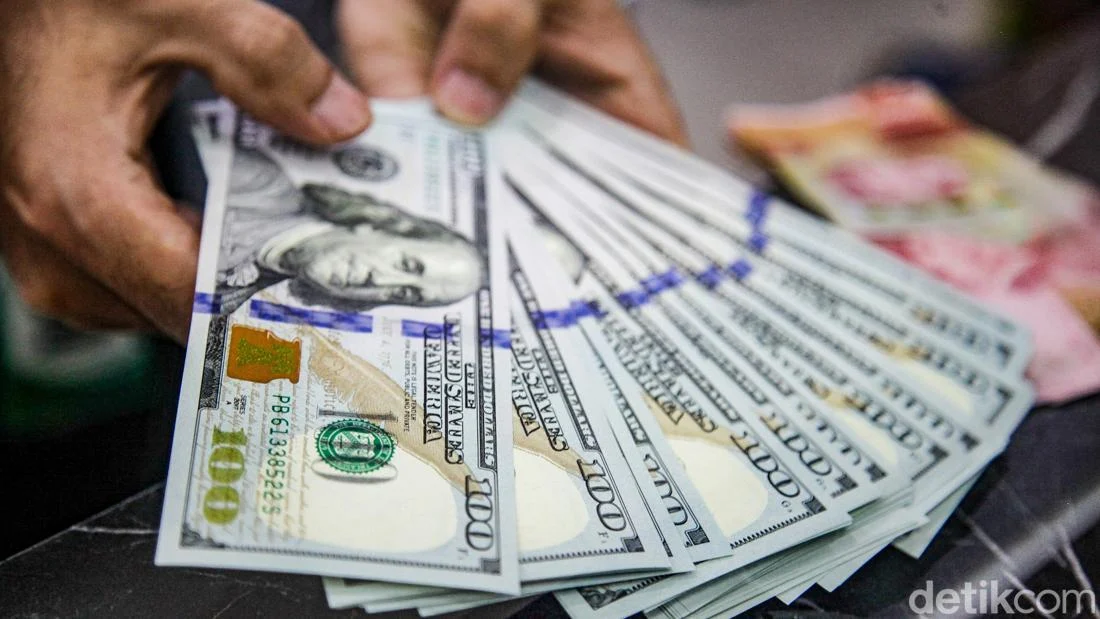
The Indonesian rupiah experienced a significant depreciation against the United States dollar, closing at the level of Rp 18,329 per US dollar, reflecting mounting pressures from both international macroeconomic shifts and localized economic concerns. According to market data retrieved from Bloomberg, the local currency weakened by 90 points, or approximately 0.50%, during the trading session on Thursday. This downward movement is part of a broader, sustained trend that has seen emerging market currencies across the Asian region struggle to maintain their ground against a resurgent greenback.
Bank Indonesia (BI), the country’s central bank, has closely monitored these developments and attributed the rupiah’s recent struggles to a complex convergence of external headwinds and domestic structural factors. While the central bank maintains that the currency’s trajectory remains largely aligned with regional peers that have also experienced downward adjustments, the scale of the depreciation has reignited discussions among financial analysts, institutional investors, and policymakers regarding the resilience of Indonesia’s financial markets as the year draws to a close.
Global Macroeconomic Triggers and the US Dollar Surge
The primary driver behind the recent pressures on the rupiah stems from international financial markets, specifically shifting expectations surrounding monetary policy in the United States. Erwin Gunawan Hutapea, Head of the Monetary Management and Securities Asset Department at Bank Indonesia, explained that the valuation of global currencies has been heavily influenced by a recalibration of market expectations regarding the Federal Open Market Committee (FOMC) interest rate trajectory.
According to Hutapea, financial markets have rapidly adjusted their forecasts following the release of hotter-than-expected inflation data from the United States. This economic indicator has led investors to price in a higher likelihood of elevated interest rates persisting through the upcoming FOMC meetings in December and extending well into 2027. Consequently, the US dollar has experienced a powerful rally, as measured by the US Dollar Index (DXY), which climbed to 102.96—marking its highest level since March 2025.
The strengthening of the US dollar has triggered a ripple effect across global financial ecosystems. Higher yields on US Treasury securities have made dollar-denominated assets increasingly attractive, compelling foreign institutional investors to reallocate capital away from emerging markets, including Indonesia. This capital flight has directly reduced foreign portfolio inflows into local debt and equity markets, creating an acute supply-and-demand imbalance for foreign exchange within the domestic market.
Domestic Pressures Compound External Vulnerabilities
While external factors have established the baseline for the rupiah’s decline, domestic vulnerabilities have exacerbated the currency’s sensitivity to external shocks. Bank Indonesia highlighted several internal dynamics weighing on the local currency, chief among them being growing apprehension within the investment community regarding a potential downgrade of Indonesia’s stock market classification by Morgan Stanley Capital International (MSCI). Such a downgrade could trigger mandatory rebalancing by global funds, leading to substantial equity outflows from the Jakarta Composite Index.
Furthermore, the domestic economy is navigating a period of complex adjustments characterized by localized economic dynamics and a seasonal surge in foreign exchange demand. As is typical toward the end of the calendar year, corporate entities, importers, and state-owned enterprises significantly ramp up their demand for US dollars to settle external liabilities, service foreign debt obligations, and finance year-end inventory procurement. This seasonal liquidity squeeze places additional, predictable downward pressure on the rupiah precisely when global liquidity conditions are tightening.
Despite these concurrent pressures, Indonesia’s fundamental macroeconomic buffers remain relatively robust. Bank Indonesia reported that the country’s official reserve assets stood at a healthy US$ 146.8 billion at the close of October 2026. This substantial foreign exchange reserve provides the central bank with adequate ammunition to cushion against excessive volatility and disorderly market movements, even as regional currencies face a collective monthly depreciation averaging around 0.11%.
Bank Indonesia’s Stabilization Strategy and Market Intervention
In response to the intensified volatility, Bank Indonesia has executed a proactive, multi-pronged stabilization strategy aimed at anchoring market expectations and restoring orderly trading conditions. Erwin Gunawan Hutapea emphasized that the central bank remains steadfast in its commitment to maintaining exchange rate stability, ensuring that the rupiah’s movements remain aligned with the country’s underlying macroeconomic fundamentals.
To achieve this, Bank Indonesia has deployed a comprehensive suite of monetary policy instruments. Intervention efforts are being conducted simultaneously across multiple market segments. In the offshore market, the central bank utilizes Non-Deliverable Forward (NDF) transactions to manage speculative pressures. Concurrently, in the domestic market, BI actively operates through Domestic Non-Deliverable Forward (DNDF) contracts and direct spot market interventions to supply necessary foreign exchange liquidity.
Beyond direct currency market interventions, Bank Indonesia has leveraged its domestic asset operations by actively purchasing Government Securities (Surat Berharga Negara or SBN) in the secondary market. This secondary market intervention serves a dual purpose: it helps stabilize domestic bond yields, thereby mitigating the spillover effects of rising US Treasury yields, and ensures adequate liquidity within the domestic financial system to support ongoing economic activity without triggering destabilizing capital outflows.
Chronology of Events Leading to the Depreciation
The current currency depreciation did not occur in a vacuum; it is the culmination of several months of evolving macroeconomic trends both globally and domestically.
Mid-2025 to Early 2026: Global inflationary pressures began to show stubborn persistence, causing major central banks, particularly the US Federal Reserve, to signal a "higher-for-longer" interest rate posture. During this period, the US Dollar Index hovered below the 102 threshold, but emerging market currencies steadily lost momentum.
September 2026: Anticipation built up regarding upcoming macroeconomic data releases from the United States. Foreign portfolio investors began exercising caution, slowing the pace of capital deployment into Indonesian capital markets.
Late October 2026: Bank Indonesia reported that foreign exchange reserves stood resiliently at US$ 146.8 billion. However, early warning signs emerged regarding shifting global sentiment and localized corporate demand for foreign currency ahead of the fourth-quarter import cycle.
Early November 2026: The United States released consumer price index figures that exceeded consensus Wall Street forecasts. This data shattered lingering hopes for aggressive monetary easing by the Federal Reserve in the near term.
Thursday, November 12, 2026: The global reaction to the US inflation print drove the DXY index to 102.96, a peak not witnessed since March 2025. Simultaneously, domestic sentiment was rattled by discussions surrounding potential MSCI market reclassifications. The rupiah reacted sharply, sliding 90 points or 0.50% to close at Rp 18,329 per US dollar, prompting immediate stabilization measures from Bank Indonesia.
Broader Implications for the Indonesian Economy
The depreciation of the rupiah to Rp 18,329 per US dollar carries multifaceted implications for the domestic economy, touching upon trade, inflation, corporate balance sheets, and fiscal management.
From an international trade perspective, a weaker local currency fundamentally alters the cost dynamics of imports and exports. On one hand, Indonesian export commodities—such as palm oil, coal, and manufactured goods—gain a degree of price competitiveness in global markets, potentially boosting export revenues for domestic producers. On the other hand, the cost of importing raw materials, capital goods, and essential commodities, including refined petroleum, wheat, and soybean, escalates significantly. This imported inflation can quickly filter through the domestic supply chain, raising production costs for local manufacturers and ultimately leading to higher retail prices for consumers.
For corporations operating within Indonesia, particularly those carrying unhedged foreign currency debt, a weaker rupiah represents a formidable balance sheet challenge. Servicing dollar-denominated liabilities becomes increasingly burdensome, potentially constraining capital expenditure plans and corporate earnings growth. Sectors heavily reliant on imported inputs, such as pharmaceuticals, electronics, and automotive assembly, may see their profit margins squeezed unless they are able to successfully pass higher costs on to end-users in an environment where consumer purchasing power may already be constrained.
From a fiscal standpoint, the depreciation presents a mixed picture for the national budget. While commodity-related revenues denominated in US dollars—such as oil and gas royalties and mining sector dividends—experience a temporary nominal boost when converted into rupiah, the overall cost of servicing foreign debt obligations by the government increases. Furthermore, government expenditures tied to imported infrastructure components and energy subsidies may experience upward pressure, requiring careful fiscal management by the Ministry of Finance to maintain budgetary discipline.
Looking ahead, financial analysts and market observers will closely monitor upcoming macroeconomic releases from both Washington and Jakarta. Key data points, including upcoming US employment reports, domestic inflation prints, and official trade balance figures, will dictate whether the current pressure on the rupiah is a temporary seasonal adjustment or the beginning of a more protracted structural realignment. In the interim, Bank Indonesia’s continuous market presence and aggressive utilization of stabilization instruments will remain the primary anchor preventing disorderly volatility in the Indonesian foreign exchange market.

